
By Lehlohonolo Lehana.
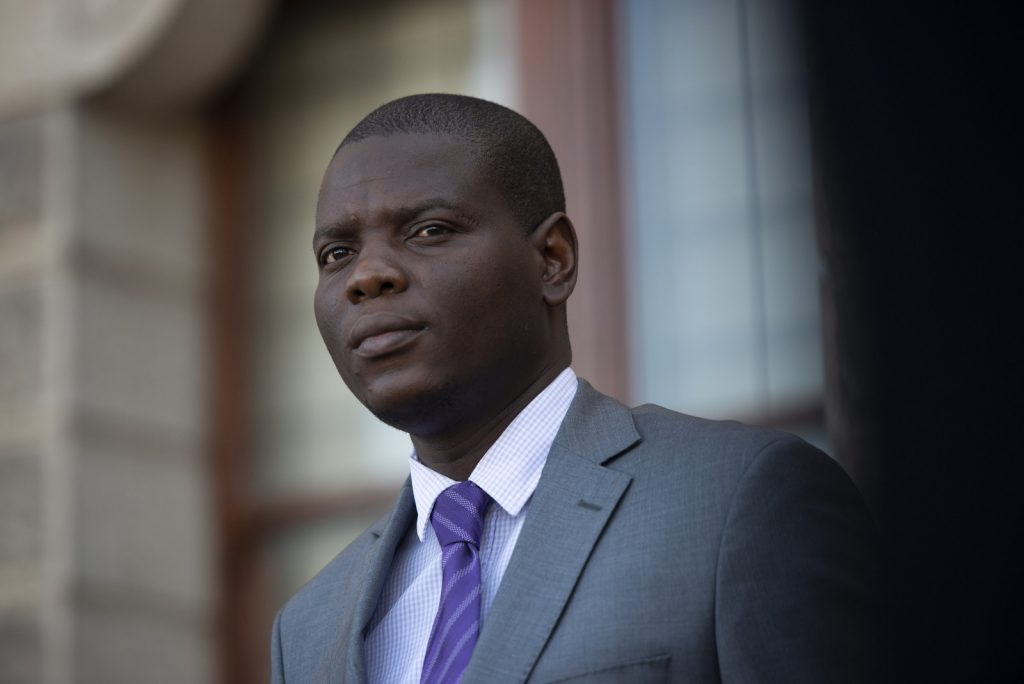
Minister of International Relations and Cooperation Ronald Lamola on Tuesday, has laid out the Government of National Unity’s (GNU’s) foreign policy vision.
Lamola was delivering a keynote address in a symposium at the South African Institute of International Affairs in Cape Town on South Africa’s foreign policy.
“To effectively address global existential challenges such as climate change, geopolitical fragmentation and insecurity, we need solidarity and collective action among progressive forces around the globe,” said Lamola.
“The evolving international world order necessitates the strengthening of the Non-Aligned Movement,” he added, uniting developing countries “that do not wish to take sides in great power rivalry.
“As our foreign policy is anchored in our history of solidarity with those struggling against oppression and occupation” — a reference specifically to the ANC’s historic allies — South Africa would continue to support the people of Palestine and Western Sahara.
It would continue to protect the rights of Palestinians in Gaza, including pursuing the charge of genocide that it brought against Israel at the International Court of Justice (ICJ) and the case it led at the International Criminal Court about the situation in Palestine.
It will be interesting how this is achieved, given the fact that the ANC and the DA do not see eye-to-eye on the Palestinian conflict and the Russian attacks against Ukraine.
Both the ANC and the DA, which enjoy the largest and second-largest number of members in the GNU, follow contradictory approaches on foreign policy, a factor many people believe is a potential source of friction that could destabilise the new coalition government.
Since it gained power in 1994, the ANC opted for a neutral nonaligned foreign policy which it intended to continue under the GNU, while the DA is pro-West and opposed to ties with Russia, China and any country perceived as enemies of the West.
Lamola confirmed that South Africa would continue to participate in Ukrainian President Volodymyr Zelensky’s peace formula talks.
At the last round of those talks, at the summit level in Switzerland in June, Ramaphosa’s national security adviser, Sydney Mufamadi,declined to sign the communiue, in part because Israel had been invited.
He stressed that Africa would remain a key pillar of South Africa’s foreign policy. Through the African Union, SA would ensure the implementation of the African Continental Free Trade Area (AfCFTA), aimed at creating a single African market. This would be facilitated by Africa’s economic growth, which the African Development Bank has forecast will reach an average of 3.7% this year, the second fastest-growing region in the world.
He noted that the foreign policy he had enunciated was based on the GNU’s Statement of Intent, which committed the government to a foreign policy guided by human rights, constitutional principles, the national interest, solidarity and the peaceful resolution of conflict; achieving the African Agenda 2063 development plan and promoting cooperation between the Global South and Global North, and fostering multilateralism.
Lamola also stressed the importance of economic diplomacy, saying his department should intensify its efforts to help South African companies and state-owned enterprises engage in meaningful opportunities in Africa.
He said they are looking to strengthen partnerships in Africa to address business challenges and create a favourable environment for conducting business.
Tabling the Budget Vote for the 2024/25 financial year in Parliament, the Minister announced that the department had been allocated R6.57 billion, reflecting a 5% reduction.
He announced that South Africa has maintained its strong position as an investor in Africa over the past year, with over 450 projects in various countries.
“This achievement results from our coordinated approach and investment initiatives, and we commend the efforts of our development finance institutions, such as the Development Bank of Southern Africa and the Industrial Development Corporation,” he explained.
He also pledged to continue collaborating closely with neighbouring countries in the Southern Africa region to enhance cooperation in areas such as oil and gas, green hydrogen, water resources, and the facilitation of goods and services.
The Minister believes that these initiatives are important to bolster the country’s economy and improve the livelihoods of people while contributing towards the full attainment of the regional integration agenda.
He also said his department, which is facing a critical staff shortage, must do more with less due to resource constraints.
A critical challenge faced by the department, Lamola explained, is managing exchange rate volatility, which affects 60% of expenditures allocated to missions abroad.
According to the Minister, the department could only fill critical vacancies identified at the head office to remain within the baseline for employee compensation, which resulted in a “very high vacancy rate”.
He said that this hurts the department’s operations and service delivery.
“However, several line function posts were filled at the Assistant Director, Deputy Director and Director levels, mainly through internal promotions to address the lack of upward mobility,” he added.
The Minister also announced that the department cannot fill all the critical vacancies with the available funds, and operations continue to be negatively affected.