
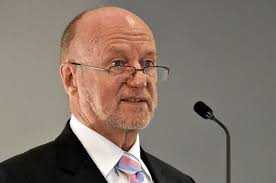
By Lehlohonolo Lehana.
Derek Hanekom, South African Airways (SAA) interim board chair, says the airline was showing “a modest profit at this stage and no loss is expected”.
Hanekom was briefing Parliament’s Standing Committee on Public Accounts (SCOPA) on Tuesday.
“We will be cash-positive by the end of the financial year … SAA is not facing a danger of collapse without the [National] Treasury’s support.”
Hanekom added that the airline was no longer in debt and continued to trade as a going concern. The going concern test is one that companies must pass to secure a clean bill of health from their auditors.
He added, that the national airline is yet to receive the R3 billion investment from Takatso Consortium.
Takatso Consortium obtained 51% shares from the SAA in what was set to be a strategic equity partnership to prevent the state-owned airline from liquidation.
The proposed SAA deal would see Takatso obtain a majority stake in SAA and put R3 billion into the airline over a three-year period to enable it to keep flying.
However, he assured the committee that the board would do everything possible to prevent the collapse of the flag carrier.
“The uncertainty makes long-term planning a little bit difficult. The question for us remains – is that capital of R3 billion coming in? Should we plan as if it is not going to come?
“The good news is that on the cash flow side, we are healthy, so SAA is not going to collapse – but the growth that we have in mind will depend on the capital injection.
While the Auditor-General agreed with Hanekom’s assessment of SAA trading as a going concern, saying it was “appropriate”, it warned that the airline’s status had “material uncertainties”.
The Auditor-General’s 22-page report painted a picture of SAA still being in a mess, at least from a governance, capacity and financial perspective, which creates uncertainty around the airline’s “going concern” status.
The Auditor-General also sees SAA’s “continued dependency” on funding from the government for its operations as a key risk to its “going concern” status.
This was also worsened by the impact of the business rescue process that resulted in the downsizing of the staff and loss of critical skills, especially in the finance function, without adequate business continuity measures that would ensure the preservation of critical skills and capacity as well as a proper hand-over process by the employees that exited the company.
“Currently, there is a lack of adequate skills and capacity to prepare credible financial statements and to support the audit process due to loss of critical skills and poor record-keeping,” the Auditor-General’s report states.
The lack of skills within SAA often resulted in the airline not complying with key legislation relating to procurement and contract management, expenditure management, consequence management and revenue management.
The inability to comply with legislation gave rise to SAA’s irregular expenditure increasing from R22-billion to R44.5-billion from 2018 to 2023, while fruitless and wasteful expenditure increased from R24.8-million to R207.3-million over the same period.