
By Lehlohonolo Lehana.
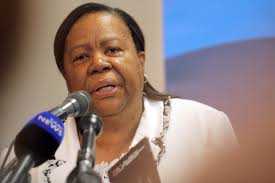
Minister of International Relations Dr Naledi Pandor on Tuesday hosted the German Minister of Foreign Affairs for the 11th Meeting of South Africa-Germany Bi-National Commission.
The commission comprises of several working groups, including security policy, economy and energy.
Addressing the German delegation and other dignitaries on Tuesday, Pandor referred to the “very substantial” relationship between South Africa and Germany. Germany is South Africa’s third biggest trade partner behind China and the U.S.
“South Africa and Germany share many common values on matters of peace and security, human rights, climate change, sustainability and economic development,” Pandor said.
She highlighted the importance of reforming the United Nations since South Africa and Germany “share many common values on matters of peace and security”.
Pandor said the world changed since the 10th Bi-National Commission, which was held back in march 2020.
Both countries face different but “equally serious global challenges”, such as the war in Ukraine and its subsequent global ramifications.
Russia/Ukraine
Baerbock called for Russia “to stop the bombing” of Ukraine, a pointed message as it draws accusations of aiding Moscow’s war effort.
South Africa’s position on the war in Ukraine has been under close scrutiny since U.S Ambassador Reuben Bridgety alleged that South Africa secretly loaded weapons onto a Russian ship that docked at a naval base near Cape Town in December.
Those allegations sparked serious concerns among South Africa’s Western allies over its position on the war. U.S. lawmakers have evencalled for some kind of punishment for Africa’s most-developed economy for what they view as its pro-Russian stance.
The South African government says it is neutral in the war in Ukraine and denies that an arms shipment was sent to Russia. And President Cyril Ramaphosa has since ordered an investigation into the visit last year of the Lady R Russian cargo ship, which is under U.S. sanctions for allegedly transporting weapons for the Russian government.
Baerbock didn’t directly refer to the weapons allegations when making comments alongside Pandor ahead of their meeting Tuesday. But she said that the rising food and oil prices that are sparking hardship across the African continent were the result of Russia’s illegal invasion of Ukraine.
“For this suffering to end, the war must end,” Baerbock said. “For the war to end, Russia must stop the bombing and withdraw its soldiers. This war is an attack on the U.N. charter, on the very rules that bind and protects us all.”
South Africa also faces possible diplomatic peril in August that might further strain relationships with the West when it hosts a summit of the BRICS bloc of emerging economies that is made up of Brazil, Russia, India, China and South Africa.
The country has invited Russian President Vladimir Putin to attend the summit even though he is the subject of an arrest warrant from the International Criminal Court for alleged war crimes over the abduction of children from Ukraine.
South Africa is a signatory to the ICC treaty and is obliged to arrest Putin should he set foot on the country’s territory, but has not committed to doing that.
Energy
Pandor concluded by saying South Africa faces various challenges, “but these challenges also bring great opportunities”.
She cited the country’s electricity crisis, borne from South Africa’s aging coal-fired power stations and lack of maintenance to infrastructure.
With that said, the development of alternative and renewable energy sources “have grown exponentially in South Africa”.
“Our government will publish its strategy for electric vehicles in a few months, and we hope that the German automotive companies that are here already in South Africa, will utilise this new policy and strategy as an opportunity to expand their capacity and produce electric vehicles in the same quantity and quality as they do internal combustion engine vehicles at the moment,” said Pandor.