
By Lehlohonolo Lehana.
South African Human Rights Commission’s (SAHRC) investigative inquiry into the water crisis that has gripped Gauteng for several years kicked off at Constitution Hill in Johannesburg on Tuesday, 19 May 2026.
The commission is examining government failures and whether the state is meeting its constitutional duty to provide sufficient water.
The full scope also includes why infrastructure keeps failing, and how vulnerable communities are being hit hardest.
Day 1 heard evidence from civil society organisations and affected residents, while today shifted focus to submissions from several local municipalities as they account for their role in the crisis.
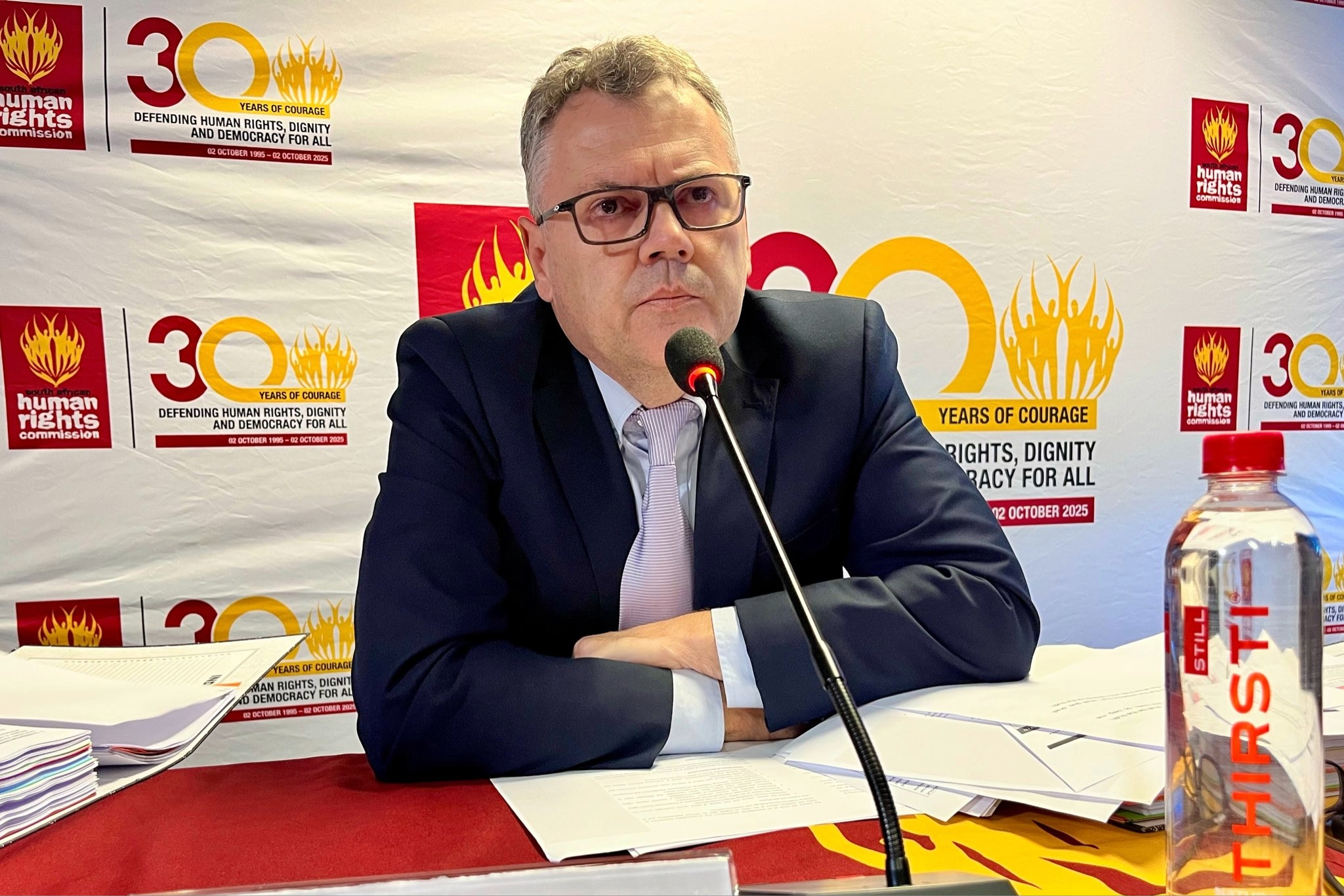
Commissioner Henk Boshoff pointed to water billing failures as “a symptom of an uncaring municipality” and said that some municipalities were showing “zero respect for authority” by failing to implement court orders compelling them to supply water.
Boshoff, who was joined on the panel by Mateenah Hunter-Parsonage and Acting Gauteng Provincial Manager at the SAHRC, Khululiwe Sithole, promised that the commission’s report would lead to action and “is not going to gather dust”.
He said that while democratic South Africa has made progress in expanding access to water, there was still deep inequality and many residents struggled daily to access services.
Boshoff expressed concern over the growing reliance on private water tankers, describing the system as “nonsense” and arguing that municipal collapse had turned emergency water supply into an exploitative business. He noted that the City of Johannesburg spent R165-million on water tankers during the 2023/24 financial year.
Andries Sekgetho, from the Office of the Auditor-General, presented a forensic overview of Gauteng’s deteriorating water systems. He told the panel that most municipalities were moving in the wrong direction.
Metros are losing more than 30% of their water through leaks and illegal connections, while losses in Rand West and Emfuleni have reached 60%, said Sekgetho.
Most municipalities are under budgeting for maintenance and capital expenditure, resulting in reactive repairs instead of long-term infrastructure planning.
Both WaterCAN executive director Dr Ferrial Adam and Amandla.mobi Organising Lead & Fellowship Programme Coordinator Zintle Tyuku explained how the water crisis had led to a reliance on water tankers, particularly in informal settlements and townships, leading to unequal access.
During today’s proceedings, the Gauteng Provincial Government said it is committed to restoring stable water and sanitation services in the struggling Emfuleni Local Municipality.
Central to the municipality’s financial strain is a staggering rate of water losses.
“Non-revenue water losses are currently estimated at approximately 70%,” said Gauteng Provincial Government spokesperson Elijah Mhlanga, conveying Emfuleni Municipal Manager April Ntuli’s submission to the commission.”
According to Mhlanga, the losses have placed the municipality under severe financial pressure, forcing it to divert rates and tax revenue toward water-related obligations rather than broader service delivery.
To provide emergency relief to the hardest-hit communities, the municipality has been spending heavily on water tankers.
“Emfuleni has spent approximately R79 million over the past five years on water tankering interventions aimed at providing relief to 33 informal settlements that currently lack adequate infrastructure,” Mhlanga said.
A tense exchange unfolded during proceedings when Ntuli suggested that informal settlements were partly to blame for the municipality’s water challenges.
Ntuli defended the municipality’s position, arguing that some settlements needed to be formalised before infrastructure could be legally installed.
“The plan is to formalise the areas first before we can put in formal infrastructure services,” Ntuli told the inquiry.
But Sithole pushed back, saying the commission could not simply accept vague assurances without evidence of progress.
“I can’t go back to those people and say the municipality says there are plans to formalise the settlement, and I don’t know how far those plans are,” she said.
Under Section 63 of the Water Services Act, national government assumed control of Emfuleni’s water and sanitation functions.
The SAHRC inquiry continues with more municipalities expected to account for ongoing water supply failures and deteriorating living conditions affecting communities across Gauteng.