
By Lehlohonolo Lehana.
Minister of Police Bheki Cele has tabled a budget of R102 billion for the South African Police Service (SAPS) during the 2023/2024 financial year.
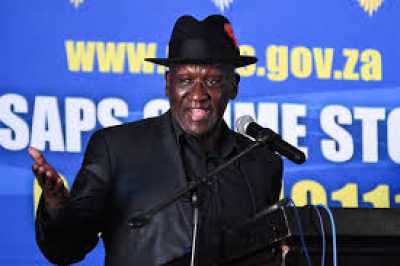
Cele addressed his department’s budget vote in Parliament on Tuesday.
He says R357 million will be allocated to the Independent Police Investigative Directorate, while R150 million will be set aside for the Department of the Civilian Secretariat for Police Service.
“Departmental spending over the medium term is in relation to the core programmes with visible policing consisting of more than 51% of the total Vote in 2023/24, “Cele told MPs in the National Assembly.
“The SAPS has been allocated more than R1.8 billion for the procurement of transport assets, such as vehicles, trucks, buses, depending on the availability in the market.”
Cele said an additional R100 million is allocated to provinces and the fight against gender-based violence and femicide response and the strengthening of FCS units.
“An action plan has been developed that aims to respond to crimes related to GBVF, vulnerable groups and sexual offences. This plan also focuses on the resourcing of FCS units, both at national and provincial level with a total of R1,3 billion for both proactive and reactive responses to these crimes.”
Additional funds will be allocated for the upgrading and building of new police stations.
“More than R1 billion is allocated for the construction and upgrading of police stations. In addition to that, R30 million is allocated for the procurement and conversion of vehicles to ensure that more mobile Community Service Centres are available to the community,” said Cele.
Cele also revealed that Saps is recruiting retired detectives “in good standing” to Crime Intelligence to increase its capacity to deal with crime.
He said the retired detectives would undergo a three-month training programme before formal recruitment.
Cele said Crime Intelligence and tackling cybercrime were among the key priority areas.
Among measures announced in the fight against crime, Cele said SAPS enrolled 10 000 police trainees for the 2023/24 financial year.
In high-crime regions, the procurement of drones, body-worn cameras, and Shot Spotters was cited as a priority. Saps was, according to the minister, training more officers to fly drones and recruiting pilot interns.
Ministry of Justice gazetted a five-year exemption from the Regulation of Interception of Communications and Provision of Communication-related Information Act (RICA), effectively giving police the right to use a range of what would otherwise be illegal surveillance devices.
The exemption means the South African Police Service (SAPS) can buy and use signal interception devices to access details about any cellular device in a given area — approval for which previous Justice ministers consistently withheld.
Among these are International Mobile Subscriber Identifier (IMSI) catchers, or “grabbers” — eavesdropping devices masquerading as regular cellular towers that harvest data from every mobile device connected to them.
Theoretically, the police will be able to map the data gathered in this way to a person’s identity, as RICA requires telecommunications service providers to collect identifying information when you sign up.
In addition to IMSI-catchers, the SAPS may use hardware keystroke recorders, night vision and thermal imaging equipment, wiretaps, eavesdropping microphones, miniature video and audio recorders, and location tracking devices.
Minister of Justice Ronald Lamola granted the extension in terms of Section 46(3) of RICA.
It essentially gives the Justice Minister the right to exempt Internet service providers, telecommunications service providers, and law enforcement agencies from specific prohibitions, including the manufacture, possession, and use of the equipment listed above.
However, it states this must be done in consultation with other relevant ministers.
In the gazette notification, Lamola said he had sign-off from the ministers of communications, defence, state security, and police in granting the exemption.