
By Lehlohonolo Lehana.
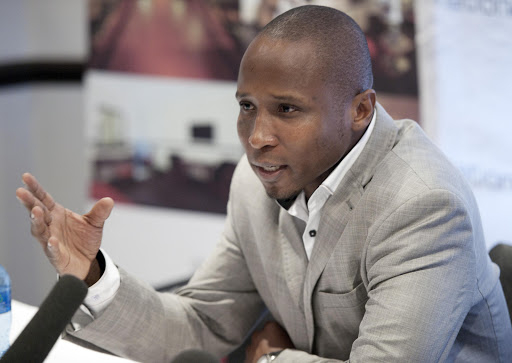
The parliament’s Standing Committee on Public Accounts (Scopa) has voted to lay a criminal charge against former Road Accident Fund (RAF) chief executive Collins Letsoalo.
The move was decided by a vote of eight in favour and three against to request the Secretary to Parliament to lay a criminal charge against Letsoalo for failing to appear before the committee.
Scopa summoned Letsoalo to answer questions about his management decisions on 25 and 26 November 2025, but on the first day, he did not appear. Instead, his legal team, Sithi & Thabela Attorneys, issued a formal demand to the Scopa chairperson (Songezo Zibi) to “cease and desist from [the] unlawful ‘oversight inquiry'”.
They argued that Scopa’s mandate was restricted to financial accountability, while operational and governance oversight of the RAF fell exclusively under the parliamentary transport committee. The attorneys argued that proceeding would violate the audi alteram partem rule (the right to be heard) and declared that Letsoalo had “not received any summons or formal notice”.
Zibi explicitly reminded Letsoalo’s attorneys that “in terms of section 17 of the Powers Act, it is a criminal offence for a person who has been duly summoned not to appear without sufficient cause”.
Letsoalo’s primary defence for non-appearance hinges on his assertion that Scopa lacked jurisdiction.
However, Parliament’s legal advisers believe that this is not a sufficient cause for evading a summons.
Their learned position is that Letsoalo was required to either appear and raise these objections on the record, or seek a court interdict to halt the inquiry, neither of which he did.
While there is room for debate on the legal case involving Letsoalo’s evasion of Scopa, evidence of his transgressions while in his role as RAF CEO stacks pretty high.
Among the instances of workplace bullying, fabrication of board resolutions and assorted governance failures that were heard by Scopa, it was under Letsoalo’s instruction that the RAF unilaterally changed its accounting standard from IFRS 4 to IPSAS 42 to artificially reduce its recorded liability from more than R300-billion to roughly R28-billion.
He also wasted public funds on a prolonged, hostile legal battle against the Auditor-General of South Africa (Agsa) to defend this policy change, spending more than R20-million in public funds on litigation.
Zibi acknowledged that the National Prosecuting Authority (NPA) may ultimately decide not to prosecute Letsoalo, but said “that is a cross we have to bear”.
He emphasised that this issue is not just about Scopa, arguing that the precedent it sets for the authority and standing of parliament is very important.
He said that, up to now, public servants have generally appeared before parliament voluntarily when invited, and in cases where individuals were initially unwilling to attend, they ultimately did so without the need for criminal charges.
Zibi added that there is always a risk that the NPA may decline to prosecute, but said Scopa’s responsibility ends with the complaint it lays with the police.