
By Kevin Rademeyer, Sports Journalist.
Photo Credit: ATP
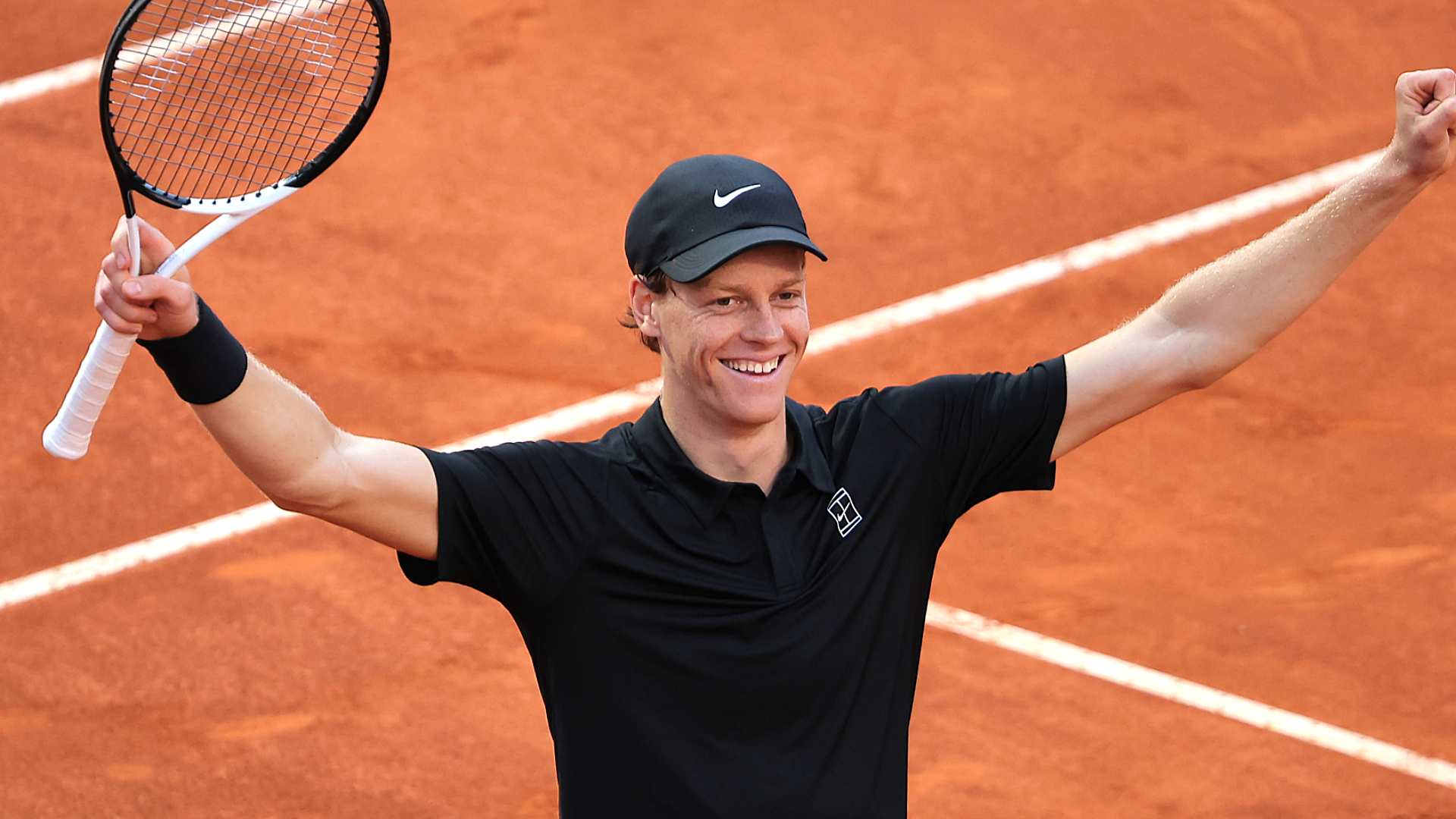
On a humid Sunday evening in Rome, beneath the weight of expectation and history, the 24 year old Italian stood on the red clay of the Foro Italico and completed one of the most difficult achievements in modern tennis. By defeating Casper Ruud 6-4, 6-4 in the Italian Open final, Sinner became only the second man ever to complete the Career Golden Masters, winning all nine ATP Masters 1000 tournaments. Only Novak Djokovic had done it before him.
The startling part is not merely that Sinner joined Djokovic. It is how violently fast he got there. Djokovic needed more than a decade and 30 Masters titles before finally sealing the collection in Cincinnati in 2018 at age 31. Sinner completed the full set less than three years after winning his first Masters title in Toronto in 2023. He did it with just 10 Masters crowns to his name. At 24, he reached a summit that even Roger Federer and Rafael Nadal never conquered. And he did not crawl there. He sprinted.
For six months, the ATP Tour has resembled a landscape rearranged around one player’s suffocating precision. Since late 2025, Sinner has won six consecutive Masters 1000 titles, an unprecedented run that includes Paris, Indian Wells, Miami, Monte Carlo, Madrid and now Rome. No man in history had ever won six straight at this level. Not Federer. Not Nadal. Not Djokovic.
By the end of Rome, his Masters winning streak stood at 34 matches. “I don’t play for records,” Sinner said earlier in the tournament after defeating Andrey Rublev to break Djokovic’s long standing Masters winning streak mark. “I just play for my own story.”
The line landed with unusual force because Sinner’s story increasingly feels detached from the normal rhythms of the men’s tour. Players are no longer trying merely to beat him. They are trying to interrupt momentum that seems to gather weight with every tournament.
That is what the great champions do. They distort reality around them. For years, tennis searched anxiously for the next era after Federer, Nadal and Djokovic. The sport feared decline. Instead, it may have stumbled into something else entirely: a new rivalry and a new ruler.
Carlos Alcaraz remains the one player capable of matching Sinner’s violence and imagination over five sets. But with the Spaniard sidelined through injury ahead of Roland Garros, the balance of power feels unmistakably tilted toward the Italian. Sinner enters Paris carrying something Nadal once carried into the same city: inevitability.
That comparison is dangerous territory. Nadal won Roland Garros 14 times and built the most intimidating clay court legacy in sporting history. Sinner has not yet won the French Open. Last year he lost an epic final there to Alcaraz. Yet the atmosphere surrounding him now echoes those years when Nadal walked through Paris with the field already psychologically diminished. Nobody wants to say Sinner is unbeatable. Few appear willing to say who can beat him.
Alexander Zverev has lost five straight matches to the Italian. Djokovic, now 39, admitted after last year’s French Open semi final defeat that Sinner gave him “no time to swing through the ball.” Daniil Medvedev pushed him briefly at Indian Wells and Rome, only to watch Sinner erase pressure with frightening calm. Against Ruud in Rome, Sinner recovered from an early break deficit without visible panic, then slowly dismantled one of the best clay court players in the world with drop shots, baseline depth and suffocating consistency.
There is something chilling about the efficiency of it all. The emotional outbursts are rare. The pulse barely changes. Sinner competes with the detached concentration of a man solving equations only he can see. Opponents often describe the same sensation afterward: constant pressure, no space, no relief. “He was just constantly on the line, trying to make me defend,” Djokovic said after their Roland Garros meeting last year.
The terrifying reality for the rest of the tour is that Sinner is still evolving. His clay court game, once viewed as slightly less complete than Alcaraz’s, has expanded dramatically over the past two months. In Monte Carlo, he outmanoeuvred Alcaraz on the Spaniard’s preferred surface. In Madrid and Rome, he added touch and variety to the brutal baseline hitting that already made him the cleanest ball striker in tennis.
During this six title Masters run, opponents managed to take only three sets from him. Three.
What makes Sinner’s rise especially compelling is that it has not been wrapped in theatricality. There is no cultivated mystique. No extravagant declarations. He speaks softly, almost reluctantly, about greatness. But his tennis speaks with startling clarity.
He has now won 16 of the sport’s biggest titles before turning 25. He owns four Grand Slam trophies already. He has swept the Sunshine Double without dropping a set. He became only the second man after Nadal to win Monte Carlo, Madrid and Rome in the same season. In Rome, he also ended a 50 year wait for an Italian men’s champion, becoming the first home winner since Adriano Panatta in 1976. The statistics are beginning to sound less like accomplishments and more like warnings.
There are still caveats, of course. Every era gets interrogated. Critics point to the absence of peak Federer, Nadal and Djokovic in Sinner’s path. They question the depth beneath him and Alcaraz. Tennis history has also shown how fragile greatness can be. Injuries arrive. Confidence disappears. Rivalries evolve. But that debate belongs to the future.
Right now, Sinner is doing something simpler and far more brutal. He is removing uncertainty from elite tennis. Tournament after tournament, surface after surface, he keeps reducing the sport’s chaos into something orderly and predictable.
The ATP Tour has spent two decades orbiting impossible standards established by Big Three. Sinner is not imitating them anymore. He is beginning to create standards of his own.
And as Roland Garros approaches, the question is no longer whether the Italian superstar belongs among the defining figures of modern tennis, but whether anyone left in Paris can truly stop him. Main draw play at the 2026 French Open begins on May 24, yet several of the sport’s biggest names, including Carlos Alcaraz, Jack Draper and Lorenzo Musetti, will not be there to test the World No. 1.
Novak Djokovic remains the looming threat, the last great champion still capable of summoning something extraordinary on the sport’s grandest stages. But over five sets on clay, against a player operating with this level of precision, confidence and ruthless control, even that challenge feels uncertain. Then again, this is Paris. Tennis history has taught us that certainty rarely survives the red clay of Roland Garros.