
By Lehlohonolo Lehana.
President Cyril Ramaphosa has announced pipelined projects that will cut across several sectors like energy and social services worth over R100 billion.
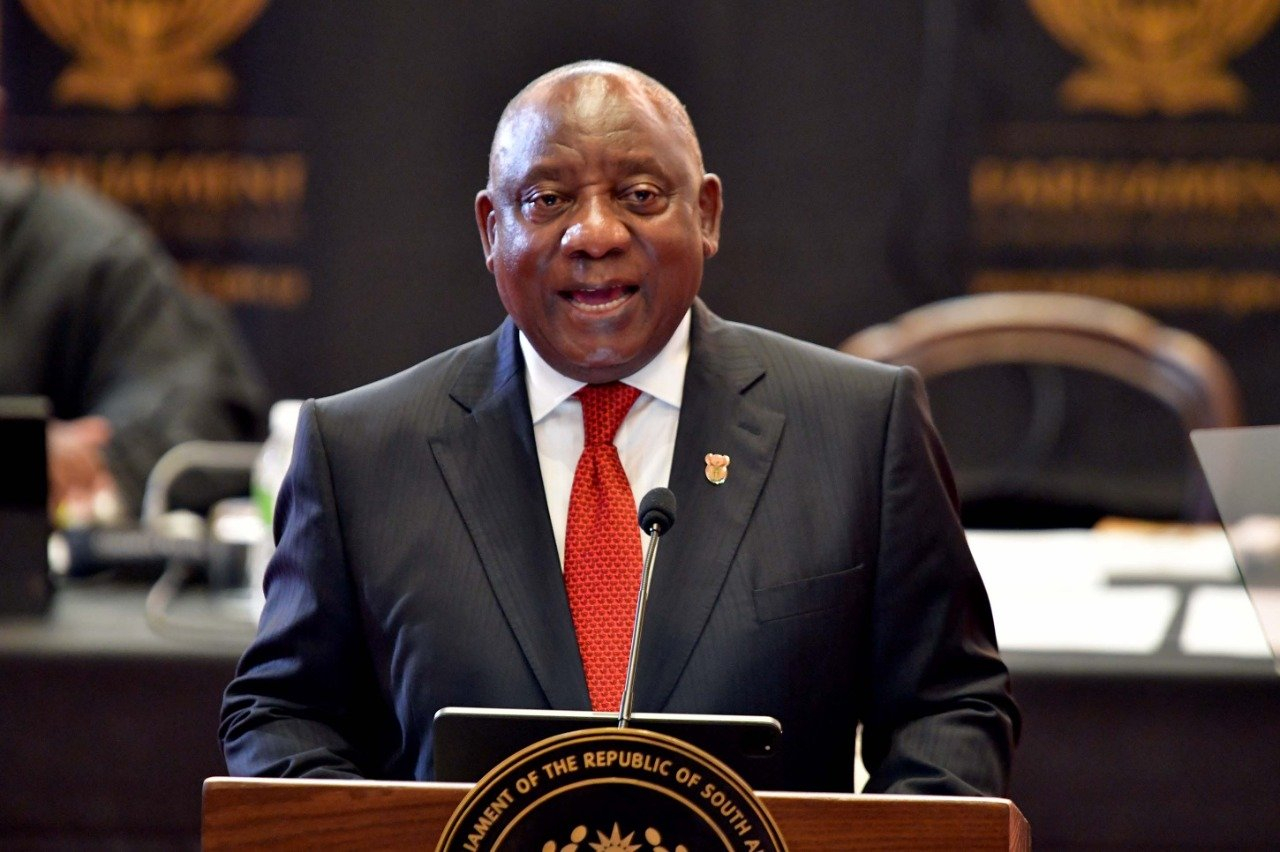
Delivering the State of the Nation Address at the Cape Town City Hall on Thursday evening, the President said the construction for some of the projects will resume this year.
“The infrastructure fund is at the centre of this effort with a R100 billion allocation from the fiscus.
“The Infrastructure Fund is now working with State entities to prepare pipelined projects with an investment value of approximately R96 billion in student accommodation, student housing, telecommunications, water and sanitation and transport,” he said.
The President said infrastructure is central to the country’s economic reconstruction and recovery plan.
Through innovative funding and improved technical capabilities, government has prioritised infrastructure projects to support economic growth and better livelihoods, especially in energy, roads and water management, the President said.
“Several catalytic projects to the value of R21 billion are expected to start construction this year.
“Of this, R2.6 billion is contributed by government and the balance is financed by the private sector and development finance institutions.
“Government will make an initial investment of R1.8 billion in bulk infrastructure, which will unlock private sector projects to the value of R133 billion.”
He said for millions of South Africans in rural areas, roads and bridges provide access to markets, to employment opportunities, to families and social services.
“Yet many children still have to brave overflowing rivers to reach schools and motorists have to battle impassable roads to reach the next town.
“One person was telling me that they now have to travel to drive on the side of the road because many roads are so bad.
“We are therefore upscaling the WeliSizwe Rural Bridges Programme to deliver 95 bridges a year from the current 14.
“Our South African National Defence Force is the implementing agent of the Welisizwe programme and has demonstrated the expertise of the SANDF engineers in bridge construction.”
Employment Stimulus programmes
The first two phases of the Presidential Employment Stimulus programmes supported over 850 000 work opportunities, President Cyril Ramaphosa revealed in his State of the Nation Address (SONA).
Reflecting on the programmes’ success at the Cape Town City Hall, the President revealed that more than 80% of participants were young people, with over 60% of them women.
The programmes, he said, would soon reach over one million South African direct beneficiaries.
“This includes over half a million young people appointed as education assistants, making it the largest youth employment programme ever undertaken in our history,” he said, as he delivered the State of the Nation Address (SONA).
The employment stimulus would also enable the Department of Home Affairs to recruit 10 000 unemployed young people for the digitisation of paper records, enhancing their skills and contributing to the modernisation of citizen services.
“The Social Employment Fund will create a further 50 000 work opportunities using the capability of organisations beyond government, in areas such as urban agriculture, early childhood development, public art and tackling gender-based violence,” he said.
In addition to expanding public employment, government will be providing support to young people to prepare them for work and link them to opportunities.
“To encourage hiring by smaller businesses, we will be increasing the value and expanding the criteria for participation in the Employment Tax Incentive.
“For several years, this has been an effective way to encourage companies to hire new work seekers. The changes to the incentive will make it easier for small businesses in particular to hire young people,” he said.
He added that Finance Minister Enoch Godongwana would announce the details of these changes in the Budget Speech on 23 February.
Corruption
On corruption, State Capture and crime, Ramaphosa said the State Capture Report has proven that State Capture had indeed happened and that SOEs like Denel, Transnet and Eskom were impacted. He reiterated that by the end of June he’d report back to Parliament on what he intended to do.
Already work was underway to look at better protection of whistleblowers – “We are doing a review… to strengthen whistleblower protection…” – and discussions are happening on, for example, special court rolls for State Capture cases.
He said this meant that public institutions and state-owned enterprises had been infiltrated by “a criminal network intent on looting public money for private gain”.
He said: “The reports have detailed the devastating effects of this criminal activity on SAA, Transnet, Denel, South African Revenue Service and Government Communications. State capture had a direct and very concrete negative impact on the lives of all South Africans, but especially the poorest and most vulnerable members of our society.
“It has weakened the ability of the state to deliver services and to meet the expectations and constitutional rights of people.”
He said government should now do everything in its power to ensure that state capture “never happens again”.
“My responsibility is to ensure that the Commission report is properly and carefully considered and then acted upon. By no later than 30 June, I will present a plan of action in response to the Commission’s recommendations.
I have every confidence that the National Prosecuting Authority will carry out the further investigations that the Commission has recommended, and that it will bring the members of the criminal network that infiltrated government and captured the state swiftly to justice,” he said.
The Investigating Directorate in the NPA, was now poised to deliver on its crucial mandate, and a dedicated team has been established to pursue these cases.
Following the resignation of Adv Hermione Cronje as ID head, he said her replacement would soon be appointed.
He said the amendment to the State Capture Commission regulations in June 2020, empowered the sharing of information between the Commission and law enforcement agencies.
Turning his attention to COVID-19 related malfeasance, he said companies and individuals that had conspired with public officials to defraud the government of billions had been acted on as soon as evidence emerged.
“We withdrew certain emergency procurement regulations, set up a fusion centre that brought together various law enforcement agencies, published the details of all COVID-related contracts online and instituted the most extensive investigation that the Special Investigating Unit has undertaken since its formation,” he said.
In December, the SIU submitted its final report on its investigation into COVID-related contracts.
As a result, 45 matters, with a combined value of R2.1 billion, have been enrolled with the Special Tribunal. The SIU has referred 224 government officials for disciplinary action and referred 386 cases for possible prosecution to the NPA.
It all unravelled somewhat when Ramaphosa claimed Cabinet collective responsibility for the damning findings of security cluster ministerial failures, alongside governing ANC factional battles, for the July 2021 public violence, as the recently published presidential panel found.
“The expert panel said that if the violence has exposed anything, it was the poverty and inequality that is the root cause of the desperation of the people of South Africa.
“We are taking steps to safeguard our democracy, protect our economic infrastructure and build safer communities for all.
“The report concludes that government’s initial handling of the July 2021 events was inept, police operational planning was poor, there was poor coordination between the State security and intelligence services, and police are not always embedded in the communities they serve,” the President said.
The expert panel found that Cabinet must take overall responsibility for the events of July 2021.
The panel was mandated to examine all aspects of the security response to the unrest, and to make recommendations on how to strengthen security capabilities.
Ramaphosa said as part of implementing the panel’s recommendations, government will begin to immediately fill critical vacancies and address positions affected by suspensions in the State Security Agency and Crime Intelligence.
Energy
Ramaphosa announced the beginning of the end of Eskom’s monopoly on selling electricity, by publishing legislative amendments that will enable the trading and reselling of electricity among private players.
Amendments to the Electricity Regulation Act were gazetted by Minister of Mineral Resources and Energy Gwede Mantashe on Thursday. The regulations are open for 30 days of public comment.
The amendments also make provision for the licensing of an independent operator of the national electricity grid – the Transmission System Operator – which has been legally established by Eskom, in the first of several stages of splitting the company.
Ramaphosa lamented the current “electricity crisis” that has befallen the country as a result of Eskom’s challenges and an energy shortfall of at least 4000MW needed to maintain a stable grid.
He assured South Africans that plans are already in motion to mitigate the impact of these challenges with several new energy projects expected to serve the power grid in the next few years.
“During the past year, we have taken firm steps to bring additional generation capacity online as quickly as possible to close the shortfall. As a result, several new energy generation projects will be coming online over the next few years,” he said.
These projects include:
- Over 500 MW from the remaining projects in Bid Window 4 of the renewable energy programme, which are at advanced stages of construction,
- 2600 MW from Bid Window 5 of the renewable energy programme, for which the preferred bidders were announced last year,
- up to 800 MW from those risk mitigation power projects that are ready to proceed,
- 2600 MW from Bid Window 6 of the renewal energy programme, which will soon be opened,
- 3000 MW of gas power and 500 MW of battery storage, for which requests for proposals will be released later this year,
- an estimated 4000 MW from embedded generation projects in the mining sector and
- approximately 1400 MW currently in the process of being secured by various municipalities.
He reflected that Eskom itself is also working to ensure that power stations are continuously maintained.
“Due to our aging power stations, poor maintenance, policy miss-steps and the ruinous effects of state capture, our country has a shortfall of around 4000 MW of electricity.
“The utility has continued with its intensive maintenance programme, to reverse many years of neglected maintenance and underperformance of existing plants,” he said.
Cutting red tape
Work is underway to cut red tape in an effort to enhance the business environment and create much-needed jobs in South Africa.
Delivering the State of the Nation Address (SONA) on Thursday night, President Cyril Ramaphosa said there are too many regulations in the country that are unduly complicated, costly and difficult to comply with.
“We are therefore working to improve the business environment for companies of all sizes through a dedicated capacity in the Presidency to reduce red tape. If we are to make progress in cutting unnecessary bureaucratic delays for businesses, we need dedicated capacity with the means to make changes.”
He announced the appointment of Sipho Nkosi as head of a team in the Presidency to cut red tape across government. Nkosi, who has extensive experience in business, is currently the chairperson of the Small Business Institute.
“The red tape team will identify priority reforms for the year ahead, including mechanisms to ensure government departments pay suppliers within the required 30 days.
“The team will also work with other departments and agencies to unblock specific obstacles to investment and business growth. It will support current initiatives to simplify processes relating to property registration, cross-border trade and construction permits,” said the President who delivered the SONA to a joint sitting of the National Assembly and National Council of Provinces.
The President also announced the review of the Business Act, alongside a broader review of legislation that affects SMMEs – to reduce the regulatory burden on informal businesses.
“There are too many regulations in this country that are unduly complicated, costly and difficult to comply with. This prevents companies from growing and creating jobs,”he said.