
By Lehlohonolo Lehana.
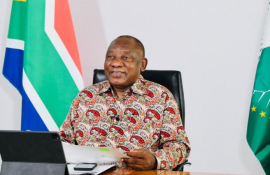
President Cyril Ramaphosa is set to deliver the 2022 State of the Nation Address (SONA) in an environment that continues to be challenging for the country.
The president’s advisors and policymakers need to understand that many South Africans remain vulnerable to the pandemic’s adverse economic effects.
One of the critical reflections from 2021 is that the economic outlook remains uncertain, especially in the face of a virus that is evolving all the time. Although the effects of the quick rise in Covid cases related to the Omicron variant on the overall economy were muted, some sectors continued to suffer setbacks due to less consumer spending. Furthermore, since it is not known whether the following variant will be virulent and deadlier than the previous strain, the implications on the economy remain uncertain.
Thus, appropriate policies are urgently needed. It’s crucial to make correct policy decisions and ensure their implementation is swift and unobstructed. Additionally, decisions and actions on policies (be they economic, developmental or monetary) must recognise that the presence of Covid means the global economy is evolving in unexpected ways.
The SONA is traditionally delivered by the President before a joint sitting of the National Assembly (NA) and the National Council of Provinces (NCOP). The SONA sets out government’s key policy objectives and deliverables for the year ahead. However, the 2022 SONA – which also reflects on successes, challenges as well as outlines interventions needed– will take place for the first time, at the Cape Town City Hall, this Thursday.
A devastating fire that destroyed Parliament’s buildings, including the NA and sections of the Old Assembly Chamber, necessitated the change of venue.
While the move from the historic parliamentary precinct is not ideal, the City Hall is also a venue of historical significance having served as the place where Nelson Mandela addressed the nation after his release from prison on 11 February 1990.
Mandela, would later become democratic South Africa’s first President.
South Africans are overwhelmed by the knowledge that government and the state failed the nation miserably in so many levels. The nation has had enough of Ramaphosa’s familiar “feel-good” addresses; instead, they demand answers and sustainable plans for the year and the future. They have had enough of job summits and costly initiatives in the hope of attracting investors with no concrete results.
The President will deliver the address at a time when the country continues to grapple with the COVID-19 pandemic, unemployment and corruption, amongst others.
Fighting corruption
Recently, the Presidency received the second part of the report of the Judicial Commission of Inquiry into Allegations of State Capture, Corruption and Fraud in the Public Sector. Acting Chief Justice and Commission Chairperson, Judge Raymond Zondo, presented the first part of the report to the President in January.
The report is a key cog in the fight against corruption and is a step forward in the work needed to rid the country of corruption.
It is expected that the Presidency will receive the third and final part of the report by 28 February 2022.
The fight against the scourge also received a boost through a Special Tribunal order compelling two Free State departments to invoke the Public Finance Management Act (PFMA) in order to recoup financial losses, suffered from officials implicated in the awarding of unlawful personal protective equipment (PPE) contracts.
The move is a deterrent for would-be errant public servants. The order invalidated PPE procurement contracts of at least 36 companies contracted to the Free State Health and Treasury departments.
Vaccines
In 2021, the COVID-19 pandemic continued to cast a tall shadow across the world, including South Africa. However, government procured the much-needed lifesaving jabs for all within the borders of the country with the first consignment of vaccines having arrived on 16 February 2021.
The arrival of the jabs strengthened the fight against the pandemic and to date; more than over 30 million inoculations have been administered.
Meanwhile, South Africa recently became the home of a vaccine manufacturing campus in the Western Cape. Ramaphosa alongside Dr Patrick Soon-Shiong, founder of the multinational conglomerate NantWorks, LLC, launched the campus last month.
The two also launched the Coalition to Accelerate Africa’s Access to Advanced Healthcare (The AAAH Coalition). The launch follows Dr Soon-Shiong’s announcement in September of an ambitious initiative to build capacity for advanced health care in Africa.
NantSA, a division of NantWorks, and The AAAH Coalition aim to accelerate domestic production of pharmaceuticals, biologics and vaccines that will reach patients across the African continent.
Moving forward, the government, as led by Ramaphosa, must recognise that it can no longer oscillate between imposing rigid and strict restrictions in response to the severity of the virus.
Energy
In addressing South Africa’s energy challenges, government announced that 25 preferred bidders are expected to add at least 2583MW of energy to the electricity grid through the Renewable Energy Independent Power Producers Procurement (REIPPP) Programme.
The projects are expected to inject at least R50 billion into the economy and create about 13 900 jobs during and after construction.
Meanwhile, South Africa was offered R131 billion by the US, UK, Germany and the European Union (EU), to help it transition from coal to clean energy. However, the offer made at the 26th session of the Conference of the Parties (COP26) to the United Nations Framework Convention on Climate Change (UNFCCC), does not mean the country must accept any unfavourable terms.
The support will take the form of various financial instruments, ranging from grants to concessional loans at a lower interest rate.
Government also took the decision to amend Schedule 2 of the Electricity Regulation Act, 2006 (Act No. 4 of 2006), to exempt generation facilities up to 100MW from the licensing requirement. The move aimed to resolve the country’s energy supply shortfall and reduce the risk of load shedding.
Social assistance
Given the hardships brought on by the pandemic, President Ramaphosa in July 2021 announced the reinstatement of the Special COVID-19 Social Relief of Distress (SRD) Grant, which is set to run until the end of March 2022. Set at R350, it benefits unemployed citizens, most of whom lost their jobs when COVID-19 struck in 2020.
Initially, the grant was approved from May 2020 – April 2021. Government has allocated R26.7 billion for the latest iteration of the grant.
During the first iteration of the grant, almost 10 million applications were received with just over 6 million approved for payment to the tune of R24 billion and an additional R15 billion paid as top-ups for a period of 6 months to all grant types.
Economic growth and employment
While it is no secret that the country faces an uphill battle against unemployment, government initiatives like the Economic Reconstruction and Recovery Plan (ERRP) have gone some way in tackling this challenge.
In October, government announced that R11 billion in new funding has been allocated for the next phase of the Presidential Employment Stimulus (PES) in the 2021/22 financial year. Phase 2 of the PES was launched in November.
The President launched the PES in October 2020 in response to the impact of the Coronavirus on employment.
As part of the ERRP, the stimulus aims to create new employment, provide livelihood support and protect existing jobs in vulnerable sectors.
Phase 2 of the employment stimulus supports the continuation of some programmes from Phase 1, as well as a range of new programmes. Among these is the recruitment of young people as school assistants.
In addition, the country’s R800 million Social Employment Fund is expected to create at least 50 000 jobs, which is critical for uplifting communities and driving development. The Fund is the second phase of the PES.
Through this fund, non-governmental, community-based and civil society organisations, as well as social enterprises will be supported to create jobs while undertaking work that serves the common good and is not for profit.
Organisations that will be supported include those working in “food security, healthcare, education support, greening the environment, better public spaces, community safety and action against gender-based violence”.
Applications for organisations to become implementing agents of the fund were opened with organisations – or implementing agents – expected to create no less than 1 000 jobs within the first quarter of receiving the funding and to spend no less than 80% of the funds received on wages.
Tackling gender-based violence
Government is also addressing Gender-based violence (GBV) with legislation aimed at strengthening efforts to end gender-based violence, with a victim-centred focus on combating such criminal acts, and to make it more difficult for perpetrators to escape justice.
The President has approved the amendment of the Criminal Law (Sexual Offences and Related Matters) Amendment Act Amendment Bill; the Criminal and Related Matters Amendment Bill, and the Domestic Violence Amendment Bill.
The legislation is a deliverable from the National Strategic Plan on Gender-based Violence and Femicide, which was called for at the November 2018 Presidential Summit against Gender-Based Violence and Femicide (GBVF).
While the country faces a myriad of challenges, the SONA provides a roadmap in tackling these and taking the country to greater heights.
Of course, the economic outlook remains uncertain. However, South Africa’s policy response should not be. Instead, it must be nimble and adaptive to a range of plausible outcomes.
Road Closures
On the day of the SONA, Roeland Street between Buitenkant and Brandweer Streets as well as Buitenkant Street between Roeland and Darling Streets will be closed from 17:45 to 19:30.
There will also be temporary closures Thursday on the following routes:
- Klipper Road, Newlands: from Main Road (M4) to Newlands Avenue
- Princess Anne Avenue, Newlands: from Newlands Avenue to Union Avenue
- Newlands Avenue, Newlands: from Dean Street to Princess Anne Avenue
- Dean Street, Newlands, westbound: from Main Road (M4) to Newlands Avenue
- M3, Union Avenue, Rhodes Drive, Philip Kgosana Drive (De Waal Drive), Roeland Street, City-bound carriageway: from Newlands Avenue to city centre
- Woolsack Drive, Rondebosch, westbound: between Main Road (M4) and Rhodes Drive (M3)
- Anzio Road, Observatory: from Main Road (M4) to Philip Kgosana Drive (De Waal Drive) (M3)
- N2, Settlers Way City-bound carriageway: from Main Road (M4) to city centre
- Buitenkant Street: from Glynn to Strand Streets
- Darling Street, Sir Lowry Road: from Buitenkant to Tennant Streets (this will include a closure of Hanover Street and Tennant Street)
The closures will be from 17:45 to 19:00.
Road closures will also be imposed from 04:00 to 23:45 on Commercial Street between Plein and Buitenkant Streets – becoming bi-directional as well as Plein Street between Roeland and Barrack Streets
There will also be contingency closures on Thursday in case of an emergency from 08:00 to 23:45, that will apply to roads contained in parking restrictions.
Parking restrictions along the following areas will apply as of midnight, 9 February to 10 February:
- Parade, Cape Town
- Roeland Street: outgoing lane between Plein Street and 37 Plein Street (Bld. Next to Nieuwmeester parking)
- Buitenkant Street from Glynn to Darling Streets (all 3 days 16:00 – 20:00 and on 9 Feb. from 23:59 to completion)
- Plein Street: between Roeland and Darling Streets
- Spin Street: between Parliament and Plein Streets
- Commercial Street: between Buitenkant and Plein Streets
- Parade Street: between Caledon and Darling Streets
- Corporation Street: between Darling and Caledon Streets
- Caledon Street: between Corporation and Parade Streets
This includes 14 to 16 February.
Road closures included in parking restrictions:
- Darling Street: between Plein and Buitenkant Streets
- Longmarket Street: between Plein and Buitenkant Streets
- Corporation Street: between Caledon and Darling Streets
- Parade Street: between Caledon and Darling Streets
- Plein Street: between Roeland and Barrack Streets
- Commercial Street: between Nieuwmeester Parking and Plein Street.
The SONA debate and replies will take place from 14 to 16 February 2022.