
By Lehlohonolo Lehana.
South Africa and Germany signed an agreement to create a task force that will help Africa’s most industrialized nation create projects that are able to meet international demand for green hydrogen.
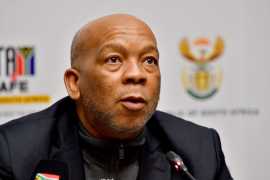
The joint declaration of intent signed virtually on Tuesday by Electricity Minister Kgosientsho Ramokgopa and Robert Habeck, German vice chancellor and minister of economic affairs and climate action, will assist to drive the commercial viability of green hydrogen projects and infrastructure in both nations, the Ministry of Electricity said in a statement.
The green hydrogen economy has been billed as a new frontier for clean energy as it emits low carbon emissions with a global potential of about $300 billion in exports.
The country holds approximately 80% of the world’s platinum group metals (PGMs) and 40% of the world’s platinum and palladium supplies which are key components in the production of hydrogen – making South Africa potentially a key player in the future of the market.
The cooperation between the two countries aims to link South African developers in the Green Hydrogen market with off-takers in Germany looking at additional funding for projects and cooperation in creating projects in South Africa that are commercially viable that can meet international green hydrogen demand and supply.
Business-to-business opportunities between South African companies and their German counterparts will also be created through the task force.
The key outputs of the declaration are the creation of the task force which will look at how the green hydrogen market will be created, how it will develop and grow.
The government has already drawn up plans for a Hydrogen Valley which is expected to run from Limpopo, through Johannesburg to Durban.
The valley will establish opportunities for projects which will kick-start hydrogen initiatives in hubs with the aim of boosting economic growth and job creation
European countries are turning to Africa to secure future supplies of the fuel, investing heavily in green hydrogen projects in countries from Namibia to Morocco and Egypt to South Africa.
Last week, the Netherlands and Denmark launched a $1 billion green hydrogen fund in South Africa. A similar fund was launched in Namibia last year.
South Africa, the continent’s most advanced economy and the world’s 14th biggest emitter of greenhouse gases, has also made green hydrogen an important pillar of its own decarbonisation efforts.
President Cyril Ramaphosa has said the country would need up to 319 billion rand ($17.28 billion) of investment to kick-start the industry.
So far it has received $700 billion dollars under $8.5 billion pledged to it by a group of rich countries including France, Germany, Britain, the United States and the European Union. Tuesday’s agreement did not specify any investment target by either country.