
By Lehlohonolo Lehana.
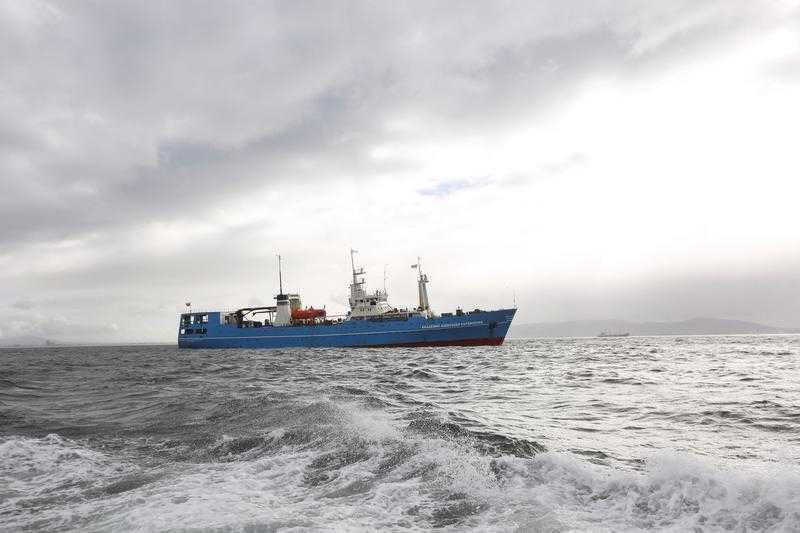
President Cyril Ramaphosa says his government is probing allegations that South Africa had loaded weapons onto a Russian ship that docked in the country.
During the president’s question-and-answer session in the National Assembly on Thursday afternoon, DA leader John Steenhuisen asked Ramaphosa to confirm the reports about the arms supply. Steenhuisen said it would be inconceivable for the president not to have been briefed on the matter. Ramaphosa said the allegations were fresh and the matter was still being looked into.
He added, let’s allow that process to reach fruition. In time, we will be able to speak about it. This matter is best left where it is. It is being looked into.
South Africa has always maintained it is impartial in the conflict, which started after Russia sent its troops into Ukraine.
In March, Pretoria abstained from voting on a United Nations resolution condemning Russia’s invasion of Ukraine and calling for Moscow to withdraw its forces immediately.
South Africa, along with 34 other countries, also abstained from a vote at the UN condemning Russia’s annexation of Ukrainian territories in October.
US ambassador to South Africa Reuben E Brigety II told media in Pretoria on Thursday Washington had established the vessel was loaded with weapons while docked at the naval base in December.
There was controversy when the vessel docked, with Pretoria silent on its activities while in South African waters.
Brigety said this was one of the issues of “concern” raised by US senior officials with a high-level South African delegation which visited the US recently.
“The docking of the Russian cargo ship, Lady R, in Simon’s Town between December 6 and 8 2022, which we are confident loaded weapons and ammunition in Simon’s Town as it made its way back to Russia,” Brigety said.
Brigety said it would be “a mistake to underestimate the concerns in Washington”.
Ramaphosa sent a delegation to Washington to smooth the way for Russian President Vladimir Putin’s planned visit to South Africa in August, hoping to avoid a diplomatic fallout that could put trade ties worth R400bn at risk.
Pretoria and Moscow have long historical ties dating back to the times of white minority rule in South Africa.
The ruling African National Congress (ANC) has longstanding relations with Moscow forged during the liberation struggle against apartheid. Many of the ANC leaders were educated or received military training in the Soviet Union.
The Soviet Union backed the liberation movement with arms and money. This was in stark contrast to the West, where the United States labelled the ANC a “terrorist organisation”. Washington considered the liberation hero Nelson Mandela a “terrorist” until 2008.
South Africa is also a member of the Non-Alligned Movement. The 120-country movement, formed during the Cold War, is not formally aligned with or against any major power bloc or superpower.
Since gaining independence in 1994, a core pillar of South Africa’s foreign policy when it comes to conflict resolution has been to call for dialogue. Pretoria has backed peace talks in several conflicts in Africa and most recently hosted peace talks between Ethiopia’s government and rebels from its Tigray region.