
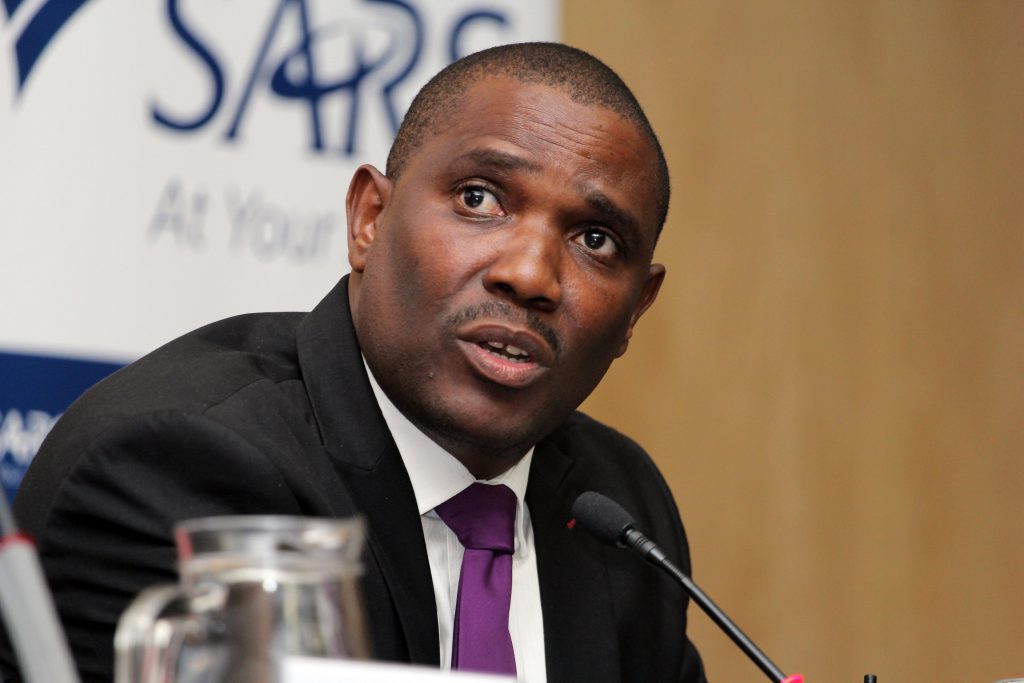
By Lehlohonolo Lehana.
South African Revenue Service (SARS) showed the country recorded a trade surplus of 17.75 billion rand in June, far exceeding analysts’ forecast of a 3.45 billion rand surplus and signalling resilience in the external sector.
This surplus was attributable to exports of R193.6 billion and imports of R175.8 billion, inclusive of trade with Botswana, Eswatini, Lesotho and Namibia (BELN).
The year-to-date (01 January to 30 June 2026) preliminary trade balance surplus of R109.1 billion was higher than the R81.5 billion trade balance surplus for the comparable period in 2025.
On a month-on-month basis, exports increased by R8 billion or 4.3%. This was driven the value of vehicle exports, which grew by 15.8% to R23.929 billion. Vegetable exports, which include maize, rose by 23.0% to R14.984 billion.
Imports fell by R5.3 billion or 2.9% to R175.8 billion. This was largely due to a drop in mineral products, which includes crude oil. There was a 15.2% decline in the value of mineral product imports to R44.0 billion.
Asia was the highest export growth region in the first six months of 2026 with a 20.3% year-on-year gain. This was followed by Europe with a 10.2% year-on-year rise.
Despite the implementation of the African Free Trade Agreement in January 2021, exports to the rest of Africa fell by 5.8% in the first four months. In 2025 exports to this region decreased by 2.1%.
The top 5 countries South Africa exported to in June 2026 were: China (12.5% of total exports), the US (7.7%), Germany (7.4%), Japan (5.6%) and the UK (4.0%). It shows that despite the strained diplomatic relations with the US, it remains South Africa’s second largest export destination.
This was not much different from February when the order was China (10.8%), Germany (9.2%), the US (7.5%), the UK (5.5%) and Japan (4.9%). In January the order was China (13.6%), Germany (7.9%), the US (6.7%), the UK (5.9%) and the Netherlands (5.8%).
The top 5 countries South Africa imported from in June 2026 were: China (22.7% of total imports), India (12.2%), Nigeria (6.8%), the US (6.3%) and Germany (5.7%).