
By Lehlohonolo Lehana.
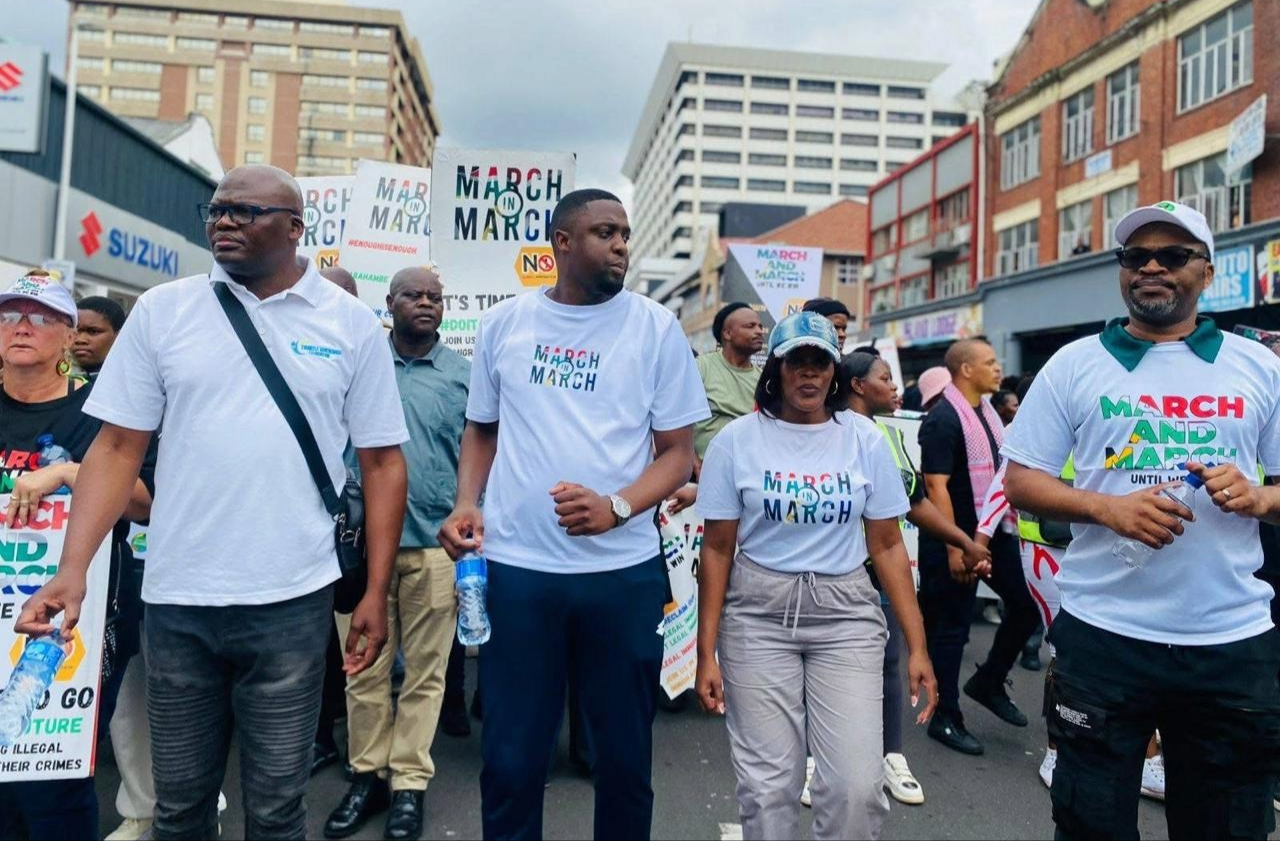
The presidency has strongly rejected claims that South Africa is becoming isolated from the rest of the African continent amidst the anti-illegal immigration protests.
It comes after last week reports that President Cyril Ramaphosa had sought a state visit to Ghana and had been rebuffed over South Africa’s handling of migration.
Addressing a media briefing at the Union Buildings on Wednesday, Presidential Spokesperson Vincent Magwenya said the campaign sought to paint South Africa as a “pariah state”, despite government’s repeated condemnation of vigilantism against foreign nationals and its commitment to enforcing immigration laws within the Constitution.
“Over the last two months, we have observed a sustained campaign that seeks to isolate South Africa from the rest of the African continent, under the guise of protesting against the recent wave of anti-illegal migration protests that we have recently experienced here in South Africa.”
“This campaign has sought to create an impression that South Africa is now a pariah state, which must be referred to international courts,” he said.
Magwenya said the campaign ignored numerous official government statements condemning attacks on foreign nationals and affirming that the enforcement of immigration laws remains the responsibility of the state.
He also raised concern over what he described as the deliberate spread of false information by a diplomatic representative.
“More concerning has been the peddling of false information by a diplomatic representative of a country that has become central to this campaign. Even ordinary diplomatic exchanges over meetings have been deliberately misrepresented to create an impression that South Africa is being isolated,” he said.
Magwenya stressed that the Presidency rejects attempts to misrepresent the country’s international standing.
“As the Presidency, we firmly reject and caution against the peddling of false information against South Africa, and we further assert that any campaign that seeks to misrepresent what South Africa is and represents will be rejected with the utmost contempt that it deserves,” Magwenya said.
He said recent diplomatic engagements demonstrate that South Africa continues to enjoy strong relations both on the continent and internationally.
Magwenya pointed to Ramaphosa’s recent working visit to France, where he met French President Emmanuel Macron and co-chaired the Leaders Group meeting of the High-Level Steering Committee on Education alongside the Director-General of the United Nations Educational, Scientific and Cultural Organization (UNESCO) before attending the Transforming Education Summit +4.
He said the engagements reaffirmed France as a strategic partner and demonstrated South Africa’s active role in shaping global education priorities.
Magwenya also highlighted Ramaphosa’s engagements with African leaders through bilateral meetings, telephone calls, Bi-National Commissions and the Southern African Development Community (SADC) summits, including discussions with the Presidents of Botswana, Kenya, Malawi, Mozambique and Zimbabwe.
He further cited the President’s recent working visit to the Democratic Republic of Congo, where South Africa pledged financial support to assist the country’s response to the Ebola outbreak and continued working with the Africa Centres for Disease Control and Prevention (Africa CDC).
“This is a South Africa that is engaged with the African continent and that can never be isolated,” he said.
Magwenya said government remains committed to addressing illegal migration through constitutional processes and collaboration with neighbouring countries, while pushing back against what he described as a campaign to portray South Africa as isolated on the continent.