
By Monique Vanek.
South Africa plans to list its first credit-guarantee vehicle that’s being established to unlock private investment in infrastructure.
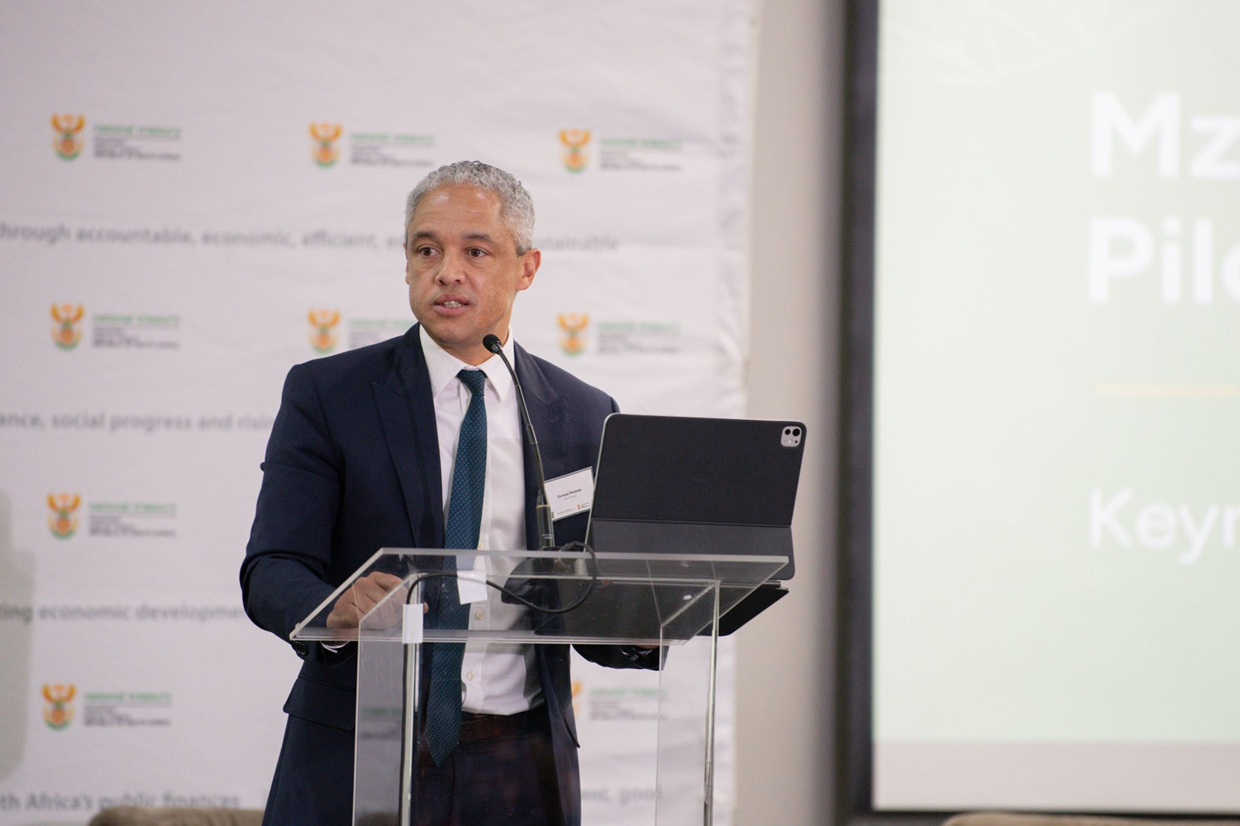
The National Treasury, with technical assistance from the World Bank, is making good progress on setting up the vehicle, Director-General Duncan Pieterse said in speech at an Absa Group consumer conference on Tuesday.
“We have appointed an interim board for the CGV and are currently finalising the requirements to license and list the entity,” he said.
This entity will mobilise private finance at scale for mega-projects such as the expansion of South Africa’s electricity transmission network, he said.
The vehicle, which will serve as a form of private insurance, will initially get as much as $100 million – of a total $500 million capital base – from the Treasury via a loan from the World Bank and the rest will come from development financial institutions, the Washington-based lender said in a document. Over time, further investment could bring the capitalisation of the CGV to $2.5 billion, it said.
The plans form part of President Cyril Ramaphosa’s drive to lift growth by overhauling ports, rail, power and water infrastructure, with the aim of raising the economy’s expansion rate to 3.5% by 2030 from less than 1% a year over the past decade. That effort is underpinned by a shift toward investment in South Africa’s state budget.
Expenditure on new infrastructure, maintenance and refurbishments is now the fastest-growing component of the budget, rising by almost 10% a year over the medium term.
The government has also in recent months attracted new forms of funding for public investment. In December, it raised 11.8 billion rand in the debut issuance of a new infrastructure bond and R4.4 billion in July.
Both infrastructure bonds cleared close to market, which is “remarkable for new and relatively illiquid instruments,” Pieterse said. “These outcomes demonstrate strong interest from institutional investors to support government’s public investment ambitions.”
The next infrastructure bond auction will take place on October 21, he said.
Pieterse also noted that South Africa’s fiscal strategy remains on track despite headwinds from the Iran war and other global challenges.
“Not only did we end the previous fiscal year on a positive note, but the current year has continued to exceed our expectations,” he said. “We have just released the monthly numbers for June, which is a big month for corporate income tax collections, and our revenue collections are running ahead of our budget estimates for the year to date.”
Tax revenue over the first quarter of the current fiscal year — April to June — grew at 9.2% compared with the same period in 2025. Provisional corporate tax collections rose more than 25% with the mining, finance and manufacturing sectors the most significant contributors. “These robust revenue collections will help to buffer the fiscal framework,” Pieterse said.