
By Lehlohonolo Lehana.
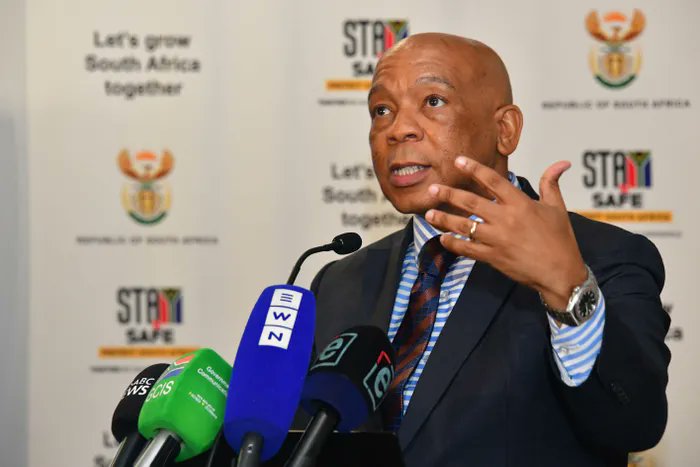
The Electricity and Energy Minister, Dr Kgosientsho Ramokgopa, announced new the Section 34 Determination for additional generation capacity over the 2026-2037 planning horizon at a media briefing on Wednesday.
The determination advances the seventh administration’s inclusive growth and employment and reduction of the cost-of-living impact on our people.
Under Section 34 of Act 4 of 2006, the Minister can declare that new energy generation is needed to secure the country’s power supply.
Ramokgopa said government will prioritise gas-to-power and battery energy storage systems (BESS) to strengthen reliable electricity supply.
South Africa plans to add more than 105 GW of new generation capacity by 2039, according to a planning document released last year, with renewable energy accounting for more than half of that as the country gradually reduces its dependence on coal
In an initial stage, it will procure 4.6 GW of battery storage systems and 5 GW of gas-to-power projects, said Ramokgopa.
Allocations for wind and solar generation capacity would follow at a later stage, Ramokgopa said.
South Africa currently has five battery storage projects totalling 513 megawatts, and a bigger uptake of the technology would help make better use of wind and solar resources currently stranded due to a lack of grid capacity, the minister added.
Ramokgopa indicated that the front-loading of BESS and GtP procurement had been informed by priorities outlined by the System Operator, which had identified a need for greater flexibility and for dispatchable plants.
It is also a response to a material increase in curtailment, which is implemented by System Operator when available generation cannot be accommodated because of network constraints or operating conditions, including periods when supply exceeds demand.
Ramokgopa indicated that BESS was central to seeking ways to address curtailment and associated rise in compensation payments by the National Transmission Company South Africa (NTCSA) to renewables independent power producers selected during previous public procurement rounds.
Batteries, he said, could charge from electricity that would otherwise be curtailed and discharge during evening peaks or other periods of need.
He added that South Africa already had a template for procuring BESS, pointing to the approach taken by the IPPO, which had to date conducted three bidding rounds for BESS based on substation sites selected by the NTCSA.
A total of 1 744 MW/6 976 MWh of BESS has been procured to date, and all five projects from the first bidding round, involving 513 MW/2 052 MWh and combined investments of more than R15-billion, have advanced to construction.