
By Lehlohonolo Lehana.
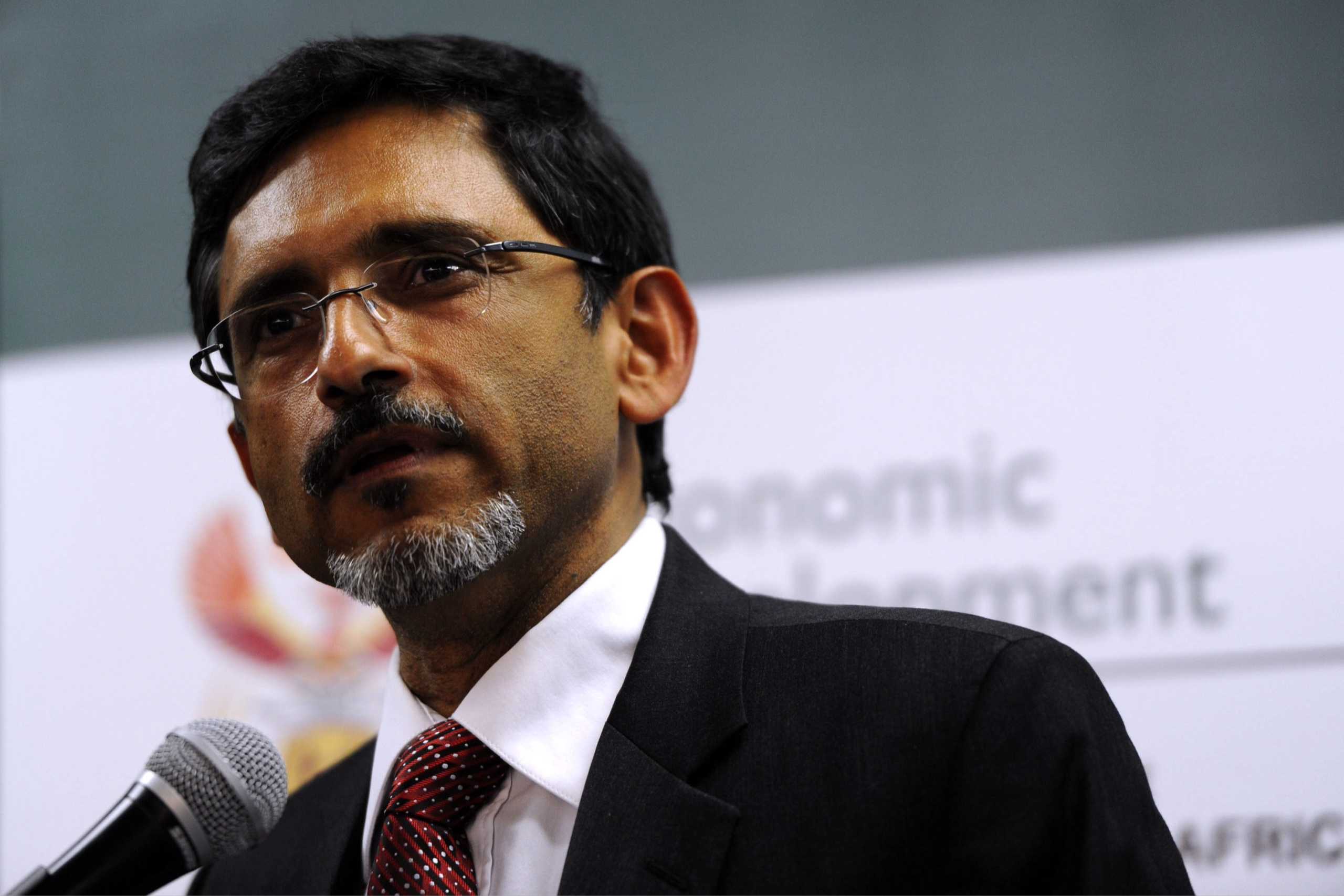
Trade, Industry and Competition Minister Ebrahim Patel has released a White Paper that outlines a comprehensive electric vehicle (EV) roadmap for South Africa.
The policy supports investments in the development and expansion of new and existing manufacturing plants to support the production of electric vehicles in the country.
At a media briefing in Pretoria, Patel said the primary goal of the White Paper is to set a course to transition the auto industry from primarily producing Internal Combustion Engine (ICE) vehicles to a dual platform that includes EVs in the production and consumption mix, alongside ICE vehicles in South Africa by 2035.
“This vision is aligned with the foundational objectives outlined in the SAAM, a strategic framework implemented from 2021 to shape the nation’s automotive industry,” Patel said.
Patel explained that it also aligns with changing demand in export markets and South Africa’s commitment to reducing greenhouse gases.
“The compelling reasons behind this transition are numerous. Foremost is the urgent need to reduce greenhouse gas emissions and combat climate change. Additionally, we recognise the pivotal role the automotive industry plays in South Africa’s economy, as a major employer and a driver of economic growth.
“This White Paper presents a comprehensive, coordinated approach to the transition to minimise the perils of an uncoordinated transition. It draws on extensive international and domestic research and consultations, spanning from 2019 to 2023.
“It is grounded in the principle that decarbonisation should not lead to de-industrialisation but rather be leveraged for growth, deepening the automotive value chain, fostering growth of the local industry, and ensuring the transition aligns with economic priorities,” Patel said.
Patel said successful management of the transition is a pro-growth and pro-investment strategy.
“The success of the transition requires all stakeholders to continue to work collaboratively to navigate this challenging transition and transform it into an opportunity for growth, sustainability, and economic vitality,” the Minister said.
Patel said South Africa could see the first electric vehicles as early as by 2026.
Last week, Cabinet approved the White Paper on EVs to ensure that South Africa becomes part of the global shift from internal combustion engines to new technology vehicles.
Addressing the Post Cabinet briefing last Thursday, Minister in the Presidency Khumbudzo Ntshavheni said the policy supports investments in the development and expansion of new and existing manufacturing plants to support the production of electric vehicles in the country.
“South Africa’s automobile industry plays a critical role in economic growth and supports thousands of jobs, and the country is also endowed with mineral resources that position it to become a key and strategic player in EV value chains,” the Minister said.
The White Paper is the culmination of substantial research and engagement over the last number of years and follows the publication of a Green Paper in 2021, extensive industry consultation (assemblers, component makers and organised labour), consideration of public comments, all of which helped to shape the policy actions to be taken.
Patel also highlighted the Green Paper on the advancement of new electric vehicles and battery-electric vehicles in South Africa. The draft Green Paper seeks to develop a framework upon which a comprehensive and long-term automotive industry transformation policy on new EVs can be developed.
Meanwhile, the final Green Hydrogen Commericialisation Strategy highlights the considerable growth opportunities in terms of green hydrogen through several pathways for South Africa, Patel says.
This includes the production and domestic use of green hydrogen to decarbonise South Africa’s economy, with a specific focus on hard-to-decarbonise value chains.
There is also the production and export of green hydrogen and beneficiated products into future global green energy trading markets.
Also, Patel pointed out that the country already has key capabilities and advantages in green hydrogen, including condition required for renewable energy and considerable platinum group metals resources.
Green hydrogen initiatives would also support the country’s just energy transition goals.
Moreover, there is the development of industrial capabilities in the entire value chain, including in the manufacturing and supply of equipement used in the green hydrogen value chains.
The strategy indicates that these areas present an overarching commercial opportunity for South Africa to develop a new green energy economic sector to drive growth and development, employment, improve energy security and to transition to a lower carbon economy and society.
However, they also presents a series of complex challenges and decisions for stakeholders to ensure that this important lever to transition the economy to a lower carbon intensity is also aligned to the National Development Plan and the need for inclusive participation in this new sector.
The strategy outlines several strategic objectives that should be considered in pursuit of South Africa’s green hydrogen vision, including securing long-term global market share and a competitive trade position; developing the domestic market; securing foreign direct investment and low-cost green finance; contributing to economic and socioeconomic development; ensuring local industrial capability and participation; and considering the need and role of a just transition.