
By Lehlohonolo Lehana.
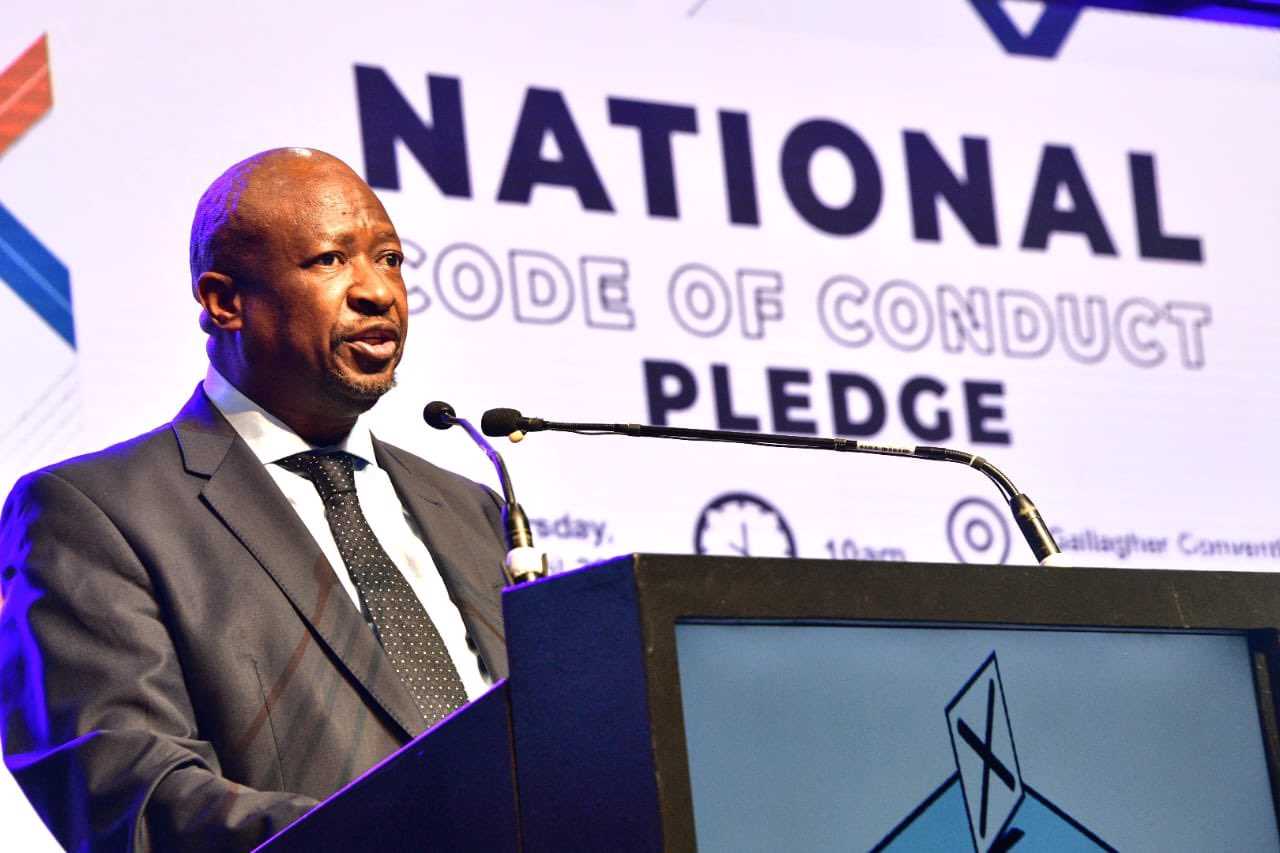
South Africans in nine of the 111 foreign missions across the world are set to cast their votes on Friday (May 17), while the rest of the 102 will cast ballots on Saturday, 18 May 2024,” Electoral Commission (IEC) Chief Electoral Officer Sy Mamabolo said.
South African citizens who live abroad, or will be abroad on election day in South Africa, and who have a South African identity document (either a green ID book, a smartcard ID or a valid temporary ID certificate) and a valid South African passport or a valid temporary passport, are eligible to vote abroad.
You also need to be a registered voter, and be at least 18 years and older.
Mamabolo said, “All missions have already received the election materials, which include ballot papers, voting booths, ballot boxes, envelopes, and a voter list.”
London has the largest cohort of voters with an expected turnout of 24 194 voters. Mamabolo said as a result, voting stations in that City will operate on Saturday and Sunday.
The international segment of the voters roll for out-of-country voters has 56 698 voters, but the total number of people expected to vote is 76 580.
“This comes after the approval of 20 886 VEC10 notifications from voters who informed the Chief Electoral Officer of their intention to vote outside of the country due to temporary absence,” Mamabolo said.
He said the IEC was ready to ensure that voting goes smoothly in 111 foreign missions around the world.
Where do I cast my vote?
You can find a list of South African missions for voting abroad here.
South Africans abroad will be able to vote at their mission as follows:
- Algiers, Amman, Cairo, Damascus, Jeddah, Kuwait City, Ramallah, Riyadh and Tehran will vote on Friday, 17 May between 7am and 7pm;
- The remaining 102 missions will be open for special votes on Saturday, 18 May between 7am and 7pm; and
- In respect of the South African mission in the UK, the IEC has determined two days of special voting. South Africans registered to vote in the UK can do so on Saturday, 18 May and Sunday, 19 May from 7am to 7pm.
Mamabolo said voting was not possible in some countries for “security reasons”.
“Dirco has confirmed that the missions in Sudan, Tel Aviv and Kyiv remain closed. Unavoidably and regrettably, voters registered at these three missions will not be able to vote in the forthcoming elections, added Mamabolo.
What happens after South Africans abroad have voted?
For security and confidentiality reasons, ballot papers will first be placed in an unmarked envelope. This envelope will be placed into a second envelope marked with the voting station and voter’s details. The second envelope will then be placed into a secured ballot box.
Once secured, the ballot will be transported back to the IEC’s national office in Centurion, Pretoria, for counting, said Mamabolo.
The counting of international votes will take place a day after the elections.
South Africans don’t vote directly for their president, but rather decide the makeup of Parliament, which is called the National Assembly.
They do that by choosing parties and those parties get seats in Parliament according to their share of the national vote.
The 400-member National Assembly then elects the president, meaning whichever party has a majority chooses the head of state.
That has always been the ANC since the first all-race elections in 1994, but this time it may need to strike agreements with other parties to get the required 201 votes from lawmakers to reelect the 71-year-old Ramaphosa and form a government.
The main election will be held on May 29 across all nine provinces. It will decide the makeup of both the national and provincial legislatures.