
By Estea Rademeyer, Sports Journalist.
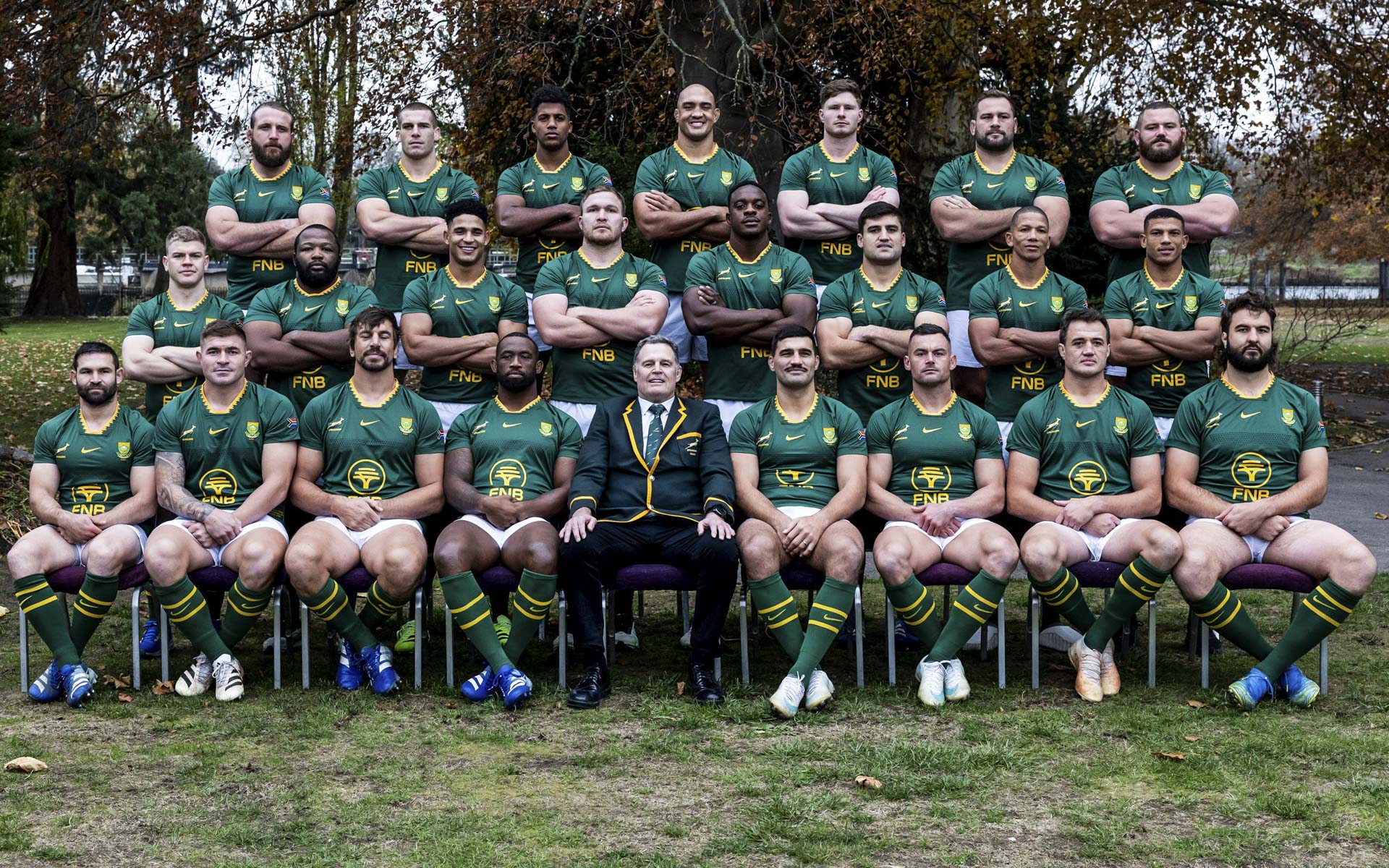
Photo Credit: Springboks.
The Springboks have reached the Nations Championship final, but their presence at Twickenham on Sunday comes with a question they cannot avoid: can they rediscover the authority that has made them the dominant force in world rugby?
South Africa have lost their last two Tests, against France in Paris and Ireland in Dublin. They have still qualified for the inaugural final, helped by New Zealand’s defeats to Wales and England, but the route has left little room for complacency.
The Boks and All Blacks finished the southern hemisphere pool phase on 22 log points apiece. South Africa claimed top spot on points difference, despite the successive defeats, and will now face a French side that has already shown it can expose weaknesses in the world champions.
There is a trophy to win, but the implications of Sunday’s performance reach further than the Nations Championship.
South Africa have enjoyed a successful 2026. They won the Rugby’s Greatest Rivalry series against New Zealand 3-1, used 73 players across a 15-Test season and continued to build a squad with the depth required for the 2027 World Cup. The Junior Springboks also secured a second successive world title.
Yet the results have dipped. The Boks won 11 of 13 Tests in 2024 and 12 of 14 in 2025. This year they have won eight of 12, a 67 per cent success rate that sits below the standard they have established.
They have lost to four different nations. New Zealand, Australia, Ireland and France.
The 33-16 defeat to New Zealand at Ellis Park was their heaviest loss since Rassie Erasmus returned to the coaching set-up in 2018. The defeats in Paris and Dublin marked the first time South Africa had lost consecutive Tests since 2022.
A third successive defeat on Sunday would be another unwanted landmark. The Boks have not lost three Tests in a row since 2021, and another loss would mean they had been beaten in four of their last five matches, including the 42-38 defeat to Australia in Perth after the Rugby’s Greatest Rivalry series.
The final therefore offers a chance to finish the season with a response, rather than allowing the recent setbacks to define it.
The selection has already signalled that the coaching staff recognise the need for change.
Sacha Feinberg-Mngomezulu will start at fullback for the first time in Test rugby, with Manie Libbok returning at flyhalf. Damian Willemse’s injury in Dublin forced one change, but the decision to move Feinberg-Mngomezulu and restore Libbok gives South Africa two natural playmakers in the starting side.
It is an attempt to bring more invention into an attack that has looked increasingly predictable over the past fortnight. Against France and Ireland, the Boks struggled to turn possession and territory into sustained pressure.
Their approach became too reliant on physical confrontation, allowing opponents to organise defensively and limit the space available to South Africa’s outside backs.
Feinberg-Mngomezulu has not been at his best in the last two matches, but the move to fullback could give him more room to operate. From deeper positions, he will have opportunities to counter-attack and bring his running game into play.
Libbok’s selection is equally important. He is a playmaker who looks to involve those around him, and his ability to move the ball could help South Africa avoid becoming trapped in a one-dimensional approach.
There is risk in the change. Feinberg-Mngomezulu is still learning the demands of the position at Test level, while Libbok has had limited opportunities in the side this season. France will be alert to any uncertainty in the backfield, particularly with Dupont and Jalibert capable of varying their kicking game and putting pressure on the back three.
The selection also retains continuity in the midfield and on the wings, where the coaches have kept combinations that have played together for much of the tournament.
Bok assistant coach Mzwandile Stick explained that the decision to move Feinberg-Mngomezulu was influenced by the need for match fitness and the opportunity to have Libbok directing the attack. “We considered someone like Aphelele Fassi at fullback, but looked at someone with more match fitness, so Manie comes in,” Stick said. “It’s easier in that regard to switch Sacha Feinberg-Mngomezulu to fullback.”
The forward selection has also changed, with Pieter-Steph du Toit ruled out after picking up a niggle. Cameron Hanekom moves to flank, Paul de Villiers starts at No 8 and Franco Mostert joins the replacements.
The loss of arguably the worlds greatest player over the last decade, Du Toit is significant. His work rate, defensive intensity and ability to influence a match in both tight and loose play make him one of the Boks’ most valuable players. South Africa cannot simply replace his contribution with another name on the team sheet.
De Villiers has impressed the coaching staff in training, and the final provides an opportunity to show that he can deliver the same intensity against the highest level of opposition.
The starting pack will need to meet France’s physical challenge from the opening whistle. South Africa have selected Gerhard Steenekamp, Jan-Hendrik Wessels and Thomas du Toit in the front row, with Lood de Jager and Salmaan Moerat forming the lock partnership.
There is considerable experience among the replacements. Malcolm Marx, Ox Nché, Wilco Louw and Eben Etzebeth give the Boks the ability to change the contest up front, while Mostert adds further versatility.
The six-two bench split is designed to maintain physical intensity for the full 80 minutes. France have selected the same balance, underlining how important the forward battle is expected to be.
Stick was clear about the need to sustain the effort for the entire match. “Considering the selection, we want to make sure every side can play for 80 minutes. If we play against the likes of Ireland and France, two of the best teams in the world, and we don’t play for 80 minutes, we’re going to struggle,” he said.
The Boks will also give Emmanuel Tshituka his Test debut from the bench. The Sharks loose forward has been rewarded for his work rate and consistency, and his inclusion adds energy to the replacements. His brother Vincent has already represented South Africa, making them the 38th set of Test siblings to play for the Springboks.
The challenge is formidable. France have named Antoine Dupont and Matthieu Jalibert together at halfback, with Thomas Ramos returning at fullback after recovering from a thigh injury.
Dupont was influential in France’s 21-19 victory in Paris and will again be central to their attacking plan. His ability to change pace, identify space and keep defenders guessing makes him a constant threat. Ramos adds an experienced goal-kicker and a reliable counter-attacking option.
The Boks will need to be disciplined in their defensive spacing and careful with their kicking. Loose exits and poorly controlled possession could give France the platform to attack from broken field.
Kolisi has been quick to recognise the threat posed by Dupont. “Antoine makes a big difference, you can see, he’s an amazing player,” the Bok captain said. “You cannot deny how good he is, I mean, you would be a fool not to say that.”
The French have also strengthened their front row, with Jefferson Poirot and Maxime Lamothe coming into the starting side. Their scrum was a point of vulnerability in the previous meeting, and the changes suggest Galthié is determined to improve that area.
For South Africa, the breakdown and set piece will be central to controlling the contest. If the Boks can win the physical exchanges and provide their backs with quicker, cleaner possession, the new attacking combination may have the opportunity to make a difference. If France disrupt their rhythm, the same problems that surfaced in Paris and Dublin could return.
The absence of Erasmus on match day adds another unusual dimension. The head coach is serving a six-match suspension following his comments about the officiating after the defeat in Paris. He can continue to coach during the week, but will not be involved on the touchline at Twickenham.
Kolisi has not attempted to disguise the significance of Erasmus’ absence, but neither has he used it as an excuse.
The captain has been the public face of the Springboks during a difficult fortnight, dealing with questions around the defeats, the coaching suspension and the team’s media engagement. His experience will matter in a final where South Africa need calm leadership as much as physical conviction.
“We’d love to do it for him,” Kolisi said of Erasmus.
The Springbok captain has led the side through two World Cup triumphs and numerous high-pressure encounters. The squad’s record in major finals suggests they know how to find another level when the stakes are highest. Their matchday squad also carries substantial experience, even after Du Toit’s withdrawal.
But reputation alone will not be enough. France have beaten South Africa recently, are playing with confidence and have the attacking talent to punish mistakes. The Boks must show greater clarity with ball in hand, make better decisions under pressure and rediscover the intensity that has defined their most successful performances.
Winning the Nations Championship would add another title to an already impressive period in Springbok history.
More immediately, it would end the losing run and give the team a stronger finish to a demanding season. It would also mean that the Springboks achieved their main objectives for the year, being victory in the Greatest Rivalry series, lifting the Nations Championship trophy, and creating more depth in the squad.
The final cannot erase the defeats in Paris and Dublin, but it can provide a powerful measure of how much the Springboks have learned from them. More importantly, it will reveal whether they can still summon their trademark brilliance when the stakes are highest, and carry that psychological edge into the final stretch before next year’s Rugby World Cup in Australia.
If South Africa can beat France without Rassie Erasmus on the touchline, with an injury depleted squad, amid the off- field distractions and on northern hemisphere soil, the statement will be enormous. It would reaffirm not only their ability to win under the most testing circumstances, but their status as the team every other nation fears most. It would only be a foolish person, who would bet against them.