
By Lehlohonolo Lehana.
Two days after announcing an improvement to the system after several generating units returned to service at the weekend, Eskom has now announced that Stage 4 load shedding will return on Wednesday afternoon.
This was after eight generating units broke down since Tuesday evening.
Breakdowns have increased to 19,127MW of generating capacity while the generating capacity out of service for planned maintenance is 2,313MW.
Since Tuesday evening, two generating units at Grootvlei Power Station were returned to service.
The delay in returning to service a generating unit each at Kendal, Kriel, Matla, and two generating units at Tutuka power stations is contributing to the current capacity constraints.
Meanwhile Eskom’s system operator, which maintains grid stability by balancing electricity supply and demand, says that the Western Cape’s power system can operate with stability if both units of Koeberg are down simultaneously.
The possibility that both Unit 1 and Unit 2 could be down for maintenance either this year or next due to delays in the extension of life project was mooted by Minister of Electricity Kgosientsho Ramokgopa on Monday.
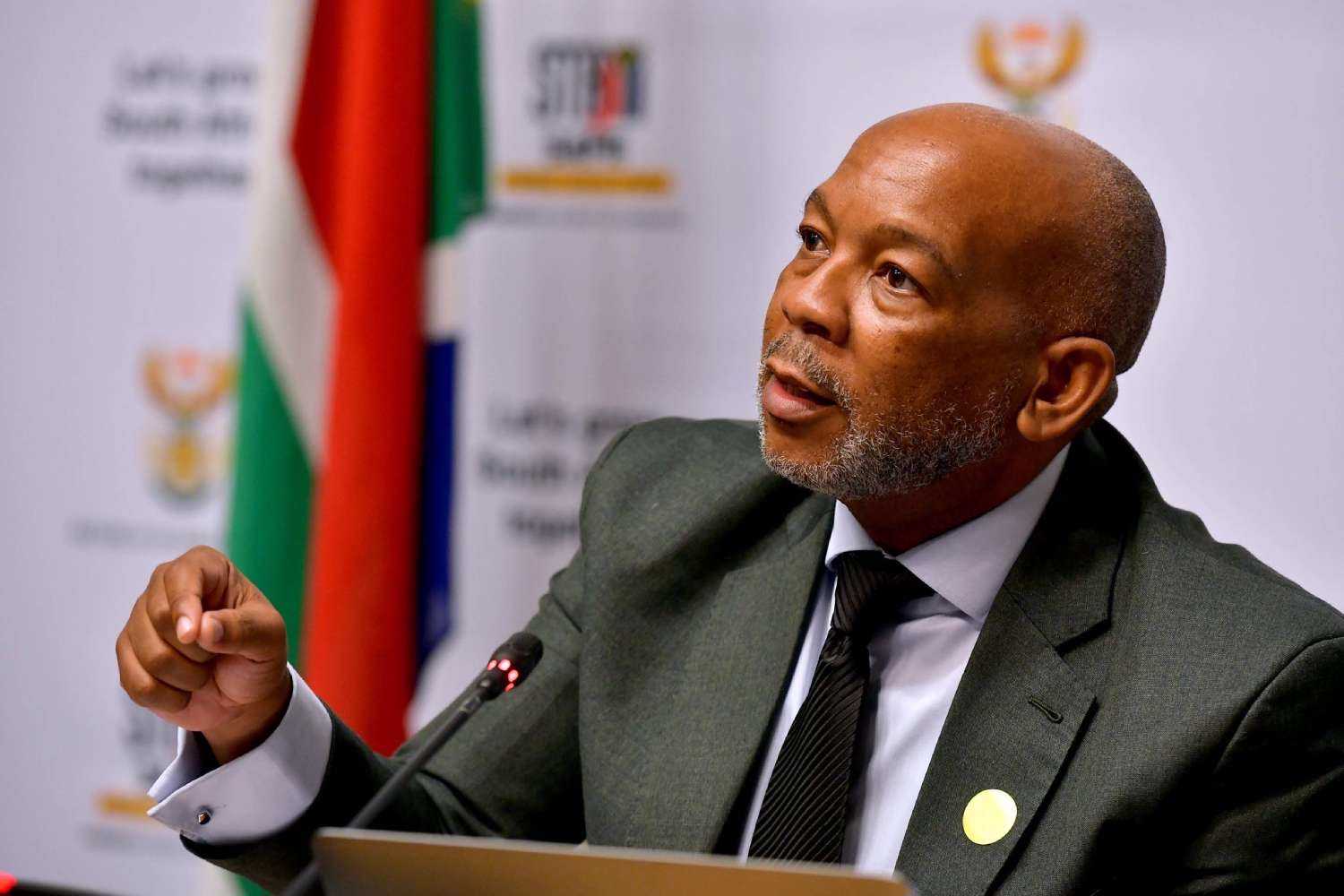
Speaking at a government communications webinar on Wednesday, general manager for the System Operator, Isabel Fick, said that only an additional event or shock to the system would cause the Western Cape grid to become unstable without Koeberg.
She said: We have had both units of Koeberg off at once on the 15 April for 48 hours. There is quite a bit of stability in the Western Cape without Koeberg, mainly due to the 765kV backbone that is going into that area, so we don’t foresee a major issue as a result. You would need an extra contingency, like the 765kV to go down before you see a major issue.
Eskom installed the 765KV high-voltage line linking the Western Cape to the Mpumalanga Highveld in 2016. Before this, the Western Cape was linked to the Northern Cape with two 400kV lines. 765kV is one of the highest voltages for electricity used in the world.
Also speaking at the webinar, CSIR Energy Centre researcher Monique le Roux said that the centre’s modelling showed that the Western Cape could operate without energy from Koeberg.
“We have modelled the system without Koeberg, and I can confirm that it can remain stable without Koeberg, even with high levels of penetration of renewable energy. There are also mitigation strategies that can compensate for the loss of Koeberg, such as the implementation of synchronised generators or other dispatchable energy, like battery storage, so it isn’t the case that the system cannot operate without Koeberg,” she said.
Premier Alan Winde expressed “grave concern” on Tuesday over the potential scenario of the province being without power from Koeberg.
Ramokgopa was expected to visit Koeberg on Wednesday for an update on the situation.
Eskom is trying to avert a situation where both units are off simultaneously by delaying the replacement of the steam generators in Unit 2. Koeberg’s operating licence ends on 21 July 2024, after which both units must either be refurbished and relicensed or shut down. Eskom has applied to the National Nuclear Regulator to postpone Unit 2’s end-of-life date for a year because it was commissioned a year later than Unit 1.