
By Lehlohonolo Lehana.
President Cyril Ramaphosa hailed the handover of the second part of the State Capture Inquiry report as a “significant step in ridding the country of corruption”.
The commission released the second part of its report on Tuesday. It covered findings on state-owned enterprises (SOEs), the arms manufacturer Denel and Transnet.
It consists of two volumes amounting to 646 pages.
The report delves into the depths of corruption at Transnet, confirming the wide-ranging reach of Gupta associates who were allegedly aided in capturing the entity by its executives.
The report recommended fraud and corruption charges be pursued against former Transnet group CEOs Brian Molefe, Siyabonga Gama, former Transnet CFO Anoj Singh and former head of engineering Thamsanqa Jiyane.
There were three main deals – for 95, 100 and 1 064 locomotives. The 95 and 100 deals were specifically with what was then called China South Rail (CSR). CSR also featured in the 1 064 deal, along with China North Rail (CNR) – with which it later merged – General Electric, and Bombardier Transportation.
The commission’s recommendation was that they be investigated by law enforcement authorities with the aim to prosecute them for fraud, contravening the Public Finance Management Act, racketeering, wilful or gross negligence and a range of other alleged wrongdoings.
With the 95 deal, the commission said that shortly after Molefe was appointed as group CEO and Gama made a return as CEO of Transnet Freight Rail in 2011, that the parastatal saw the “first significant locomotive transaction tainted by corruption”.
The commission said there were reasonable grounds to believe that there were irregularities including a prior decision by Molefe to favour CSR as a bidder, his “inappropriate communication with CSR prior to the closing of the bid”, communication between CSR and the Guptas, the improper changing of the evaluation criteria to favour CSR specifically around its initial lack of B-BBEE accreditation, the failure to obtain the authorisation for a cost overrun, and the non-recovery of late delivery penalties.
The commission found that the alleged wrongdoing in the 100 deal included that management misled Transnet board’s acquisitions and disposals committee and the board itself when it presented a business case motivating that the purchase be confined to CSR. It also said the deal included the payment of excessive advance payments prior to the delivery of any locomotives and the unjustifiable increase in the price of the procurement by R740 million without prior authorisation of the board.
CSR paid a kickback of R925 million on this contract to one of Gupta lieutenant Salim Essa’s companies.
The wrongdoing in relation to the 1 064 locomotive procurement included the misrepresentation to the board of the components of the estimated total cost, the unfair favouring of CSR, the inflation of the price, the inappropriate calculation of escalation costs, forex and contingencies; and the payment of excessive advance payments favouring CSR and CNR – among a raft of other findings.
Former public enterprises minister Malusi Gigaba should also face a corruption investigation by law enforcement agencies.
The report detailed how the Guptas and their associates used VR Laser, a long-standing defence supplier to Denel, to capture the SOE. Gigaba frequented the family’s sprawling compound in Saxonwold, with the then Denel CEO Riaz Saloojee finding him there “soliciting SOE business for his friends,” the Gupta family.
“Scathing on the relationship between the Guptas and Gigaba, the former minister was likened to what one of the brothers, Tony Gupta “used to do with Duduzane Zuma.”
“There is no doubt that the Guptas brought Gigaba to the meeting with Saloojee to show him that Gigaba was a mere tool in their hands, a dupe who would do their bidding and from whom Saloojee could expect no protection.
A politician who did not recognise this to be so would be so naive indeed. it is in the same as what, on the evidence heard by the commission, Tony Gupta would bring Duduzane Zuma along to meetings that he had with government officials attached to SOEs and he would do the talking and Duduzane Zuma would simply be there but not really take part in the discussion,” reads the report.
In bringing Zuma’s son to meetings, Gupta believed that officials would realise that he had easy access to the former president through his son.
“In other words, they better cooperate because otherwise, their non-cooperation could be reported to former president Jacob Zuma.”
At Denel, the report recommended law enforcement agencies should probe the former Denel board, headed by discredited lawyer Daniel Mantsha, which took over in 2015 and oversaw the decline of the once internationally hailed aviation entity.
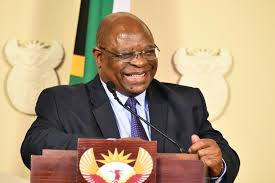
In a summary of concerns raised during the inquiry’s investigation, acting Chief Justice Raymond Zondo recommended establishing a separate entity to oversee the appointment of boards of SOEs and executives of these companies.
The report has been divided into three parts, with the final one expected to be released at the end of February.
Ramaphosa has until 30 June to report to Parliament on his actions, based on the report’s recommendations and findings.
Read the Full Report Here: State Capture Report Part 2 / Denel and Transnet & State Capture Report Part 2 / Denel and Transnet.