
By Anga Jamela.
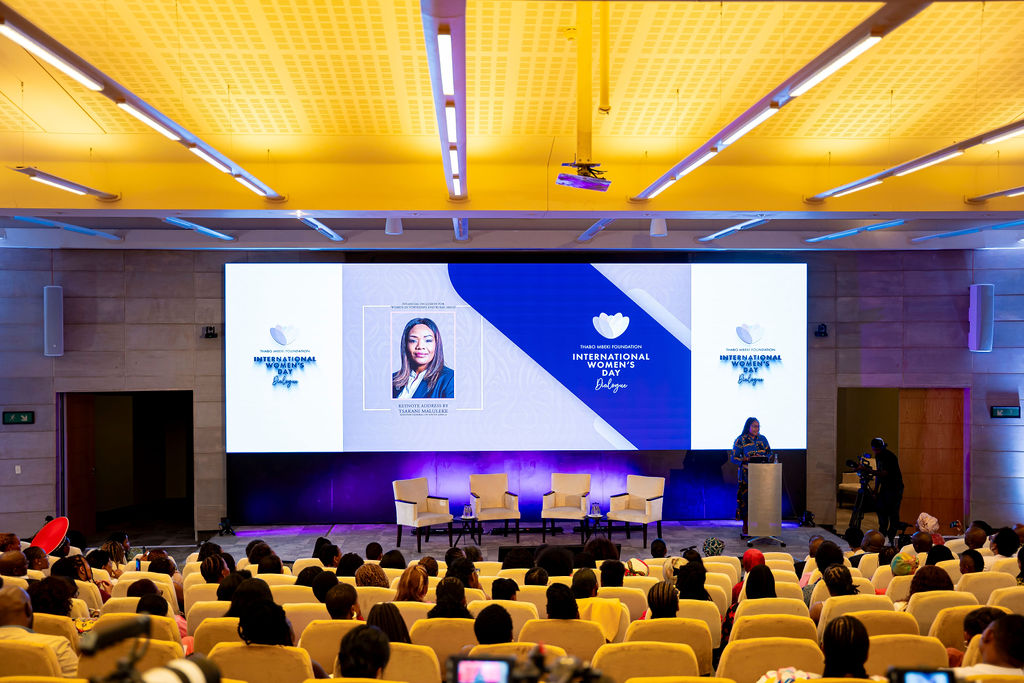
The Thabo Mbeki Foundation, in partnership with the University of South Africa (UNISA) and the Women’s Development Bank Trust, will host the 15th International Women’s Day Dialogue, a landmark convening that continues the commitment to advancing women-led development on the continent.
This year’s dialogue is built around a timely and urgent theme: “Social Business: A Catalyst for Women-Led Development in Africa.”
The TMF hold a simple but serious view. Africa’s renewal cannot be imagined, let alone achieved, without the full participation, leadership, and economic ownership of women. That is the conviction behind this platform, and it is what continues to give it force and relevance year after year.
Why this year matters
Over the years, the Dialogue has grown into an important pan-African space for bringing together women leaders, policymakers, entrepreneurs, financiers, development institutions, civil society, and cultural voices.
It is a place for serious discussion, but also for practical thinking about what must change if women are to move from the margins of the economy to the centre of ownership, decision-making, and institution-building.
This year, the Foundation is pushing the conversation forward.
After focusing on financial inclusion in 2025, the 2026 Dialogue takes on a deeper structural question.
Access to finance remains essential, but it is not enough on its own. Too many women across Africa continue to face systems that make it difficult to formalise, grow, and sustain enterprises, even where talent, discipline, and innovation are already present.
The Foundation is therefore using this year’s gathering to explore social business as a more durable path to women-led development.
The 2026 theme, “Social Business: A Catalyst for Women-Led Development in Africa,” speaks to the need for a development model that is both values-driven and financially sustainable.
The TMF considers social business as a practical bridge between moral purpose and economic discipline. In this model, enterprises are designed to solve social problems, sustain themselves financially, and reinvest surplus into expanding impact rather than extracting private gain.
For the Foundation, this is a way of asking how Africa can build businesses that create livelihoods, solve real social challenges, and widen the space for women’s leadership in the economy. It is also a way of grounding development in dignity, solidarity, and shared prosperity.
The main Dialogue will unfold across 10 to 12 March 2026 and is designed as more than a conversation. It is intended as a launchpad for action.
Across the three days, the programme will move from diagnosis, to case studies and working models, and then to execution. The aim is not simply to describe the problem, but to clarify what must be built, financed, and delivered.
The IWD activities include the three-day main Dialogue, a Leadership Soirée, and a post-dialogue implementation session focused on converting the outcomes into a practical action plan.
One of the most important ambitions of IWD 2026 is to move beyond rhetoric and into implementation. The Foundation intends to help convene a coalition that can support policy reform, capital mobilisation, market access, and delivery discipline. In other words, the work does not end when the event closes. The event is part of a larger effort to build an ecosystem that can sustain women-centred development in practice.