
By Kevin Rademeyer, Sports Journalist.
For nearly two decades, men’s tennis operated with a built in assumption. No matter how chaotic a draw became, no matter how many early upsets occurred, a former Grand Slam champion would still be standing when the second week arrived. That assumption is now gone.
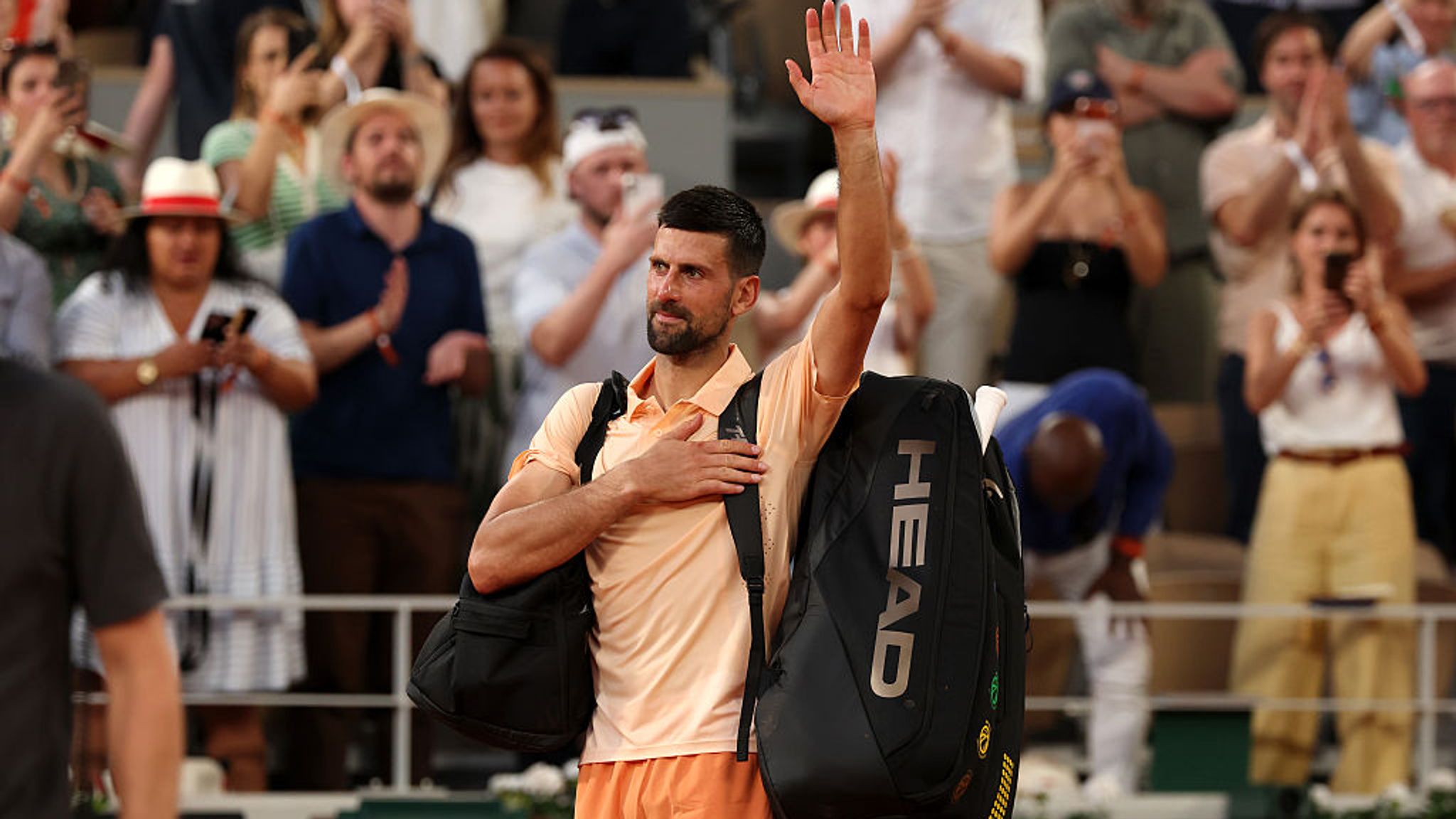
Friday’s five set defeat of Novak Djokovic by 19 year old Joao Fonseca at Roland Garros did more than remove the most decorated player in men’s tennis history from the tournament. It completed something the sport has never seen before.
For the first time in the Open Era, which began in 1968, not a single former men’s Grand Slam champion has reached the Round of 16 at a major. The statistic is startling. The implications are even larger. This is not simply a changing of the guard. It is the disappearance of the old guard altogether.
Djokovic entered Paris carrying the last link to an era that defined modern tennis. His résumé remains unmatched: 24 Grand Slam singles titles, 428 weeks at No. 1, a record eight year end No. 1 finishes, an Olympic gold medal and accomplishments that may never be replicated, including a Triple Career Grand Slam and two Career Golden Masters. Even at 39, he remained a legitimate contender.
For two sets against Fonseca, he looked every bit the veteran favorite. He absorbed the Brazilian’s power, exploited moments of impatience and moved within striking distance of another trip to the second week. Then the momentum changed, and so did the score.
Fonseca’s forehand became the defining shot of the contest. He began taking the ball earlier, accelerating through the court and forcing Djokovic into increasingly defensive positions. The Brazilian’s willingness to play aggressively in the biggest moments ultimately separated the two players.
Serving at 5 all in the fifth set, Fonseca produced three consecutive aces under pressure, first saving break point and then sealing one of the biggest victories of his young career.
“Huge credit to Joao for really deserving to win the match,” Djokovic said afterwards. “He without a doubt was a better player in important moments and those crucial fourth and fifth sets.”
The victory was historic for another reason. Fonseca became the first teenager ever to defeat Djokovic at a Grand Slam tournament. Yet the bigger story may be what happened around Djokovic.
World No. 1 Jannik Sinner had already suffered a stunning collapse against Juan Manuel Cerundolo. Defending champion Carlos Alcaraz never made it to Paris due to injury. Suddenly, a tournament expected to be shaped by established stars has become something entirely different.
The 2026 French Open will now crown a first time Grand Slam champion. That outcome alone would be notable. The fact that it arrives with no former major winner left in the draw elevates it into something larger.
Sports rarely announce the beginning of new eras with a single moment. More often, the transition happens gradually, almost imperceptibly. Veterans remain competitive. Young stars emerge. The lines blur. Paris provided no such ambiguity.
Djokovic himself acknowledged uncertainty about his future after the loss. Asked whether he would return to Roland Garros next year, he offered a simple response. “I don’t know.”
Perhaps he will. Perhaps he won’t. Either way, the significance of Friday’s result extends beyond one player’s future.
The generation that spent years chasing Federer, Nadal and Djokovic has largely come and gone. The generation led by Sinner and Alcaraz appeared ready to inherit the sport. Yet neither man will contest this title either. Instead, the second week belongs to players who have never won a major and, in many cases, never expected this opportunity to arrive so quickly.
The result is a draw stripped of history and reputation. No former champions. No safety nets. No familiar names waiting at the finish line.
For the first time since professional tennis opened its doors in 1968, the sport will crown a major champion from an entirely championless field. A new era is not approaching. It is already here.