
By Kevin Rademeyer, Sports Journalist.
The final act of South Africa’s domestic one day season ought to have been remembered purely for its tension, its skill and its reminder that finals are rarely won by the most decorated side. Instead, it unfolded as a study in contrast: composure against chaos, collective resolve against individual lapse.
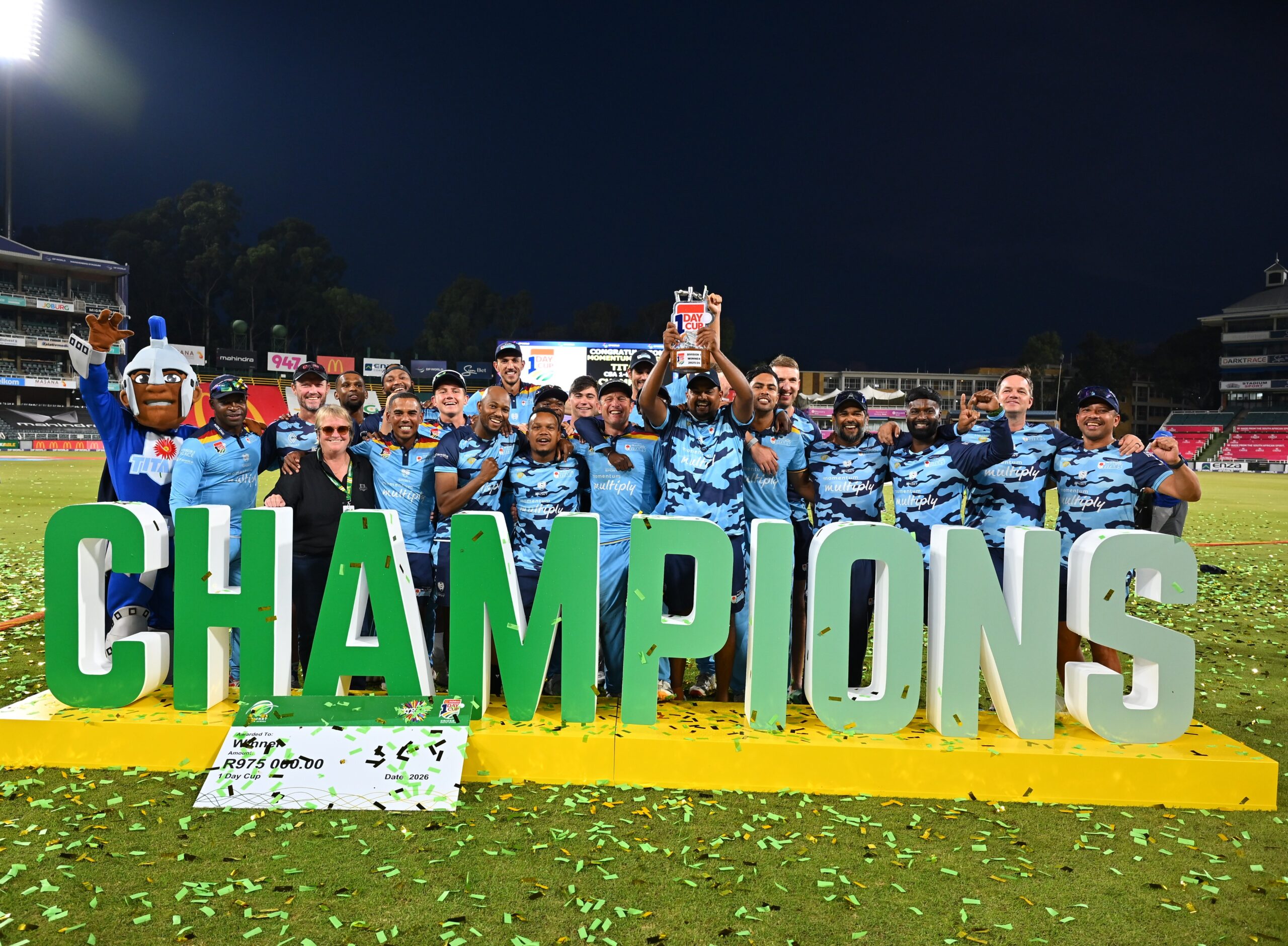
At the Wanderers Stadium, the Titans claimed a record extending 22nd provincial title, edging the Lions by three wickets with a single ball remaining. It was a victory chiselled out of pressure rather than dominance, and one that owed as much to temperament as it did to talent.
The Lions, unbeaten en route to the final and boasting the more illustrious names, set what felt a defendable 248 for nine. Rassie van der Dussen’s measured 57 and Temba Bavuma’s brisk 43 suggested a side in control without ever quite breaking the game open. That inability to land a decisive blow would linger.
The Titans, by contrast, made a habit of living on the edge. Reduced to 16 for three inside seven overs, their pursuit threatened to unravel before it had properly begun. What followed was an innings of rare discipline from Keegan Petersen, whose 90 from 134 balls was not so much an assault as an act of resistance. In an era increasingly impatient with attrition, it was a reminder of its enduring value.
If Petersen steadied the innings, Duan Jansen finished it. His unbeaten 61 carried the imprint of a player unburdened by the occasion. Where others tightened, he expanded, none more so than with a decisive strike late in the penultimate over that shifted the balance irreversibly.
Yet the defining image of the match may not come from bat or ball. It came in the second innings when Beyers Swanepoel, having completed his allocation, left the field and the contest entirely to catch a flight to England. The Lions, already under strain, were forced to complete the final seven overs , in a final with ten men. In a match decided on the finest of margins, the symbolism was unavoidable.
Cricket, particularly in its longer forms, has always prized endurance and presence. Swanepoel’s departure cut against that grain and, in the words of the Lions’ chief executive, represented a failure not merely of availability but of responsibility. It also sharpened the contrast with a Titans side who, short on star power by comparison, leaned heavily into collective effort.
Their bowling effort earlier in the day reflected that ethos. Lizaad Williams’s three wickets ensured the Lions never escaped into the distance, while Roelof van der Merwe, recalled late in the campaign, offered control and experience. That he was present at the crease to guide home the winning run felt entirely fitting.
This was, in many respects, a triumph of timing. The Titans had stumbled through the group phase, finishing third and requiring a qualifier merely to reach the final. But they arrived at the decisive week with clarity and cohesion, peaking precisely when it mattered.
If there was a disappointment beyond the Lions’ internal disruption, it lay in the stands. For all the efforts made to draw a crowd, including organised transport initiatives from areas such as Mamelodi, Soshanguve and SuperSport Park, the attendance never matched the occasion. A final of such quality deserved a fuller stage, particularly given the narrative weight both sides carried into it. It is clear that the crowds, like some of the players, have lost their desire for domestic cricket?
In the end, though, the match distilled into a simple truth. The Lions possessed the greater individual pedigree. The Titans, on this day, possessed the stronger collective will. In finals, that distinction is often decisive.