
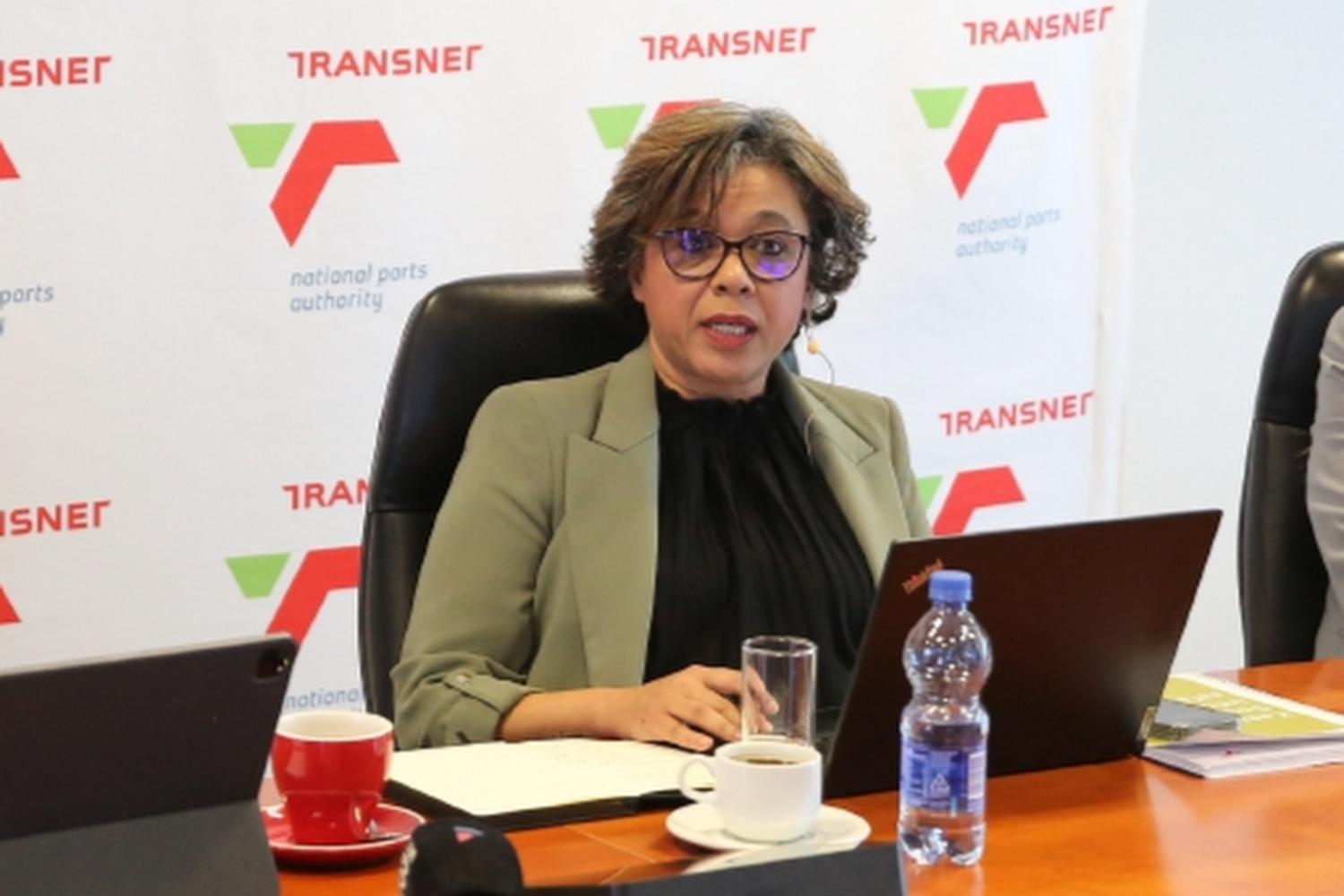
By Sfundo Parakozov.
South African state-owned logistics group Transnet on Thursday reported its first annual profit in four years, boosted by the sale of a stake in the country’s busiest container terminal in Durban.
Without the 25-year concession agreement with Philippines-headquartered terminal operator ICTSI in December last year, Transnet would have posted another loss.
The debt-saddled company has held back growth in Africa’s biggest economy for years due to equipment shortages and maintenance backlogs.
But its performance has begun to recover, supported by government guarantees that bolstered liquidity and helped avert a potential debt default.
The group posted a net profit of 4.6 billion rand ($286.05 million) for the year ended March 2026, compared with a loss of 1.9 billion rand the year before.
Transnet said its revenue was up 7.1% to 88.6 billion rand as it moved higher volumes on rail and pipeline networks.
The deal with ICTSI generated a profit of 12.5 billion rand.
Freight Volumes Rise, Still Below Target
Freight rail, Transnet’s largest operating division, saw volumes increase to 167.9 million metric tons, from 160.1 million tons a year earlier. That was still below a previously announced target of 180 million tons.
Chief Executive Michelle Phillips said hitting the target was a prerequisite for the group’s underlying business to break even.
Some of the 11 private operators granted access to Transnet’s rail network as part of efforts to boost freight volumes were expected to begin operations by 2027, she added.
The third-party operators are expected to add 24 million tons of capacity initially, potentially rising to 52 million tons.
Debt Challenge Remains
The logistics group is still grappling with a growing debt burden, with borrowings rising to about 150.7 billion rand from 144.8 billion rand a year earlier.
Gearing, however, which measures debt relative to equity, eased marginally to 49.4% from 49.6% helped by the profit.
Transnet plans to invest 129.1 billion rand over the next five years, 115.9 billion rand of which will be allocated to maintaining and rehabilitating existing infrastructure.
Phillips said the company had enough government guarantees for the five-year plan.