
By Lehlohonolo Lehana.
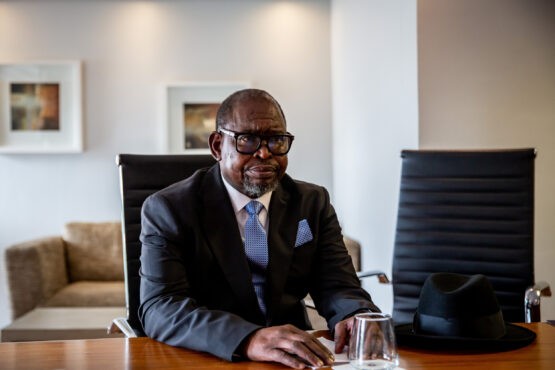
Finance Minister Enoch Godongwana and Treasury Director-General Duncan Pieterse provided a status update on the temporary withholding of equitable share transfers to 69 municipalities.
On July 7, the National Treasury announced the withholding decision, which it said had been taken in terms of Section 216(2) of the Constitution.
During a joint meeting of the Portfolio Committee on Cooperative Governance and Traditional Affairs, the Standing Committee on Finance, Godongwana defended the intervention.
Godongwana said the decision to invoke Section 216(2) had been taken as a “last resort” to halt the financial deterioration in municipalities, and only after other supportive actions had been taken.
He reiterated, the intervention was designed to address the passing of unfunded budgets, the non-payment of bulk suppliers, including water boards and Eskom, ongoing unauthorised, irregular, fruitless and wasteful expenditure, and a failure of the councils to implement consequence management.
Initially, letters were sent to 99 municipal mayors on June 22, following which 30 municipalities responded by the June 30 deadline with evidence demonstrating they had adhered to the requirements.
Pieterse said the decision marks a shift from monitoring municipalities to taking direct enforcement action.
He said more than half of South Africa’s municipalities are in financial distress, with mounting irregular, unauthorised, fruitless and wasteful expenditure, alongside billions of rands owed to Eskom, water boards, SARS and pension funds.
He added Treasury first warned municipalities in December last year that funding could be withheld if they failed to address persistent financial failures. Since then, the number of affected municipalities has dropped from 99 to 69 after some complied with Treasury’s demands.
The intervention was met with criticism, including the Cooperative Governance and Traditional Affairs (Cogta) minister Velinkosini Hlabisa.
Hlabisa called for a harmonisation of the process to be followed before invoking Section 216(2) and also urged the National Treasury to act as assertively against provinces and national departments that owed municipalities billions in outstanding payments.
It proposed a five-step process for any future freeze, including formal consultation with Cogta as required by the Municipal Finance Management Act (MFMA), at least 14 working days’ notice, and partial or phased withholding rather than complete suspension where lesser measures would work.
Committee Chairperson Dr Zweli Mkhize said the crisis had been years in the making, tracing it to the Auditor-General’s May 2025 consolidated local government report, which flagged poor audit outcomes, weak consequence management and failing political and administrative leadership at municipalities.
“Section 216 is a constitutionally prescribed intervention in cases of non-compliance,” said Mkhize.
Mkhize insisted that the focus must remain on the municipalities’ own failure to act on previous audit warnings.
“The challenge, therefore, is not Treasury action but the municipalities’ lack of response in all previous reports and calls for action. Treasury actions should be seen as an unavoidable and last resort in cases where municipalities have long been called upon to implement consequences management and turn the situation around.”
Despite Mkhize’s defence, the FFC and Salga argue that withholding this money is bound to affect basic service delivery, turning the streets of South Africa’s biggest cities into dumping grounds. They point out a massive flaw in the strategy: this cash freeze uses ordinary citizens as human shields while the guilty officials get off completely free.