
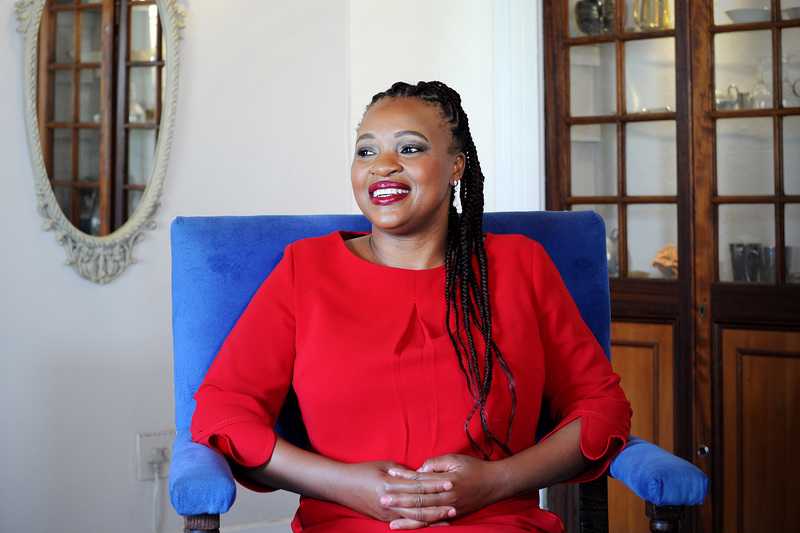
By Lehlohonolo Lehana.
The Chairperson of the University of Cape Town’s council, Babalwa Ngonyama has resigned, with immediate effect.
Her resignation comes after the panel, headed by former supreme court of appeal president Lex Mpati, prepared an interim report concluding that “her continued presence as CoC [chair of council] poses a serious risk to the university”.
“This, together with her threatened attempt to stymie the work of the panel through an ill-conceived legal stratagem is further proof that she cannot be trusted to fulfil her fiduciary duty to the university,” the panel said.
The panel said while its final report would address wider recommendations on governance issues and organisational culture at UCT, it was of the view that the council could not wait until then to remove Ngonyama from her position.
“The decision to remove the CoC cannot wait for the panel to complete its work and finalise its report, much less wait for the matter to be dragged through the courts. The facts are clear and council must act.”
Ngonyama had challenged the panel’s powers to investigate her conduct and demanded the right to cross examine all witnesses who made allegations against her.
Her attorneys signalled that they had been instructed to launch legal action against the panel and to convey that she would neither answer to the allegations in writing nor testify pending the outcome of the litigation.
In the statement announcing her resignation, Ngonyama said she had taken the decision to step down after “thoughtful consideration and deep and thorough reflection” and taking into consideration the current circumstances on her wellness and health.
She said she had always supported the work of the Panel but “it was one thing to focus on improving governance at UCT, it is a completely different matter to use the process in an attempt to lay blame”.
Ngonyama said the fact that the Panel had refused to give her access to statements made against her “conflicted with a basic tenet of procedural fairness”.
She had made a court application to determine the fairness of this, and it was this that had prompted the release of the interim report.
At the heart of the probe was whether the university’s then vice-chancellor (VC), Professor Mamokgethi Phakeng, and Ngonyama misled the university’s executive and Senate about the reasons for the departure of the deputy vice-chancellor (DVC) for teaching and learning, Associate Professor Lis Lange.
They claimed Lange had resigned for personal reasons. Lange claimed she had been pushed.
In February this year, the council approved a settlement agreement terminating Phakeng’s appointment and, the Panel notes, she had since severed her relationship with the university.
The Panel said while Phakeng had twice given evidence before it, Ngonyama had repeatedly refused to cooperate.
“It is apparent she has no intention of providing evidence to the panel, this despite her fiduciary duty to do so. She complains that the panel is not treating her fairly. There is no substance or evidence to support this complaint,” it said.