
By Lehlohonolo Lehana.
The G20 Health ministers meeting in Polokwane, Limpopo has failed to sign a declaration after US rejected to sign in agreement with the other G20 countries.
The G20 Health Ministers’ Meeting, held the final session of the G20 Health Working Group, in Polokwane, Limpopo.
The meeting assessed prior discussions and recommendations to forge concrete commitments for lasting health improvements.
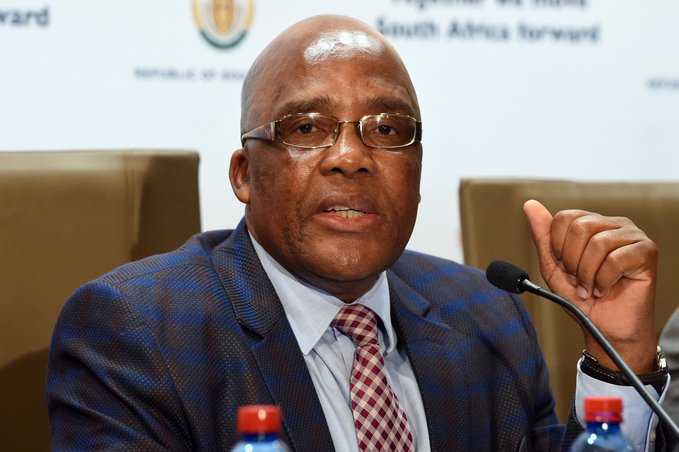
Health Minister, Dr Aaron Motsoaledi, said South Africa is committed to multilateralism and diplomatic solidarity, working to build a resilient, equitable Global Health Architecture.
The country aims to create a lasting covenant for global health, recognising it as a fundamental human right and economic necessity.
“Our shared narrative must begin with an urgent reckoning: that the progress towards Universal Health Coverage (UHC) has stalled, leaving billions exposed to financial ruin. This stagnation is a global failure we must now redeem,” Motsoaledi said.
He explained that unlocking UHC’s promise requires embracing the Primary Health Care (PHC) Approach as the singular, uncompromising cornerstone of equity.
South Africa chose “Solidarity, Equality, Sustainability” as the theme for its presidency of the group of leading economies but has faced resistance from the G20’s wealthiest member, the United States.
The draft statement seen by Fullview includes key references to prioritising universal health coverage (UHC) through primary health care systems; investments in health financing and health protection (e.g. insurance) systems; investments in the health workforce; as well as initiatives to combat noncommunicable diseases (NCDs) and antimicrobial resistance.
However, the statement also stresses multilateral action on climate change as well as pandemic prevention, preparedness and response (PPPR) – to which Donald Trump Administration is vocally opposed.
At the same time that the United States withdrew from the WHO, US officials also repudiated the Pandemic Agreement, framing it as an assault on nations’ sovereignty.
There has been a “significant watering down of key elements” in the health ministers’ draft declaration to be presented to the November 22-23 summit, newly elected MSF president Javid Abdelmoneim said.
MSF is a member of the health working group of the G20, which is made up of 19 nations and two regional organisations that account for more than 80 percent of world economic output.
“I have to say we are disappointed to note that, at a time of particular importance for G20 countries, for them to be uniting in support of global access for health for all, many of them instead focused on doing the opposite, pushing for less obligation, less coordination, and less support,” he said.
“We saw the original zero draft of the health declaration, and we noted a significant watering down of key elements, such as pandemic preparedness and the central coordinating role of the World Health Organization. While we appreciate the importance of consensus decision-making, it’s a pity that in this case, it has been weaponised by powerful countries to weaken a previously bold ministerial declaration that stood strong on the themes identified by the South African government and the presidency: equality, solidarity, and sustainability.
Without naming specific countries, he said MSF has “grave concerns” about the inputs made by “powerful” countries.
South Africa wants to use its presidency to champion Global South priorities, including boosting climate resilience and tackling debt in developing countries, before handing the baton to the United States next year.