
By Lehlohonolo Lehana.
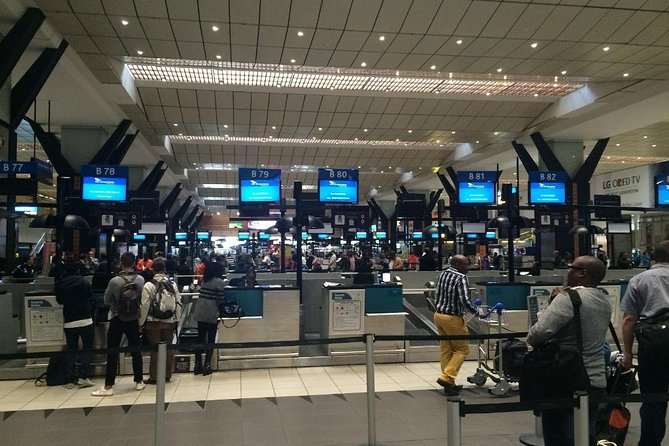
More countries have joined a wave of travel bans imposed on South Africa, following local scientists’ data sharing on the B.1.1.529 Covid variant – now given the designation of Omicron by the World Health Organisation.
Late on Friday, the United States, Canada, Australia and the Philippines joined the growing list of countries to either suspend flights to and from South Africa, or add further restrictions on travel to the country.
President Joe Biden’s administration said it will restrict travel from South Africa and seven other countries starting on Monday, while Canada is banning the entry of foreign nationals into Canada that have travelled through southern Africa in the last 14 days.
The Philippines has immediately suspended flights from South Africa and six other countries until December 15 over concerns about a new variant, and Australia – which initially took a ‘wait and see’ approach to the variant – has now suspended flights from the country with immediate effect.
Returning Australian citizens and their dependents who have been in any of the countries in the past 14 days must enter supervised quarantine on arrival. Other travellers from those locations will not be allowed to enter Australia.
These countries now join the UK, the European Union (and specific bans from the Netherlands and Germany), Israel, Japan, Malaysia, and others in shunning South Africa and its neighbours.
Southern African nations including Namibia, Zimbabwe, Botswana, Lesotho, Eswatini, the Seychelles, Malawi and Mozambique have been included in the bans.
Government have expressed disappointment and frustration over the bans.
Tourism minister Lindiwe Sisulu said the bans, coming at peak travel season, will do significant damage to the sector, and Department of International Relations and Cooperation minister Naledi Pandor slammed the bans as being premature. Both departments are engaging with international governments to reconsider.
Health minister Joe Phaahla described the bans as ‘knee-jerk’, and entirely unwarranted and unjustified. He said that the announcement and sharing of data around the new variant was done in the interest of transparency, and out of a duty to alert the world about the potential dangers of the emerging variant.
The variant was not first discovered in South Africa – it was sequenced in Botswana initially – and has since appeared in other countries like Belgium, in patients with no ties to South Africa. Yet South Africa is now bearing the brunt of the world’s response to the news.
Scientists and researchers have described the response and travel bans on South Africa as ‘punitive’, that may incentivise secrecy around new Covid variants.
“The announcement caused some panic, some consternation and uncertainty. It’s somewhat expected in an announcement of this nature, where we’re dealing with a moving target, so to speak. However, some of the reaction has been unjustified – especially that coming from Europe and the UK and other countries,” Phaalha said.
“The announcement was done to be in line with the norms and standards as prescribed by the World Health Organization…that we should act with transparency.”
Phaahla said that much of the reaction is based on fear from other countries that the new variant will be highly transmissible and prove to be resistant to vaccination and natural immunity. However, he said that, as the initial briefing made clear, there is not yet any evidence that this is the case and scientists stressed that studies are in the early stages.
South Africa’s National Coronavirus Command Council was set to meet on Sunday to discuss the new variant and possible measures to take to mitigate its spread. Given the urgency of the matter – especially the international community’s response to South Africa – the meeting has now been brought forward to Saturday (27 November).
The World Health Organization (WHO) said the new variant may spread more quickly than other variants of Covid-19 and preliminary evidence suggested there is an increased risk of reinfection.
Epidemiologists warned travel curbs may be too late to stop Omicron from circulating globally. The new mutations were first discovered in Botswana and have since been detected in Belgium, South Africa, Israel and Hong Kong.