
By Lehlohonolo Lehana.
Chaos erupted at Nelson Mandela University (NMU) on Thursday after private security and members of the South African Police Service (SAPS) fired rubber bullets at students at the North Campus during a protest over accommodation, registration and transport issues.
The disruption comes just days after the 2026 academic year officially began on Monday, with some students still arriving on campus.
Protesting students said lectures should not continue while many remain unregistered and without accommodation.
They argued that the University should resolve outstanding registration, housing and funding issues before academic activities proceed.
University security warned protesters to disperse before firing paint guns, stun grenades and a water cannon to clear the entrances.
Tensions escalated when some students retaliated by throwing stones.
Police then intervened, firing rubber bullets while security continued to throw stun grenades to disperse the crowd.
One student was arrested on charges of public violence and was subsequently released.
In a statement, University management said it is actively engaging with the SRC.
It added that several previously raised demands have been addressed, while outstanding matters remain under consideration through established processes.
The University reiterated its commitment to keeping all campuses open and fully operational in service of students, staff and the broader community.
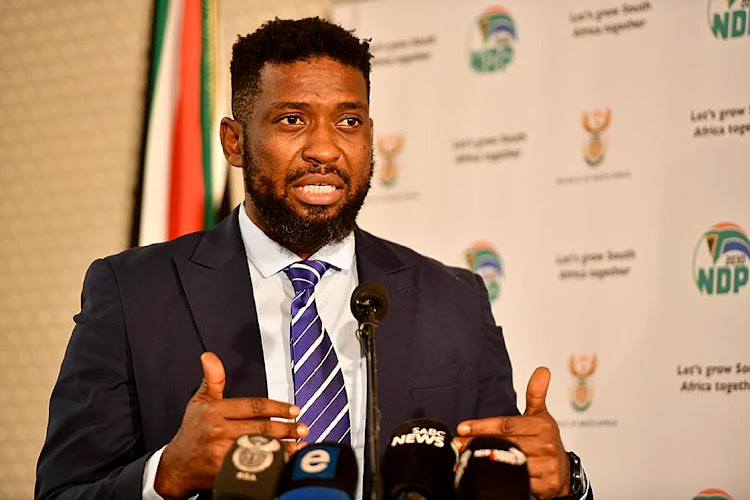
In a separate incident, Higher Education Minister Buti Manamela addressed frustrated students protesting outside Parliament, as tensions flared over funding, accommodation and broader higher education challenges.
The action kicked off soon after President Cyril Ramaphosa wrapped up his state of the nation address (SONA), with scores of Cape Peninsula University of Technology (CPUT) students marching to the gates of Parliament.
They chanted for better housing and waved signs calling out delays in funding from the National Student Financial Aid Scheme (NSFAS).
“I foresaw the Cape Peninsula University of Technology students’ accommodation protest two weeks ago,” he said, stressing that his team had started working on solutions before the blow-up.
Manamela assured them that new housing spots were in the works. He pointed to ongoing builds and partnerships to add thousands of beds nationwide. But he also called out bad apples in the system – some providers who mistreat students, hike prices unfairly, or fake room counts to grab more NSFAS cash. “Student accommodation providers ill-treat students,” he noted, vowing tougher checks to weed them out.
South Africa has nineteen public universities and seven universities of technology, totalling 26 state-owned institutions.
NSFAS meanwhile has asked universities to allow students who qualify for loans to register for the 2026 academic year, even if their funding has not yet been finalised.
In a circular issued to vice chancellors and financial aid offices last week, NSFAS said the request applies to students who were eligible for loans in the 2024, 2025, and 2026 academic years but still have outstanding fees.
“The purpose of this circular is to request universities to support NSFAS students who qualify for loans in the 2024, 2025 and 2026 academic years, whose fees are still outstanding pending the finalisation of the loan processes for these academic years,” said acting CEO Waseem Carrim.
NSFAS acknowledged that some universities still have loan applicants who were found eligible for funding but whose loan processes were not fully completed.
The provision of state financial aid to students has been one of the most important and successful higher education policies in post-apartheid South Africa. Significant numbers of students who would otherwise not access higher education have been able to do so.