
Staff Reporter.
The national Department of Water and Sanitation’s hydrological report indicates significant improvement across the Western Cape dam system following the disruption of heavy rains over the long weekend.
The Cape Town System Dams increased by more than 7% compared to last week, the department said.
The Western Cape Water Supply System (WCWSS) — comprising six dams (Theewaterskloof, Bergriver dam, Upper and Lower Steebras, Voelvlei and Wemershoek dams) supplying water to the City of Cape Town and its surroundings — is sitting at 109.38%, a significant improvement compared to 85% same time last year.
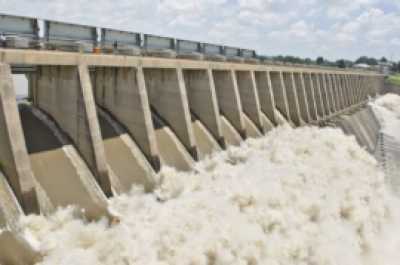
On individual dams, Theewaterskloof, the biggest dam in the Western Cape, which accounts for 54% of the province’s water supply, is at 100% and spilling.
Other dam levels are standing as follows: Misverstand Dam 152.67%; Brandvlei Dam 80.91%; Ceres Dam 101.16%; Gamka Dam 102.49%; Clanwilliam Dam 101.38% and Miertjieskraal 111.71%.
The Olifants / Doorn River Catchment has reached the 100% mark, a very healthy water yield compared to 86.71% of last year.
“It is pleasing to see that Gouritz River Catchment is hovering above 80%, as the system was below 50% at the same time last year.
“Some dams have sluice gates, while others do not have sluice gates. When the dams are full or overflowing, water is automatically released through spillways to control the flow downstream, “the department said.
While DWS is pleased with the significant rainfall, it has acknowledged that the heavy rains and adverse weather conditions have led to significant damage of infrastructure and detrimentally affected lives and livelihoods, especially those in riverbanks and low-lying areas.
“DWS continues to urge citizens to be careful near water resources and facilities, including crossing low-lying bridges.
“The department is currently conducting assessments on the infrastructure and there are no immediate reports of extensive water infrastructure (gauging stations) being damaged or washed away.
“DWS, together with other stakeholders, is monitoring the situation.”
Meanwhile the MEC of Local Government, Environmental Affairs and Development Planning in the Western Cape, Anton Bredell, has called for holidaymakers to plan their travels carefully as several roads remain closed following the floods.
“It is the start of the school holidays in the Western Cape, and we are asking people to consider their plans for traveling very carefully, as several roads are still closed, have only limited lane access, or stop-go arrangements in place,” Bredell said.
Bredell said currently, there is a stop-go arrangement on the N1 in De Doorns, which will be in place for at least three months. The N2 is closed outside Botriver; the R43 is closed in the direction towards Villiersdorp; Hemel and Aarde Road is closed towards Hermanus, and the R321 is closed from Molteno in the direction of Villiersdorp.
Updates on road closures can be viewed at: https://www.westerncape.gov.za/news/latest-road-closures.