
By Brenden Nel.
No one player makes or breaks a team in modern rugby, but the frightening reality for the Springboks is that a lot of their Rugby World Cup fortune relies on two players who are in a race against time to get fit.
While the Bok management have managed the rehabilitation of both captain Siya Kolisi and flyhalf Handre Pollard well until this point, the reality is both will need to come through sometime in the three warm-up games to prove their fitness and with less than nine weeks to go before the start of the showpiece tournament, time is an enemy.
There has been no indication that either won’t be ready in time, and those with longer memories will recall how Kolisi came through after an injury in 2019 just before the tournament to lead the team to eventual glory.
But one of the factors in this weekend’s loss to the All Blacks was the glaring absence of two of the Springboks key players.
‘Chasing Ghosts’
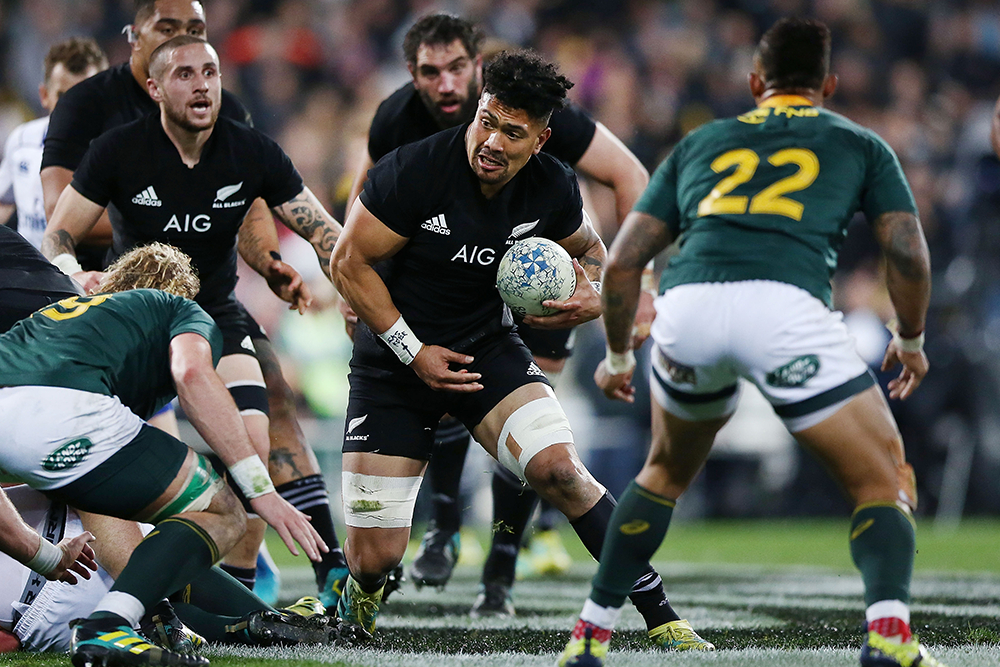
A lot will still be written about the nightmare first 20 minutes when – in Steven Kitshoff’s words – the Boks were “chasing ghosts” and the way a number of players looked underdone without action for few months, but the calming force of Kolisi’s leadership and the impact he has in the Bok game plan in the tramlines and off the ball were aspects the Boks tried to cover but never really got right.
The same goes for the calming stewardship that Pollard normally brings at 10. While it is understandable that the Boks need to look to cover their bases in case they get an injury in the showpiece tournament, the match didn’t provide them with the comfort they hoped for.
Damian Willemse is a fine player and a real asset in the way his versatility offers the Boks a lot of options in the backline – and a gem to have on the bench to do just that. And in reality that will be the plan for the World Cup with Pollard back at the helm.
But the choice to go into an All Blacks test without a recognised goalkicker, and then relying on both Faf de Klerk and Cheslin Kolbe – both through no fault of their own stepping up to take the crucial kicks – is something that would have attracted howls in any other year than in the World Cup.
With four games left until the start of the tournament the Boks will need to entrust Manie Libbok more with the stewardship of the backline if they are to cover these bases, but the reality is that, outside their current options, the cupboard is really bare when it comes to international class 10s.
Japanese-besed players underdone
In the loose trio, the knock-on effects of a number of Japanese-based players last seeing action in May seems to have affected the balance, and it wouldn’t be surprising to see the likes of Pieter-Steph du Toit and Duane Vermeulen return after some powerful performances off the bench in the second half.
That being said, the Boks will know that both Franco Mostert, Kwagga Smith and Jasper Wiese all will get better as the season goes on and Smith already showed some good touches in the second half. They were a second off the pace when compared to the All Black loose trio and the breakdown free-for-all didn’t help things either.
Kolisi’s off-the-ball disruption is something the captain doesn’t get a lot of credit for but it is a key factor in the way the Boks have played under his leadership. His ability to pop up in the tramlines and be the link for the wingers is another aspect that he does so well. Without it the Boks have had to adapt and on Saturday came up short.
They will know that and will be working hard to correct it over the next few weeks.
In the end though, the Auckland test was telling that it gave the Bok management a lot of food for thought in the way they want to play, and in terms of team selections.
And it wasn’t a bit ironic that two of their biggest headaches were players who weren’t on the field during the game.