
By Lehlohonolo Lehana.
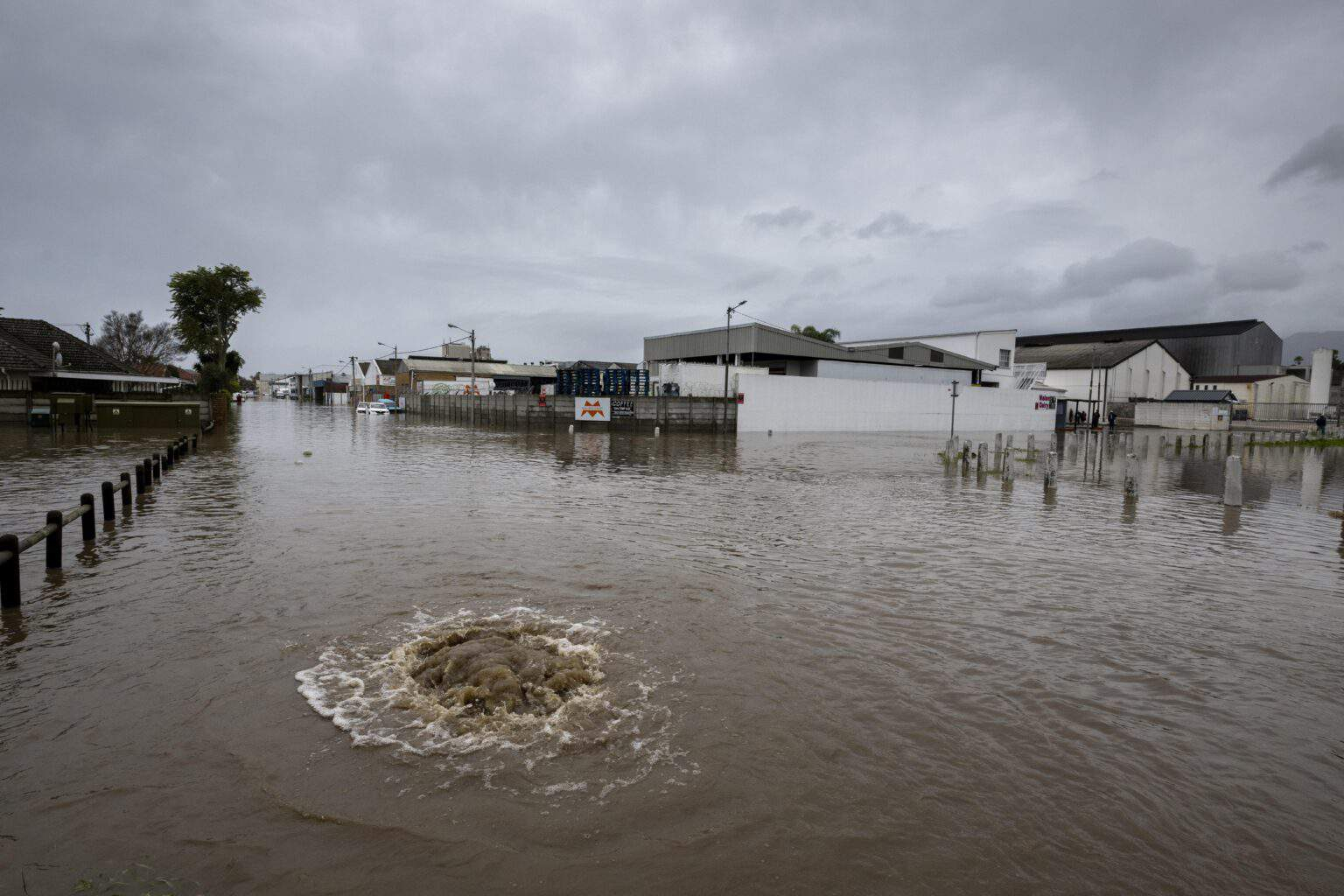
The Western Cape has been officially awarded a disaster declaration after the deadly stormy weather left a trail of destruction in the province.
The declaration followed just hours after the Western Cape Government had lodged the request.
The new Minister of Cooperative Government and Traditional Affairs, Velenkosini Hlabisa, whose department is responsible for coordinating disaster responses, has also activated the Joint Operation Command Centre.
A series of cold fronts that brought heavy rains, strong winds, snow and icy-cold temperatures wreaked havoc across parts of the province and claimed at least 1 life.
In Cape Town alone, about 100 thousand people and 33 thousand homes were affected by the adverse weather conditions.
Hlabisa who visited the affected areas attributed the disasters to climate change. He said all concentrated efforts were needed to mitigate the impact of intense weather conditions.
“We need to be proactive, we need to ensure that we plan ahead because there are indicators which do demonstrate what is coming next,” he said.
The pressing questions arose regarding intergovernmental collaboration and resource sharing to ensure provinces can provide timely aid to affected communities.
Hlabisa underscored the importance of embracing the principles of a united government, overcoming political affiliations to collectively address the needs of all citizens. He added that political parties carried the responsibility to provide formal settlements to those currently residing in informal settlements in wetlands and low-lying regions.
Hlabisa emphasised the need to move people from these vulnerable areas, saying them staying there was a time ticking bomb.
“We need to engage and persuade our people, that yes we understand they might not have formal houses but it’s not a good thing to put themselves at risk because we are living in a period of climate change,” added Hlabisa.
Western Cape premier Alan Winde said, “I really want to thank the Minister for the speed in which we’ve got this declaration and so that is just really going to help us with financing the costs of fixing the problem, making sure that we are responding as quickly as possible. We’ve got to really start investing far more resources into mitigation mechanisms, into redesign, into rebuild.”
Winde said: “The real costs will still take a few days to establish.”
Meanwhile president Cyril Ramaphosa emphasised the urgency of decisive action and collaboration against climate change at the Climate Resilience Symposium 2024, reiterating South Africa’s commitment to a just transition to a low-carbon economy, aiming for net zero emissions by 2050.
The National Treasury, World Bank, Presidential Climate Commission, and other partners will host the Climate Resilience Symposium 2024 from today to 17 July in Pretoria, focusing on climate change and a just transition.
The Climate Resilience Symposium aims to integrate climate goals into macro-fiscal and finance policy, improve government coordination, profile the National Treasury’s contribution to climate action, and advance policy, advocacy, green growth, and collaboration in addressing climate change challenges.
Ramaphosa stated that the Climate Resilience Symposium is taking place at a time when we are witnessing first-hand our extreme vulnerability to the impacts of a changing climate.
He pointed to the recent storms in the Western Cape that caused significant damage to homes, infrastructure, and businesses, temporarily halting container ship traffic at the Port of Cape Town.
This underscores the urgency for the country to swiftly develop and enforce financial and policy measures to address these shocks, said President.
There were “substantial gaps between available disaster funds and the cost of disaster response”.
“Even as we have taken proactive measures like setting up a climate change response fund, we need to think seriously about the urgent financial and policy measures needed to address these shocks and how to strengthen the National Treasury’s disaster financing response.”