
By Kevin Rademeyer, Sports Journalist.
Three rounds into the Women’s Six Nations, the headline figures are striking. Yet, as ever, the numbers only begin to tell the story.
Start with the crowd. A cumulative attendance of 194,466 has already surpassed the entire total from the 2024 tournament. That is before the final fortnight. Scale that against last season at the same point, just 84,645, and the growth is not incremental. It is exponential. A 136 per cent rise suggests more than novelty. It signals habit forming interest.
The venues matter here. Allianz Stadium. Principality Stadium. Scottish Gas Murrayfield. These are not tentative bookings. They are statements of intent, and they have been met with response. When England women’s rugby union team drew 77,120 for their opening win over Ireland, it was not simply a record. It was validation.
Viewership tracks a similar curve. An 11.5 per cent increase, with 9.9 million tuning in before round four, points to a competition that is not just filling seats but holding attention. France’s clash with Ireland pulling 2.35 million on national television reinforces that this is no longer a niche product.
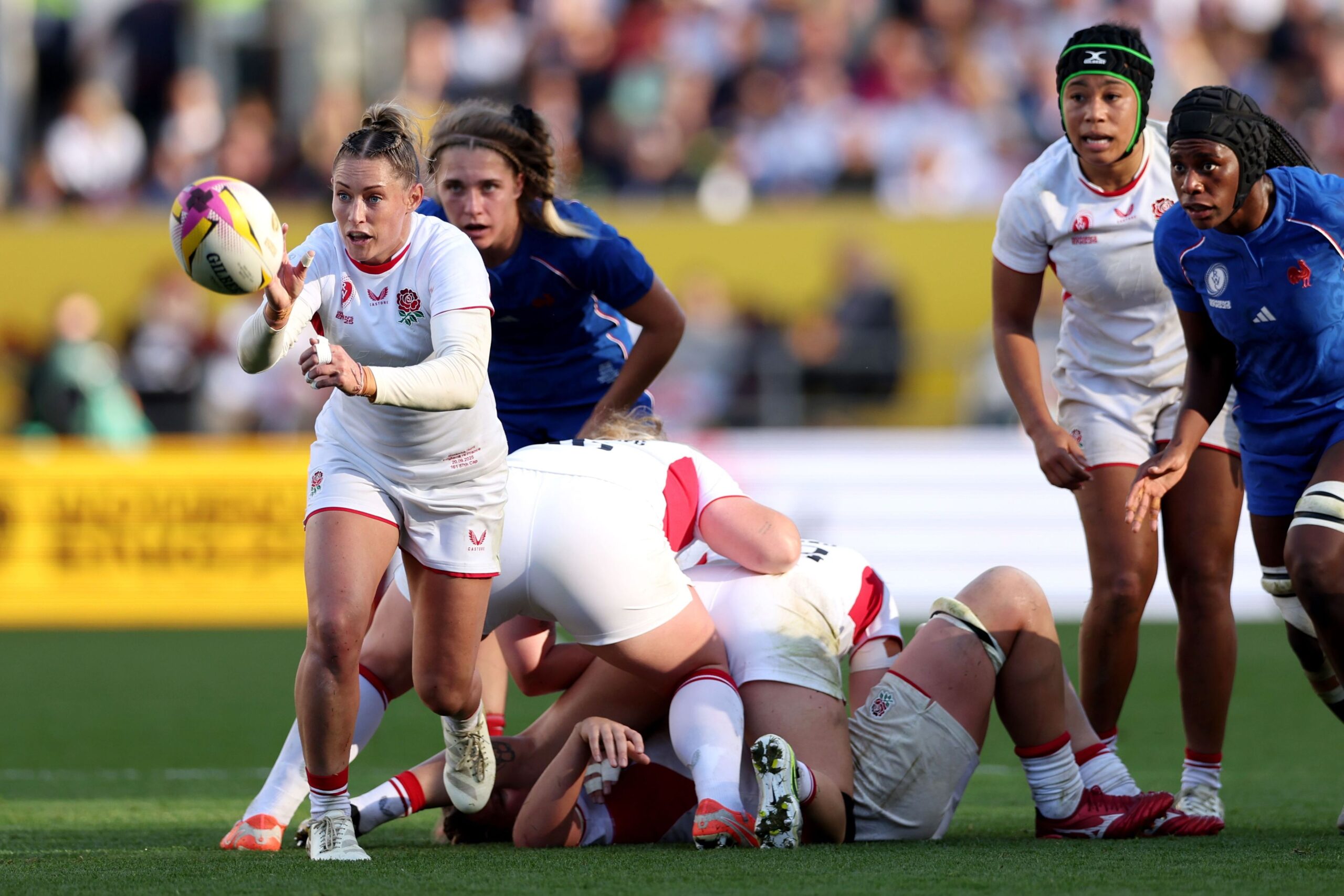
But beyond the commercial markers sits a more interesting shift. The game itself is changing. The modern Women’s Six Nations is faster, sharper and more structured than at any point in its 25 year history. Average points per game have climbed to near 58 this season, continuing a trend that has seen the five highest scoring editions all arrive since 2019. That rise is not solely the result of English dominance, though the Red Roses remain a powerful accelerant. Remove their results and scoring still sits above 50 points per match.
The more revealing detail lies in how those points are being generated. Kicking volume has surged. From just over 26 kicks per game in 2021 to nearly 45 in 2025, teams are now far more willing to play without the ball. Territory has become currency. Sides are probing space earlier in the phase count, rather than building through long, multi phase sequences.
This has compressed time. Ruck speed has increased markedly, with over 60 per cent completed in under three seconds. Quick ball remains the clearest route to defensive disorganisation, and teams now have both the technical clarity and physical capacity to sustain that tempo.
Former England head coach Simon Middleton identifies the twin drivers. Skill development and conditioning. Players are more adept in the contact area, more precise in their kicking, and better equipped to repeat high intensity efforts. The result is a game that looks, in certain aspects, closer to the men’s version than ever before.
Set piece reliability underlines that progression. Scrum and lineout success rates are approaching 95 and 89 per cent respectively, while goal kicking has climbed above 70 per cent. Even shots from the touchline, once low percentage plays, are landing more frequently. And yet, there is a tension within that evolution.
Middleton’s caution is worth noting. In chasing efficiency, there is a risk of uniformity. A game overly dictated by territory and kicking duels may lose some of the instinctive, ball in hand creativity that has long defined the women’s code. The balance between structure and spontaneity remains delicate.
For now, though, the competition is thriving in both form and function. Records are falling in the stands and on the pitch. The product is faster, more exacting, and increasingly visible.
With two rounds still to play, the trajectory is unmistakable. Attendances will rise again. Broadcast figures will follow. The closing fixtures, potentially decisive, will carry weight well beyond the table.
This is no longer a competition in development. It is one setting standards, commercially and tactically. The Women’s Six Nations has moved past proof of concept. It now commands attention, and it is shaping the future of the sport.