
By Lehlohonolo Lehana.
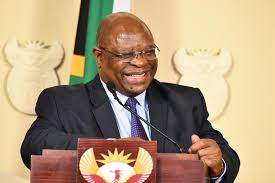
The Judicial Service Commission held its fourth and final interview for the Chief Justice position, with Deputy Chief Justice Raymond Zondo in the hot seat before the JSC makes its recommendations to President Cyril Ramaphosa who would then decide who would be the country’s new chief justice.
Zondo has been asked about decisions he took during the state capture commission of inquiry and whether as chief justice he would get tied up in litigation flowing from its findings.
He told the JSC that he did not hesitate when asked to take on the state capture task, seeing it as his duty to the country, although he knew he would “make enemies”.
His interview was used as a platform to call the judge to explain why he did not compel former spy boss Arthur Fraser to appear before the state capture commission.
Commissioners Nosiviwe Mapisa-Nqakula,Julius Malema and Gratitude Magwanishe questioned Zondo why he did not subpoena Fraser to testify on the allegations against him.
In January 2021, SSA acting director-general Loyiso Jafta told the State Capture Commission that R9-billion in fixed assets were not to be found and that R125-million could not be accounted for in the 2017/18 financial year. Fraser was appointed as SSA director-general in 2016.
Zondo said that part of the problem with Fraser was that he seemed like he did not want to follow the processes of the State Capture Commission.
He added that Fraser wanted to be treated outside of the rules and it was important to note the time in which a decision on Fraser could be made.
Zondo explained that there were several people implicated in state capture but were not called to account. He said that before March 2021, there was no reason to force Fraser to come to the Commission. He provided a series of events surrounding the interactions with Fraser.
Malema was not happy with Zondo’s response and said that he was being long-winded in an attempt to not answer the question. Malema maintained an antagonistic approach to interviewing Zondo.
He pushed Zondo for details about why former president Jacob Zuma asked to meet him in a hotel and Zondo confirmed that he went to see Zuma, who he said he knew, some 20 years ago and cannot remember the exact details of that meeting.
Zondo also confirmed that he later met with Zuma at his Forest Townhouse – and revealed that the meeting may have been in 2008.
At the time, there had been a media conference where Malema said he would “kill for Zuma”. Zondo said he was concerned about this and also extremely worried that Zuma had said nothing about Malema’s comments.
He then contacted Zuma and asked to meet with him. Zondo said he told Zuma that a country could be thrown into a lot of violence if leaders did not stop incendiary rhetoric.
Malema described it as ‘political interference” and argued that Zondo should have disclosed his relationship with the former president. Zondo did not agree – and said he spoke to Zuma as a citizen.
Malema also accused minister of Justice Ronald Lamola that he acted unlawfully when he suggested Judge President Dustan Mlambo to receive an acting appointment at the ConCourt.
That comment sent Lamola over the edge and Malema responded by screaming back at him.
Lamola said there were two vacancies at the time that he and Zondo were exchanging letters about the acting appointments. Mlambo’s name was also put forward before he was nominated as a Chief Justice candidate.
If Zondo were appointed Chief Justice, he’d serve two and a half years of the 12-year term before retiring. When asked about this, he pointed out that chief justices rarely serve full terms. He referenced former chief justice Sandile Ngcobo, who served for two years.
Zondo was first appointed as a judge of the Labour Court in 1997 and was judge president of the Labour and Labour Appeals courts between 2000 and 2010. He has been a judge of the Constitutional Court since 2012 and was appointed deputy chief justice in 2017.
The JSC will have a closed session on Saturday to deliberate.