
By Lehlohonolo Lehana.
President Cyril Ramaphosa has acknowledged that although government has made significant strides in advancing the constitutional and rights-based system, more work still needs to be done to ensure all citizens can fully exercise their basic human rights.
Ramaphosa was addressing the National Conference on 30 years of Human Rights in South Africa at the Birchwood Conference Centre in Ekurhuleni on Monday.
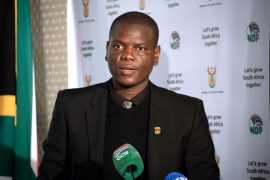
Justice and correctional services minister Ronald Lamola was also in attendance.
The conference is hosted by the Department of Justice and Constitutional Development on 18-20 March 2024 at the Birchwood Hotel and Conference Centre in Boksburg under the theme “Three Decades of Respect for and Promotion of Human Rights”.
The conference is premised on the core mandate of the department which is to uphold and administer the Constitution of the Republic of South Africa, deepening constitutional democracy and promoting the values of human dignity, equality and the advancement of human rights and freedom.
This year marks three decades since the major shift from government sanctioned oppression, colonialism, slavery, racism and sexism and other forms of human violations to a democratic State committed to build a culture of human rights and promotion of human rights in South Africa.
The country continues to be plagued by poor service delivery, especially in municipalities, said the President, adding that corruption deprives citizens of the fulfilment of their rights.
“Whilst we are rightfully proud of how far our constitutional, rights-based order has come, we know that much still has to be done to fulfil the promise of the full enjoyment of the basic human rights of all our people.
“The creation of employment for our people and promoting the rights that are enshrined in our Constitution are necessary to improve lives and lift millions out of poverty and despair.
“We are duty-bound, not just as government but as all who have a stake in the future progress and prosperity of this great country, to work harder, sparing neither strength nor courage to fulfil the basic human rights of our people. The South Africa of today is a vastly different place to what it was thirty years ago,” the President said.
The President reflected that since 1994 government has prioritised the advancement and fulfilment of the Bill of Rights as a cornerstone of the country’s democratic order.
He emphasised that human rights are the basic rights that all human beings should have.
“Human rights embody the key values of our society such as equality, dignity and fairness, and define our nationhood. Human rights should manifest themselves through protection for vulnerable groups, freedom of speech and expression, religious freedom, freedom to love and other rights that promote the well-being of people.”
Ramaphosa further acknowledged that there have been challenges and shortcomings over the past 30 years, and “we have a long way to go towards completely fulfilling the promise of the Constitution”.
That said, he added, the nation should not shy away from the immense progress that has been made.
The President outlined the pieces of legislation that have been passed that give effect to the Constitution.
“The Bill of Rights enjoins the democratic state to enact various pieces of legislation to promote human rights between and among people. Amongst those we have put in place are the Promotion of Access to information Act, which gives effect to Section 32 of the Constitution; the Promotion of Administrative Justice Act which gives effect to section 33; and the Promotion of Equality and Prevention of Unfair Discrimination Act, which gives effect to section 9.
“To give effect to section 9 (2) of the Constitution, relating to measures of redress for the previously disadvantaged, we passed the Employment Equity Act, Broad Based Black Economic Empowerment Act and others,” he said.
He further highlighted that the constitutional order is premised not only on building a non-racial society, but also a non-sexist society.
Over the past 30 years there have been significant changes in the position of women across society. Today, there are more women serving as leaders in both the public and private sectors.
“We have passed a broad range of laws to protect women from all forms of abuse and to advance their rights. These include laws around domestic violence, sexual abuse, sexual harassment, and workplace discrimination,” he said.
Watch Live in the video below:
Video Courtesy of DCOJ.