
By Kevin Rademeyer, Sports Journalist.
Photo Credit: AELTC.
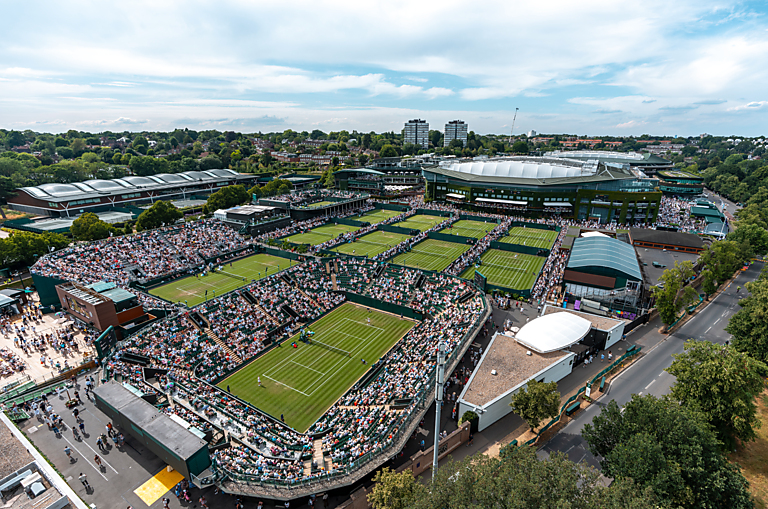
For all the changes in tennis, Wimbledon remains the one tournament every player wants to win and every fan wants to watch. The 2026 Championships proved exactly why, delivering record crowds, soaring television audiences and digital engagement on a scale unmatched in the tournament’s 149 year history.
From the immaculate lawns of the All England Club to living rooms in Johannesburg, Cape Town and across the globe, Wimbledon once again reminded the sporting world why it remains the benchmark for excellence.
This year’s Championships attracted a record 550,151 spectators, the largest attendance ever recorded at Wimbledon. Helped by perfect weather and the first rain free tournament since 2019, SW19 welcomed packed crowds throughout the fortnight, with daily attendance records falling on three separate days as demand for the sport’s oldest Grand Slam continued to surge.
The appetite for Wimbledon was just as remarkable away from Centre Court.
Coverage reached more than 200 territories, with broadcasters reporting substantial audience growth despite fierce competition from the FIFA World Cup. In the United States, ESPN delivered its second most watched Wimbledon ever, while the BBC recorded more than 54.8 million streams across the United Kingdom.
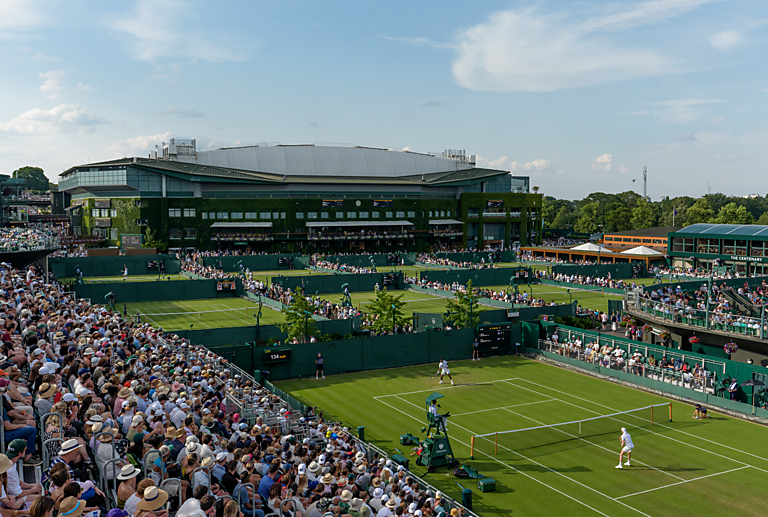
For South African tennis fans, who have watched Wimbledon occupy a special place on the sporting calendar for generations, the tournament’s reach has never been greater. Whether following the action live on television, through streaming platforms or social media, millions connected with a Championships that continues to evolve without losing the traditions that have made it iconic.
Online, Wimbledon enjoyed its biggest digital performance yet.
The tournament generated 4.8 billion social media impressions, while video views climbed to 3.2 billion, a 33 percent increase on last year. Wimbledon also reached a record 138.5 million unique users across its digital platforms, with particularly strong growth in markets including the United States, India, Germany and Japan.
On court, the tennis lived up to the occasion.
Italy’s Jannik Sinner successfully defended his gentlemen’s singles crown to further cement his status as one of the game’s dominant forces, while Czech star Linda Noskova lifted her maiden Wimbledon title to become the tenth different women’s champion in the past ten Championships, highlighting the remarkable depth emerging in the women’s game.
Home supporters also had plenty to celebrate. Arthur Fery became the first British wildcard in the Open Era to reach the men’s singles semi finals, while Henry Patten claimed a second Wimbledon doubles title alongside Finland’s Harri Heliovaara. Britain’s wheelchair stars Alfie Hewett and Gordon Reid added yet another doubles crown to their remarkable partnership.
Beyond the headlines and trophies, Wimbledon continued investing in the future of the sport.
The Wimbledon Foundation welcomed hundreds of guests from charitable organisations, while youth programmes celebrated 25 years of introducing thousands of young people to tennis. Sustainability initiatives, accessibility projects and cutting edge digital innovations reinforced the tournament’s commitment to remaining relevant in an ever changing sporting landscape.
For South African tennis, there were no participants in the main Ladies or Gentleman draw this year, however Wimbledon remains both an inspiration and a benchmark. It is the tournament every youngster dreams of playing and the standard every Grand Slam strives to emulate.
The figures are extraordinary, but they only tell part of the story.
Packed stands, global audiences measured in billions and champions writing new chapters in Wimbledon folklore once again demonstrated that no tournament captures the imagination quite like the one played on grass. In an era of constant change, Wimbledon continues to prove that tradition, when paired with innovation, remains one of sport’s most powerful combinations.