
By Estea Rademeyer.
Image: BBC.
Africa’s richest man expects to break ground on a 700,000-barrel-a-day oil refinery in Kenya by October at the latest. The plant will cost up to $16 billion. It will serve much of East Africa and reach as far as Egypt.
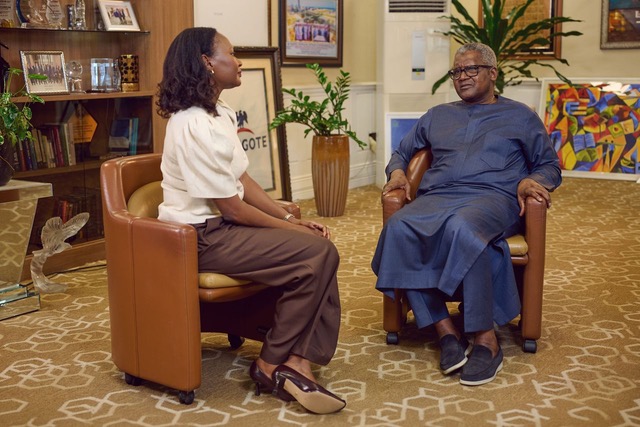
Aliko Dangote, president and chief executive of Dangote Group, told BBC’s new programme Africa Enterprise that construction of the plant should take less than four years. He originally expected the project to cost $17 billion but said the lower figure reflects a faster build, which cuts financing costs, and lessons learned from building his Lagos refinery.
“The plans have actually gone very far with Kenya,” Dangote said in an exclusive interview recorded near the Lagos facility. “I think latest by October, we’ll be doing ground-breaking.” Once built, the refinery will aim to reduce the region’s reliance on imported refined fuels.
Financing is expected to be 30% equity and 70% debt. “We know we don’t have any problem raising the money,” he said.
Dangote framed the project as part of a broader push for African energy self-sufficiency. For generations, many African countries have exported crude oil only to import refined products. The Lagos plant was built to reverse that pattern in West Africa; the East African facility is intended to do the same further east.
“It’s going to have a massive impact, really, and then also it guarantees the countries getting their own products,” he said. “They are not going to live hand to mouth.”
The interview launches Africa Enterprise, a weekly multi-platform business programme from BBC Studios and BBC News sponsored by Absa. Hosted by Nancy Kacungira, the show will air three 4-minute episodes weekly on the BBC News channel plus a longer 12-minute programme at the end of each month. Digital versions will appear on BBC.com and social channels, with episodes on YouTube and clips on LinkedIn.
Kacungira said the series will cover entrepreneurship, agriculture, mining, the future of work, creative industries, pan-African identity and infrastructure. “We’ll be answering the questions on the mind of our audience and bringing these fascinating stories from Africa to the world,” she said.
Isla Macleod, vice president commercial for Africa and Europe at BBC Studios, welcomed Absa’s sponsorship and said the programme showcases “the ambition, innovation and entrepreneurial spirit shaping Africa’s future.”
Sydney Mbhele, Absa Group’s chief marketing and corporate affairs officer, said the programme creates a global platform for African business leaders. “Africa is not one market or one story. It is a continent of diverse people, ideas and enterprises,” Mbhele said.
In the interview, Dangote returned to a theme he has voiced for years: that Africa must drive its own economic progress. Asked about his 2015 remark that “the African economic train has left the station,” he said the continent still needs to convert potential into results.
“We Africans, we must make sure that we lead the prospects that you have, the opportunities that you have,” he said. “Nobody, and I repeat, nobody will come and drive it for us.” He said he hoped countries would soon sign the African free trade agreement, adding that growth would follow. He also stressed the need to create jobs for a very young population.