
By Lehlohonolo Lehana.
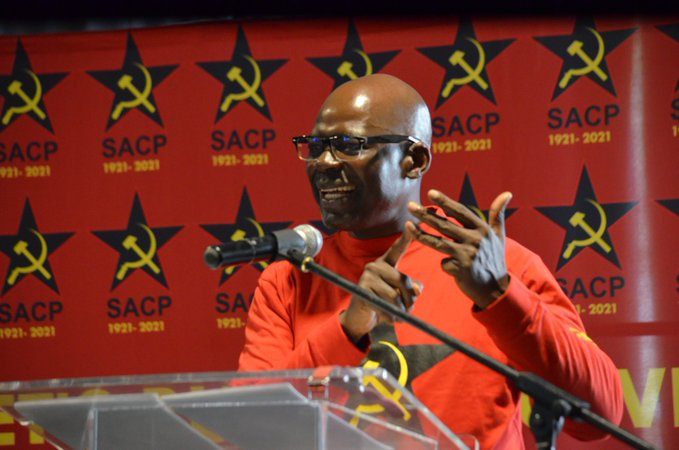
South African Communist Party (SACP) general-secretary, Solly Mapaila slammed the African National Congress (ANC), for teaming up with the Democratic Allicance (DA) and Freedom Front Plus (FF+) in a government of national Unity (GNU).
This is despite the tripartite alliance partners expressing their discomfort on a move to get into bed with neoliberal and colonial parties.
The SACP is ANC’s alliance partner, alongside the Congress of South African Trade Unions (Cosatu).
Mapaila was speaking at the National Education, Health and Allied Workers’ Union (Nehawu) national political school held in Ekurhuleni on Monday.
He pointed out that during the GNU negotiations, the SACP had made it clear to the ANC that it was against the inclusion of “neo-liberal forces” like the DA and FF Plus.
The communist party would have preferred the ANC form a coalition with the Economic Freedom Fighters (EFF) because the two parties share similar ideologies.
Mapaila said the alliance tried to negotiate for an EFF coalition with the ANC but the ANC rejected it, claiming the EFF did not respect the party.
“I did not give up. The first day I went to meet comrade Floyd [Shivambu] was the day after I had buried my brother. I lost my brother when I was at the Siyanqoba rally. I went to see him [Shivambu] and said ‘comrade, you can’t continue this way’.
“I went to the ANC. It was back and forth begging people to actually focus on the possible revolutionary path. It will be better to be irritated by the EFF in cabinet than to be irritated by the neoliberal forces who want to be dominant and take control of the revolution.”
Mapaila said he was surprised when the GNU statement of intent, signed by Fikile Mbalula and DA’s Helen Zille on the morning of the first sitting of the National Assembly on 14 June, circulated in the public domain.
He said the initial reaction from “everyone” was that the ANC has “sold out”.
The SACP secretary-general claimed that the SACP’s input on the statement of intent was “meaningless” because they were ignored in the final document.
Meanwhile David Masondo expressed cautious optimism about the longevity and success of the GNU.
While the current state of the government appears stable, Masondo noted that this stability isn’t assured indefinitely. “The construct, its logic, was mainly a construct to ensure government’s stability from that point of view.”
Masondo also highlighted potential future challenges, especially as the 2029 general elections approach. He pointed out that political parties within the GNU might start to assert their distinct identities more strongly, which could lead to internal conflicts within the coalition.