
By Lehlohonolo Lehana.
The SA Local Government Bargaining Council (SALGBC) has dismissed an application by the Tshwane metro to be exempted from implementing the last leg of a multiterm wage deal reached in the council in 2021 for the 2022/23 financial year.
The SALGBC is a platform for the employer and workers to agree on wages and other conditions of employment.
To honour the agreement, the city needs R600-million which it has reportedly said it cannot afford as it also battles to pay its creditors, including Eskom and Rand Water.
In July, the SALGBC gave the municipality 10 days to pay the wage hike agreement which was struck in 2021, however the City filed an application for exemption claiming it does not have money for the increments.
The order directs the City to pay workers’ increases as follows: Salary increase of 5.4% effective from 1 July 2023, increase of minimum wage to R9531.54, homeowners’ allowance be increased to R1011.77, all linked benefits and conditions of service to be increased by 5.4% effective from 1 July 2023.
“The 2022/23 annual financial statements do, however, indicate a slight improvement, but there are still challenges in relation to liquidity and being in a position to pay creditors. However, the budget for 2023/24 and I hasten to add that a budget projection indicates an overall increase in expenditure and income of 6% and thus it is anticipated that these measures will go a long way to ameliorate the applicant’s financial predicament,” said the Bargaining council commissioner.
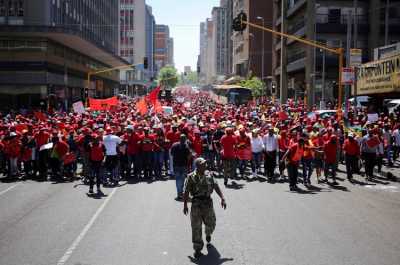
Workers affiliated to the South African Municipal Workers’ Union (SAMWU) have been on an illegal strike since July.
The strike has led to an interruption in the delivery of services in the city, including electricity outage repairs, water restoration, and refuse removal.
“This is disappointing as the city has presented solid arguments supported by evidence as to why these increases are unaffordable,” said City spokesperson Selby Bokaba
The city’s financial position is exceptionally fragile and, as such, we embarked on an extensive cost cutting exercise by reducing budgets by 30% across departments.”
“It is worth noting that the panelist acknowledges the city’s liquidity challenges, but in the same vein ordered the city to honour the collective agreement.”
Bokaba says they are shocked by the panel to dismiss the city’s exemption application.
“This ruling clearly provides grounds for review. The city will immediately begin the requisite work to approach the Labour Court on an urgent basis to review this ruling.”
The findings of the council are final and binding, however, the city is entitled to challenge them at the labour court.
South African Municipal Workers’ Union (Samwu) general secretary Dumisane Magagula said the union welcomed the ruling dismissing Tshwane’s “frivolous” exemption application. On Tuesday the union will brief the media on the next course of action for workers.
The ruling comes amid a six-week protracted strike by a handful of municipal workers which has crippled several service delivery functions including waste collection and at clinics where staff and patients were forced out of the buildings.
Samwu is South Africa’s biggest local government union, representing more than 150,000 municipal employees countrywide.