
By Lehlohonolo Lehana.
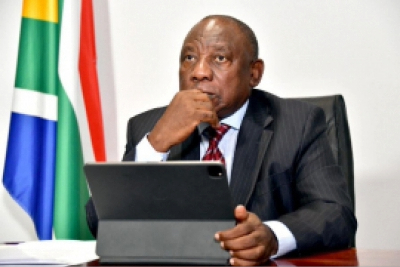
The Democratic Alliance (DA) has lost its legal bid in the Electoral Court over President Cyril Ramaphosa’s national address on the 26th of May.
In his address, Ramaphosa highlighted the “achievements” of the sixth administration, including tackling corruption, the handling of the Covid-19 pandemic, tackling corruption and gender-based violence and reducing load shedding, among other issues.
However he faced criticism from political parties for using the SABC to campaign for the African National Congress (ANC) in a last pitch to voters before the polls on 29 May.
The DA argued that the content was reiterated in an address aired by public broadcaster SABC, several other broadcasters and the government’s YouTube channel and also streamed on the presidency’s X account.
This was in breach of section 94 of the Act, with item 9(2)(e) of the electoral code, which prohibits the abuse of positions of power to influence the outcome of the elections and section 87(1)(g), which prohibits the abuse of public funds for campaign purposes.
The DA said Ramaphosa began his address by quite appropriately thanking the Electoral Commission of South Africa (IEC) and calling for free elections but then veered into naked campaign territory by saying the government had ended state capture and enabled unprecedented levels of investment in Eskom to alleviate the electricity crisis.
In a ruling delivered on Monday morning, Electoral Court judges Dumisani Zondi, Leicester Adams and Seena Yacoob found “there is no evidence that the president’s address influenced a single voter”.
The judges also accepted the president’s argument that he believed that the speech “served the public good and was not calculated to unduly influence voters”.
“We have no reason not to accept this explanation by the president,” they said.
The court also dismissed the DA’s argument that Ramaphosa had violated section 9(2)(e) of the Electoral Code, which provides that no person may “abuse a position of power, privilege or influence, including parental, patriarchal, traditional, or employment authority to influence the conduct or outcome of an election”.
“We agree with the president’s submission that the reasonable reader/viewer of normal intelligence would not have construed the presidential address in the manner contended for by the DA,” the court stated.
“The reasonable reader/viewer would have assigned ordinary meaning to the words used by the president, that being that ‘we’ as a country and as a people of the Republic have worked together for the last five years to accomplish what has been achieved.
“In addition, it is our view that the DA’s summary of the president’s speech overstates what the president claims has been achieved by the sixth administration. A great deal of the issues are simply mentioned as challenges that, in one way or another, have had to be dealt with.”
The ANC lost its majority in a historic election result that put South Africa on a new political path.
The ANC made a deal with other parties to form a government of national unity (GNU) for the first time since the end of apartheid in 1994.
The party lost 17% of its 2019 vote share, losing 71 seats in Parliament. The DA’s seats increased from 84 to 87 – up three, while the Economic Freedom Fighters (EFF) lost five seats from 44 to 39.