
By Lehlohonolo Lehana.
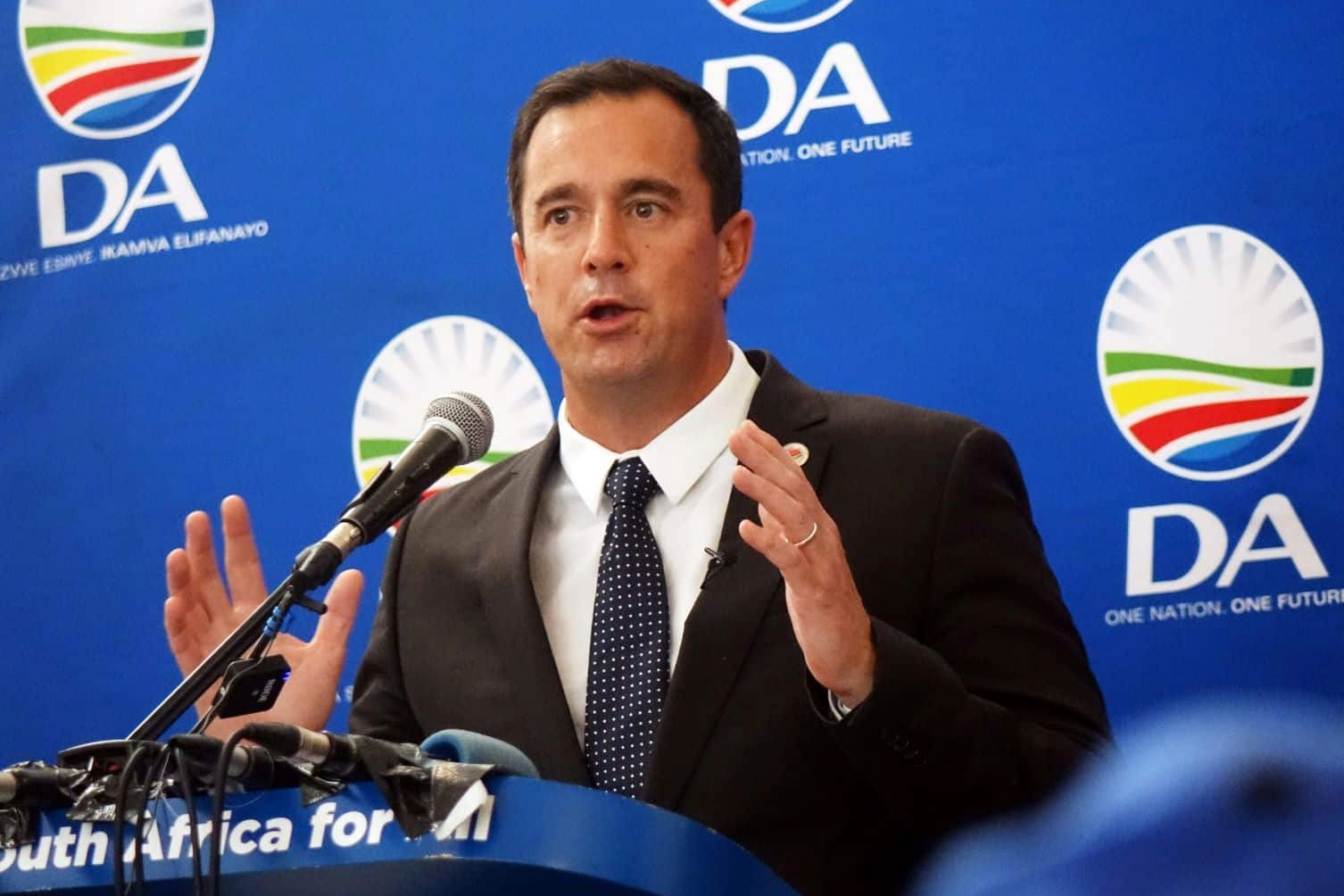
Democratic Alliance (DA) leader John Steenhuisen says his party remained opposed to national policies and legislation such as the National Health Insurance Act and the Basic Education Laws Amendment (BELA) Bill.
The NHI Bill, which seeks to introduce universal public healthcare in South Africa, dominated Health Minister Aaron Motsoaledi’s budget vote speech and many of the responses from MPs on Thursday.
The NHI is unlikely to be a quick process and may take years to implement. However, Motsoaledi said the government would implement the NHI in phases and was already in Phase 2.
President Cyril Ramaphosa signed the NHI Bill into law two weeks before the general elections, on 15 May. The Bill completely overhauls health and will require all South Africans to sign up to the NHI to allow a pooling of private and public spending on health.
Government was likely to face an “avalanche” of litigation, including from the South African Medical Association.
One of the main arguments against the legislation is that it will curtail the right of people to take out private health insurance to cover their medical bills.
Steenhuisen acknowledged that all parties forming the Government of National Unity (GNU) agree on the importance of universal access to basic healthcare and improving the quality of care for all South African citizens.
However, he said differences arise in terms of the funding model and the issue of choice.
“We will continue to use our newfound powers to influence these, but we will not back down from holding those accountable for these particular laws. This is a collaboration, not a co-option, “Steenhuisen said.
But it appears the party is no longer in a rush to head to court over the matter, choosing rather to first deal with the issue within the GNU.
He said the DA proposed an alternative approach, suggesting that the state should partner with the private healthcare sector instead of entangling the NHI in long legal battles.
He emphasised the need for choice, collaborative efforts with the private sector, and improvements in primary healthcare services, including modernisation and digital upgrades.
Steenhuisen expressed his satisfaction with the progress of the GNU, stating that it was going better than anyone had expected.
He believed that the shared goal of addressing significant issues, such as the NHI Bill amongst others, would serve as a unifying force within the GNU.
Furthermore, Steenhuisen reiterated that the DA committed to five years in the GNU but would reconsider its position if its policies were not aligned with it.
Steenhuisen also took a swipe at EFF, saying it has shown that it had “no intention of being the vanguard of the poor”.
“The money was spent on LVs, luxuries items, splurges at the Durban July and champagne and other luxury goods. And it shows very clearly that the EFF have no intention of being the vanguard of the poor. This is a mask that they use in order to justify the activities that they get up to.”
Steenhuisen further said, they would be unlikely to support a motion of no confidence against Ramaphosa, frankly, Phala Phala pales into insignificance in light of the Tshifiwa Matodzi affidavit and the acts of blatant corruption associated with state capture.
Steenhuisen said he believed that supporting Ramaphosa was the more prudent choice, given the alternative parties involved.
The DA leader, who has been appointed as agriculture minister, outlined the party’s expectations for Ramaphosa’s address at the Opening of Parliament on Thursday.
“I trust the president’s address tomorrow will reflect the voices that now exist in the national unity government, and he will commit himself wholeheartedly to this necessary policy shift, particularly after the highly successful cabinet lekgotla that took place this past weekend,” Steenhuisen said.
“As the DA remains an independent party within the government of national unity, we remain committed to our core values and principles. We will continue to serve South Africans with integrity, accountability and relentless pursuit of good government.”
Meanwhile Basic Education Minister Siviwe Gwarube said her ministry will petition Ramaphosa to return the BELA Bill to Parliament for review.
Gwarube said that the bill should be revised to avoid hindering pupils’ futures with outdated legislation.
She said debates are needed on these changes.
“We don’t want to throw the entire bill out but there are sections of the bill that we’re very much against. Fix the areas that are problematic that speak to the powers of the SGBs, but also we got to keep certain elements that talk about getting ECDs formally into the system.”