
By Lehlohonolo Lehana.
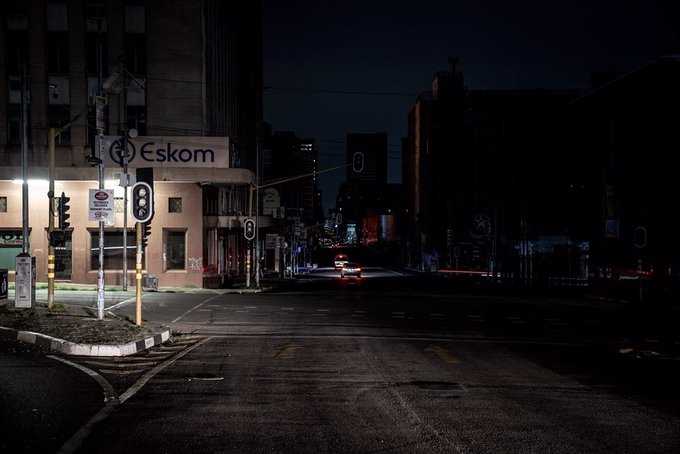
Stage 3 load shedding will continue from 16:00 on Tuesday until 05:00 on Wednesday. But it will then be suspended until 16:00, thanks to an improvement in available generation capacity, Eskom said in a statement.
Load shedding will be suspended between 05h00 and 16h00 from Wednesday through to Sunday, it said, with evening load shedding dropping to stage 2 for the weekend.
As with all Eskom load shedding schedules, times and stages are subject to change depending on demand, supply and various other factors at play.
Eskom said it will provide another update should any significant changes occur.
As things currently stand, breakdowns are at 15,420MW of generating capacity while the generating capacity out of service for planned maintenance is 3,841MW.
Over the past 24 hours, a generating unit at Arnot, Camden and Lethabo power stations was returned to service.
In the same period, a generating unit at Kriel and Tutuka power stations was taken offline for repairs.
The delay in returning to service two generating units at Kendal and a generating unit at Tutuka power stations is contributing to the current capacity constraints.
For access to other load shedding schedules, Eskom has made them available on loadshedding.eskom.co.za.
Smartphone users can also download the app EskomSePush to receive push notifications when load shedding is implemented, as well as the times the area you are in will be off.
Electricity minister Kgosientsho Ramokgopa said the impact of load-shedding on SA’s total economic activity in the production of goods and services could amount to R1.6-trillion, compared with R1.23-trillion in 2022. The effect on the value-added approach to GDP, or gross value added, is projected at R725bn.
Ramokgopa said load-shedding could also wipe out R77bn in tax earnings in 2023. This would be equal to about 5% of the total tax revenue in 2021/22.
It illustrates how the inability of Eskom to meet the demand for electricity is “affecting the government’s ability to help the poor”, Ramokgopa said during a public lecture at the University of Pretoria.
In addition, he said job losses due to persistent electricity cuts could amount to about 860,000 in 2023.
Stats SA’s latest labour force survey put the unemployment rate at about 33% — among the highest in the world.
The ministry did point out, however, that these figures are based on modelling that was done in April and thus assumed higher stages of load-shedding than is the case at present.
Despite recent improvements that have helped to narrow the gap between electricity supply and demand, resulting in lower stages of load-shedding, South Africans have already experienced more power cuts in 2023 than in any year before.