
By Lehlohonolo Lehana.
The European Union (EU) has announced R628-million (€32-million) in grant funding to support the development of South Africa’s nascent green-hydrogen industry, as well as to facilitate net-zero-related investments across Transnet’s rail, port and pipeline operations, including to prepare them for the production and storage of green hydrogen.
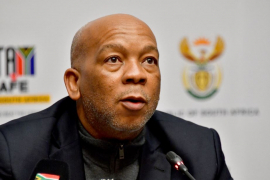
European Commissioner for Energy Kadri Simson made an annoucement at a briefing in Pretoria on Monday, where she also met South Africa’s Electricity and Energy Minister Dr Kgosientsho Ramokgopa and Trade, Industry and Competition Minister Parks Tau.
The financing is being made available by EU development finance institutions in line with a 2013 infrastructure programme agreement with South Africa and will be disbursed in partnership with South Africa’s Industrial Development Corporation.
The EU grants will support the development of South Africa’s nascent green hydrogen ecosystem.
More importantly for the country’s logistics sector, R140 million of the decarbonisation loan will go towards supporting Transnet’s turnaround process.
Simson also met with a number of additional key stakeholders, including business associations that advise the National Energy Crisis Committee, the Presidential Climate Commission, and representatives of civil society, labour, business and government.
The announcement of the €32 million in grants marked a milestone in SA-EU relations, with the two parties united in their ambition for a just energy transition, an EU statement said.
Simson indicated that Europe’s current yearly demand for hydrogen stood at about 10-million tons of mostly grey hydrogen, which would need to be progressively replaced with green hydrogen in line with EU policy and, thus, created a ready-made market. This, even before any rise in demand associated with using hydrogen to displace fossil fuels in hard-to-abate sectors.
Tau welcomed the funding and indicated that South Africa saw potential to become a leading producer of green hydrogen and derivative products, as well as for associated green industrialisation by way of South Africa becoming a producer of renewable-energy and electrolyser components.
Green hydrogen is produced by using renewable electricity in an electrolyser to split water, including desalinated water, into hydrogen and oxygen.
Ramokgopa, meanwhile, highlighted South Africa’s ambition to become a global green-hydrogen production hub while cooperating with countries such as Namibia, which held similar ambitions.
Ramokgopa argued that through infrastructure- and knowledge-sharing South Africa and Namibia could improve their overall competitiveness as green-hydrogen investment destinations.
The Green Hydrogen Economy provides the best opportunity to re-industrialise the South African economy, drive localisation, preserve and create new jobs, and introduce new skills for development,” he added.