
By Lehlohonolo Lehana.
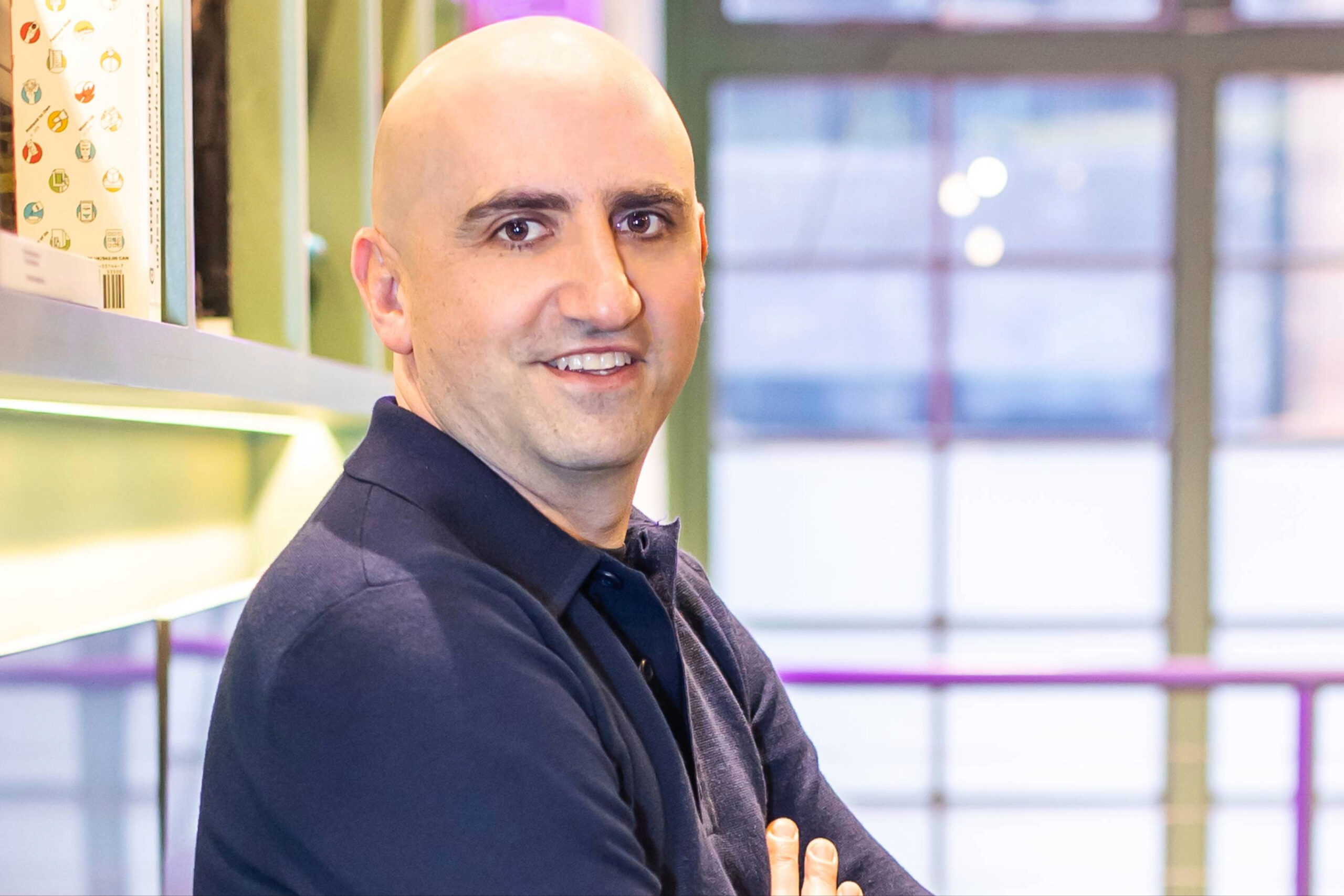
Earlier this year, YuLife has announced the appointment of Tal Gilbert as CEO, succeeding Sammy Rubin who founded the insurtech over a decade ago.
Gilbert will lead YuLife’s next phase of growth, advancing the intelligence that connects everyday health, work and insurance. He will prioritise improvements to its AI capabilities and strengthen offerings for insurers, advisers and employers globally.
He brings over 20 years of global leadership experience, previously working as CEO of Vitality USA, acting CEO of AIA Vitality in Hong Kong and general manager of Vitality Health International.
Q: What does YuLife do?
YuLife was founded in 2017 in the UK on a simple but powerful observation. Insurance, as an industry, has always been built around what goes wrong. It shows up at the worst moments, illness, death, disability, and it pays out. That model hasn’t fundamentally changed in decades.
We asked a different question. What if insurance showed up every single day, before anything went wrong? What if it rewarded people for looking after themselves?
That’s what YuLife is. An all-in-one employee benefit that brings insurance, health and wellbeing together into a single, everyday experience. We combine group risk insurance, life cover, funeral cover, income protection, lump sum disability, critical illness and education benefit, with a wellness and rewards ecosystem. Employees engage with the YuLife app, earn YuCoin by completing healthy activities like walking, meditation or health assessments, and redeem those coins for real rewards at retailers they actually use like Checkers, Shoprite, Pick n Pay and Dis-Chem.
The insight is straightforward. Healthier employees make fewer claims, have better outcomes and are more productive. That’s better for the employee, better for the employer and better for the long-term sustainability of the insurance product itself.
We’re not a wellness app with insurance bolted on, and we’re not a traditional group risk product with a loyalty programme stapled to it. It’s a genuinely integrated ecosystem and that integration is what makes it work.
Q: It has been three months since Tal Gilbert took over from founder Sammy Rubin — can he share the experience thus far?
Sammy has built a business grounded in values, one that genuinely believes insurance should give more than it takes. A culture that doesn’t just talk about that but leads by example. Stepping into that is a privilege and I’m carrying that same sense of purpose into the next chapter.
My focus has been on understanding the business deeply, listening more than talking, and identifying where we can accelerate. The product is strong. The market opportunity in South Africa is significant. The task now is scaling intelligently, building on what’s working, strengthening our broker relationships, and making sure we’re delivering the same quality of experience as we grow.
There’s also something I find genuinely motivating about this market. South Africa has a real need. The employee is under real pressure. When our product actually makes a difference, that is meaningful. That’s the energy I want to carry into the next phase of this company.
Q: What is your vision for YuLife?
The vision is to become the definitive employee benefit for the SA market. One that sets a new standard for what employers can offer their people, and what the insurance industry is capable of delivering.
Right now, too much of the market is still designed around a narrow slice of the workforce. Built for people who are already financially comfortable, already health-conscious, already engaged with formal financial services. We built YuLife for everyone, from the factory floor in a small town to the established business in Sandton. That’s not a compromise. That’s an ambition.
As AI reshapes the world of work, employers will need to think more creatively about how they support their people. My vision is that YuLife becomes the platform through which employers demonstrate, every single day, that they genuinely invest in their people. The war for talent in South Africa is real. Retention, mental health, absenteeism, these are boardroom conversations now. YuLife sits right at that intersection.
Brokers are central to all of this. Not just as a distribution channel but as true partners. Our focus is on making it easier to do business with an offering that is credible, solid and built for what this market actually needs.
We didn’t come to South Africa to compete with what already exists. We came to raise the standard.
Q: YuLife launched in South Africa in 2023 — is it yielding the desired results?
Honestly, the results have exceeded our expectations, and I say that with data behind it.
In 2025 alone, we grew premiums by 80% and doubled our member base. We now have more than 150 brokers actively quoting YuLife, R25 billion sum assured, and an average of 3.2 products per scheme. Those are not vanity metrics. That’s real commercial traction.
What I’m most proud of is the engagement. Our monthly active user rate sits above 50%, more than double the industry average for wellness platforms. Employees aged 40 to 60 are among our most engaged users, which challenges the assumption that gamification only works for younger audiences. Members earned 47.7 million YuCoin in 2025, and the top redemption categories, Checkers, Shoprite, Pick n Pay and Dis-Chem, tell you something important. Our rewards are being used for essentials. That’s real value for real people.
On the operations side, we process underwriting within 48 hours and pay claims within 48 hours of receiving documentation. We run on 90% automation with no legacy system dependency. For a market used to weeks-long onboarding and phone-tag for simple queries, that’s a genuine differentiator.
Clients like H&M South Africa, Switch Energy Drinks, George Municipality and Procera, our largest client to date, show that the product works across a wide range of sectors and employer sizes. The reception from brokers and clients has validated everything we believed about this market.
Q: How does collaboration between YuLife and its underwriting partners work? What does the arrangement entail?
Our underwriting and reinsurance structure was built to give clients, brokers, and members absolute confidence in the financial security of the product.
On the underwriting side, we have partnered with Guardrisk, South Africa’s largest cell captive insurer and a wholly-owned subsidiary of Momentum Group. Guardrisk has been operating since 1993 and underwrites some of the most recognised brands in the country. That’s not a partnership we chose lightly, it grounds YuLife firmly within the established regulatory and financial architecture of the South African insurance industry.
On the reinsurance side, we have Munich Re taking on 80% of the risk, one of the largest and most respected reinsurance companies in the world. Swiss Re absorbs a further 10%, and YuLife retains 10%. This layered structure means that when a claim needs to be paid, the financial backing is unambiguous.
What makes the whole arrangement work is that the product sits on top of this robust foundation. The behavioral science, the technology, the app, the wellness and rewards ecosystem: all of that is YuLife. But the insurance itself is held within a structure that South African brokers and regulators know and trust. That combination of innovation and institutional credibility is exactly what allowed us to grow as quickly as we have.
Q: Why is AI reshaping white-collar work faster than insurance?
It’s a fair observation, and I think there are a few structural reasons for it.
White-collar industries like legal, finance, consulting, and marketing are largely built on information processing: reading, writing, analysis, pattern recognition. These are precisely the tasks that large language models and AI tools have demonstrated the most immediate capability in. The feedback loop is fast, the output is visible, and adoption by individuals doesn’t require institutional approval.
Insurance, by contrast, is one of the most regulated industries in the world. Every process change that touches a policy, a claim, or underwriting has to be defensible to a regulator. That’s not a weakness, it’s the nature of the product. When someone makes a claim, they need to know the process is fair, auditable, and consistent. That requires a much higher bar of validation before AI gets embedded into core workflows.
There’s also a legacy infrastructure challenge. Many insurers are running on systems that are decades old. Integrating AI into those environments isn’t a software update, it’s an architectural transformation. That takes time and significant investment.
That said, I think the gap will close. The insurers who are building on modern infrastructure from the start (as we have at YuLife) will be able to move considerably faster. We’re not retrofitting AI into a legacy system. We designed the system to be automated from the ground up, which is why we can process underwriting and claims in 48 hours. That is AI and automation doing what it’s supposed to do.
Q: While insurance is adopting AI for specific tasks like claims — how reliable is it?
Reliability in AI is really a question of how well the system is designed, trained, and governed, not a property of AI in the abstract.
For high-frequency, rule-based decisions, AI is demonstrably reliable. Our underwriting bot, for example, uses logic and decision trees to customise the journey for each member, limiting irrelevant questions, processing applications faster, and reducing human error. That’s a well-bounded problem, and the system performs consistently. We achieve a 48-hour turnaround on underwriting as a result.
For claims, the picture is similar where the inputs are clear and structured: Documentation received, policy terms checked, payout triggered. We pay qualifying claims within 48 hours of receiving documentation, and that’s an automated process.
Where reliability becomes more nuanced is in complex, edge-case situations, disputed claims, unusual circumstances, or cases where context matters in ways a model might not fully capture. This is where human oversight remains critical. The right model isn’t ‘AI instead of humans’, it’s AI handling the routine, well-defined work at scale, freeing human expertise for the cases where judgement genuinely matters.
The risks of over-relying on AI without proper human oversight are real: bias in training data, opaque decision-making, and errors that compound at scale. The answer is transparency, auditability, and appropriate escalation pathways, not avoiding AI, but deploying it responsibly.
Q: What are the regulatory frameworks governing AI in the insurance industry?
South Africa doesn’t yet have a single, unified AI regulatory framework, but several existing frameworks already apply to how insurers can and cannot use AI.
The Financial Sector Conduct Authority’s Treating Customers Fairly principles are directly relevant. Any automated decision that affects a customer’s policy, premium or claim outcome has to be fair, transparent and explainable. That’s a meaningful constraint on black-box AI systems.
POPIA, the Protection of Personal Information Act, governs how personal data can be collected, processed and used. Since AI in insurance is fundamentally data-driven, POPIA compliance is non-negotiable. This includes requirements around data minimisation, purpose limitation and data subject rights.
Globally, the EU’s AI Act, which classifies certain AI applications in financial services as high-risk, is setting a standard that many South African institutions with international operations or partnerships are already preparing for.
The FSCA has also signalled increasing interest in how algorithms are used in insurance pricing and underwriting. The concern is fairness, ensuring that AI-driven models don’t produce discriminatory outcomes, even inadvertently.
For insurers like YuLife, operating with automated underwriting and claims processing, this means every decision process needs to be explainable, auditable and subject to appropriate human review. It’s a framework we welcome. Accountability and trust are the foundation of any insurance product worth having.
Q: What are the risks involved in AI adoption in insurance?
There are several, and it’s worth being candid rather than overpromising.
The first is bias. AI models learn from historical data, and historical data in financial services often reflects past inequalities. In pricing, in underwriting, in who gets approved and on what terms. Train a model on that data without interrogating it and you risk encoding those inequalities into your automated processes at scale.
The second is opacity. Many AI systems make decisions that are difficult to explain. In insurance, that’s a regulatory and ethical problem. If a claim is declined by an algorithm and the customer asks why, the model said so is not an acceptable answer. Explainability has to be built in from the start.
The third is over-automation. Speed and efficiency are valuable, but not at the cost of accuracy in high-stakes decisions. A fast wrong answer is worse than a slow right one when someone’s claim or coverage is on the line.
The fourth is data security. AI systems that process sensitive personal and health information are high-value targets. The more centralised and automated a system is, the more important robust cybersecurity becomes.
Finally, there’s customer trust erosion. If people feel their insurance is managed by a faceless algorithm and they can’t get a human to listen, that’s a reputational and commercial risk. The human element can’t disappear entirely, even as automation increases.
At YuLife, we automate the repeatable and rule-based, while keeping human expertise accessible for the nuanced and complex. That balance is deliberate
Q: The industry faces high employee resistance and requires major change management to align AI with existing workflows — how far along is the process?
Resistance to AI in the workforce is real, and I’d argue it’s largely rational. People are not wrong to ask: will this replace me? Will my expertise still be valued? Those are legitimate questions and they deserve honest answers, not corporate messaging.
The organisations making the most progress are the ones treating AI as a tool that augments human capability rather than substitutes for it. The framing matters enormously. If the message is ‘AI will make your job easier and let you focus on what only you can do,’ that lands differently than ‘we’re automating your role.’
In the insurance sector specifically, I’d say we’re at an early but accelerating stage. Front-line tasks like documentation processing, policy administration, and first-pass claims triage are being automated in more advanced organisations. The change management challenge there is largely about retraining and role redefinition, moving people from processing to judgement-heavy work.
Where it gets harder is in the middle. Underwriters, claims assessors, actuaries who have built careers on expertise that AI is starting to encroach on. The honest answer is that some roles will change significantly. Managing that responsibly requires investment in people: reskilling programmes, transparent communication, and inclusion in the process of designing the new workflows.
At YuLife, because we built on automation from the beginning, our team has grown up with that model. There wasn’t a legacy way of doing things to resist. That’s an advantage of being a newer entrant. We get to design the culture around AI-augmented work from the start.
Q: How will AI impact the underwriting of claims?
AI is already transforming both underwriting and claims, and I expect that transformation to deepen significantly over the next few years.
On the underwriting side, the traditional process of collecting information, assessing risk, applying underwriting rules, making decisions has historically been slow and labour-intensive. AI allows that to happen in near real-time. Our underwriting bot at YuLife processes applications using logic and decision trees that customise the journey for each individual, asking only the relevant questions and delivering a decision within 48 hours. That’s a fundamentally different experience for the broker and the member.
As AI models become more sophisticated, underwriting will move from rule-based logic toward genuine predictive modelling, assessing individual risk profiles with greater nuance and using broader datasets including wellness and behavioural data where relevant and consented. This has the potential to make group risk products more accurately priced and more sustainable.
On the claims side, AI enables end-to-end automation for straightforward cases: documentation received, verified against policy terms, decision made, payment triggered. We pay qualifying claims within 48 hours of documentation receipt. That’s what automation makes possible.
The longer-term impact is that the underwriter’s role shifts from processing toward oversight, exception handling, and the complex judgement calls that require human expertise. That’s a better use of experienced people. And for members, the experience becomes faster, more transparent, and less stressful exactly when they need it most.
The caveat I’d add is that AI in underwriting must be governed carefully. Pricing models that inadvertently discriminate, or claims decisions that lack transparency, are not just a regulatory risk. They’re a trust risk. Getting the governance right is as important as getting the technology right.