
By Lehlohonolo Lehana.
Gauteng Education MEC Lebogang Maile has warned that the province’s education system is under severe strain due to rapid learner enrolment and a growing infrastructure backlog.
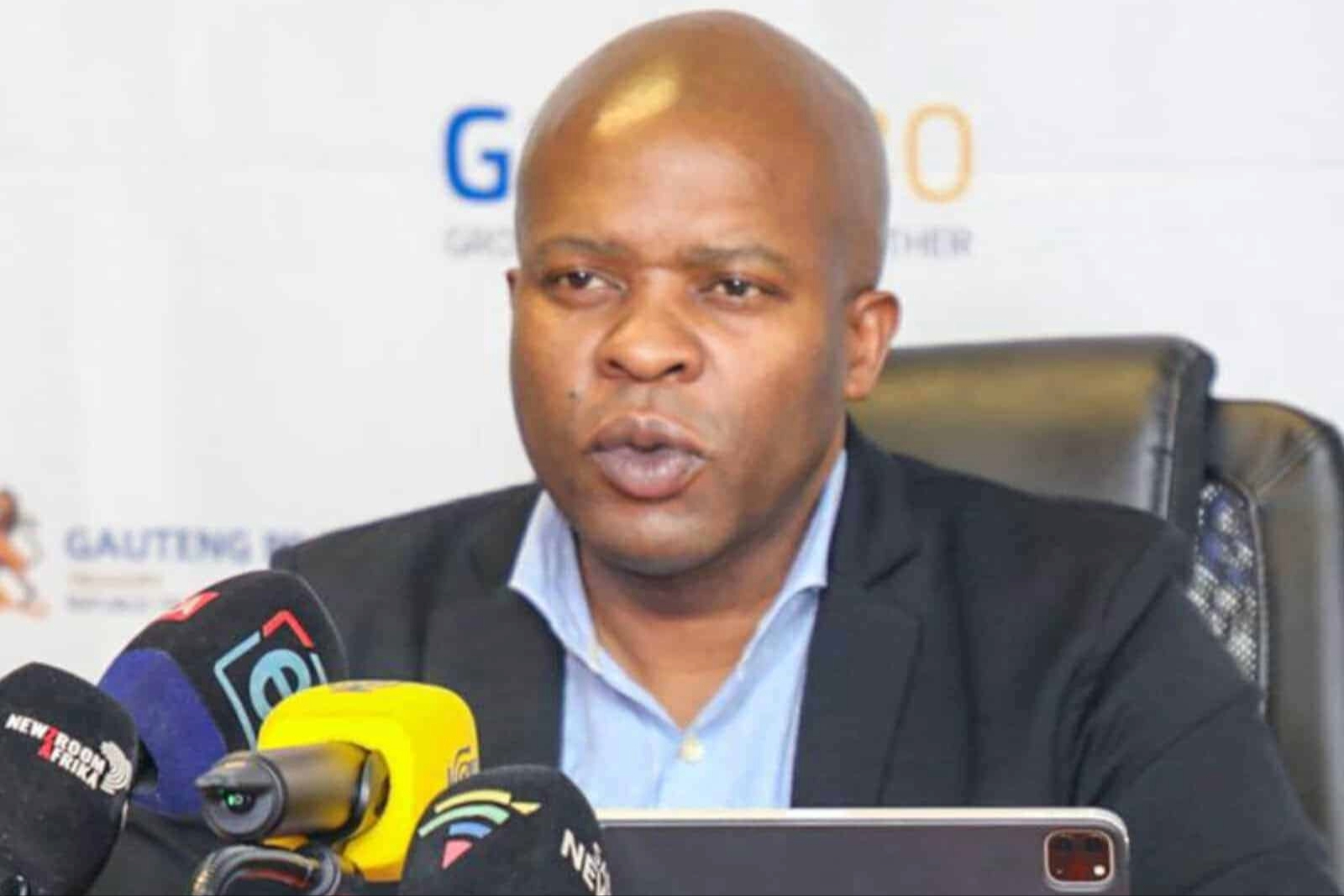
Maile was speaking during a media briefing in Sandton on Sunday.
He said while significant progress has been made since 1994, structural pressures continue to impact the quality of education and learner outcomes.
Learner enrolment in Gauteng has more than doubled from 1 408 237 in 1995 to over 2.8 million in 2026, driven by urbanisation and migration into the province.
Despite achieving near-universal access to education, he said rising learner numbers continue to strain infrastructure.
Gauteng faces a placement challenge driven by in-migration, with overcrowding in many township and inner-city schools reaching between 60 and 70 learners per teacher.
An estimated 723 schools show signs of overcrowding in some grades or across the whole school, with a documented shortage of about 5 554 classrooms – 3 166 in primary and 2 388 in secondary schools.
Many facilities are in poor condition, increasing reliance on temporary structures and contributing to unsafe learning environments. Gauteng faces a deficit of at least 200 new schools to stabilise the system.
Although the province repeatedly commits to building 10 new schools per year, many projects are behind schedule, increasing reliance on temporary classrooms as a short-term measure.
“While the Gauteng Department of Education continues to deliver classrooms and new schools where needed, we have not been able to keep pace with the growth in the learner population. This is compounded by ageing infrastructure and, in some cases, inappropriate building materials or temporary prefabricated classrooms,” Maile said.
Despite increased funding, Maile said the system is still under pressure, adding that “while the allocation has increased to over R68 billion, it remains insufficient relative to demand and inequality across schools.”
He noted that a rising wage bill was crowding out spending on infrastructure, maintenance and learning materials.
Maile also highlighted serious challenges in Early Childhood Development (ECD), following the transfer of the function to the department in 2022.
“The ECD sector is privately operated in Gauteng, with no public sites,” he said, pointing to unequal access, particularly for low-income families.
“The key challenges with ECD centres in Gauteng is that a large number remain unregistered, often operating from informal structures that do not meet municipal health and safety requirements,” he said.
Registration processes remain slow, while subsidy funding is insufficient to meet growing demand, particularly in low-income communities.
Maile said the province faces a systemic crisis in literacy and numeracy, adding that “weak early-grade reading, comprehension, and numeracy create a silent crisis where learners progress without mastering basics.”
He said, this contributes to poor performance in subjects such as Mathematics and Physical Sciences, particularly in overcrowded schools.
Textbook shortages also persist, with 871 public schools reporting gaps in learning materials.
Although the province achieved a record 89.06 percent matric pass rate in 2025, Maile said this is masked by deeper problems.
“The statistics do not outline the challenge of broader poor performance in Grade 12,” he said, linking this to weak foundations laid in primary school.
School safety continues to be a major concern, with incidents of violence, bullying, substance abuse and mental health challenges affecting learners.
“School safety and learner wellness are increasingly material risks to learning in Gauteng, with incidents of violence near school premises, bullying, substance abuse, and escalating mental health needs,” MEC said.
While partnerships with the South African Police Service and other stakeholders are in place, community crime and gang activity continue to impact schools.