
By Kevin Rademeyer, Sports Journalist.
There is something slightly improbable about the Johannesburg Giants. Not long ago, they were an idea shared between a few believers. Now they walk into the Basketball Africa League as national champions, standard bearers, and perhaps most intriguingly, a team that seems to understand exactly what it is trying to become.
Expansion teams are not supposed to move like this. They are meant to stumble, to learn in public, to absorb a few hard lessons before speaking with any real authority. The Giants skipped that chapter. In 2025, their first year, they won the national title. No easing in. No polite introductions. Just a statement, delivered with the kind of conviction that usually takes years to assemble.
At the centre of it all stands Florsheim Ngwenya, known across courts and corridors as Flosh. In local terms, his résumé reads like a dynasty. Five BNL championships. National team stints stretching back more than a decade. A hand in the rise of the Cape Town Tigers, including a run to fourth place in the 2024 BAL season. If South African basketball has had a steady pulse in recent years, Ngwenya has often been the one keeping time.
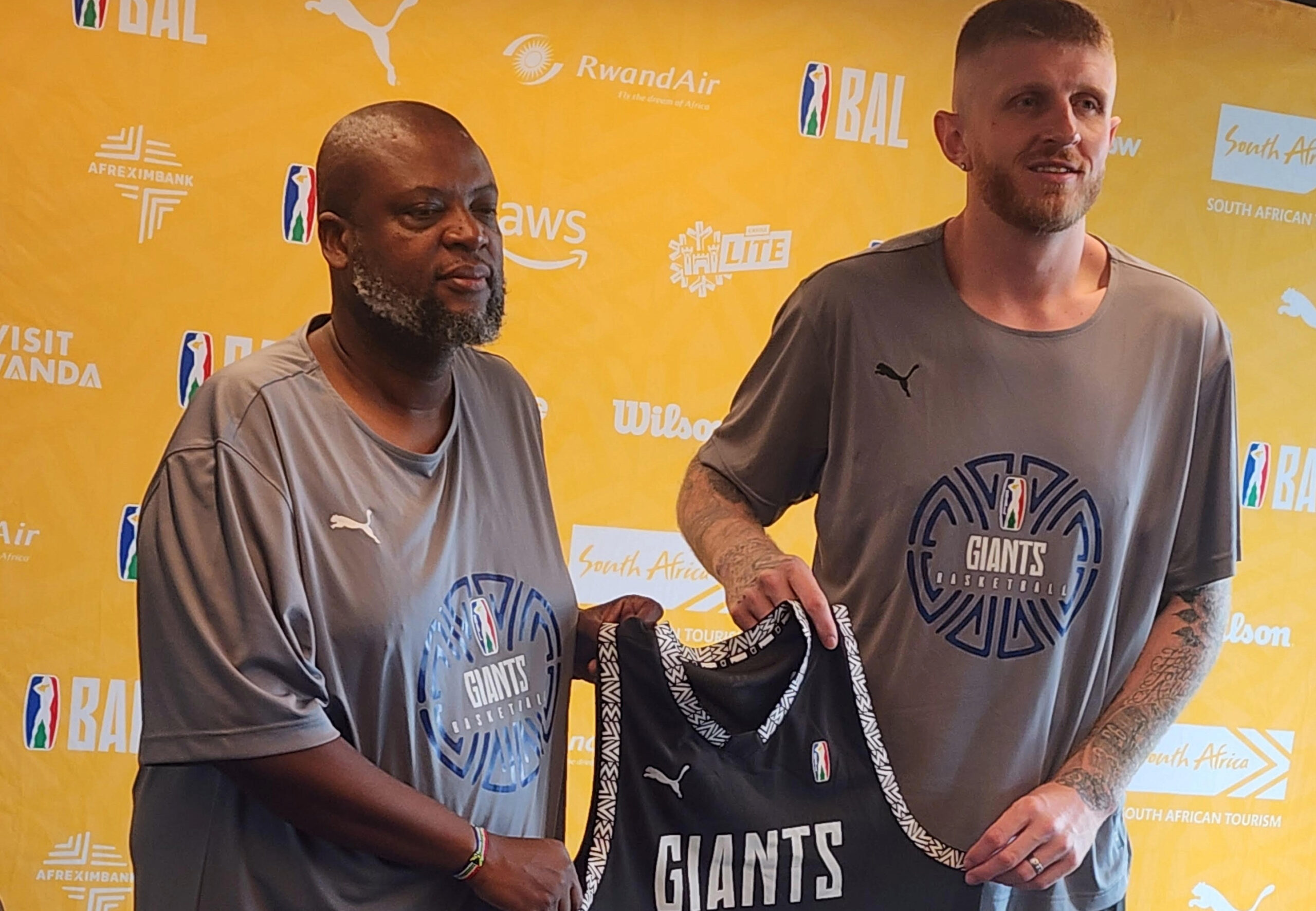
Now he has something different. Not just a team, but a project. “I have never been this excited, and I cannot remember when I have had this much energy,” Ngwenya said at media day, his tone carrying both urgency and ownership. “Right now we have the responsibility to grow the game in South Africa. It is probably the cheapest sport to play. You really only need a ball, not even shoes.”
He does not speak like a man content with wins alone. There is a broader canvas in mind. “Basketball needs to be spread throughout the land. It keeps kids away from drugs and other pressures. It is also great for your health,” he added. “We want to put basketball back on the map. We want to see these players in Pretoria and make them dream. They need to see this in Mamelodi, in Soshanguve and even Bryanston and say we can do this.”
The Giants’ origin story fits that ambition. Formed in 2025, co-founded by figures who had already invested years into the sport, the club set out to be more than a roster. Its stated aim is expansive, almost defiant. Build a world class African basketball brand. Empower players. Inspire communities. Make the game visible again.
On the floor, the identity is already forming. The roster leans heavily local, a deliberate choice in a league where imported talent often dominates. There is size, with the towering David Craig. There is athletic punch, with Nino Dim. There is grit, embodied by Nkosinathi Sibanyoni. And then there is the captain.
Pieter Prinsloo does not arrive with the sheen of novelty. He arrives with miles. College ball in the United States. Professional stops across Latin America, Europe and Africa. BAL experience with both the Cape Town Tigers and Made By Ball.
He has seen versions of this league before, enough to recognise both its promise and its flaws. “We see the passion regarding basketball,” Prinsloo said. “It has moved up from the 13th most popular sport in South Africa to number five. We can show that the sport is growing.”
Then, without much hesitation, he shifted tone. “Unfortunately we need to show what can be done, as the administrators do not care about the sport. It is a joke. Players are still owed money from years ago. The current administration is destroying the game.”
It is not the kind of quote teams usually prefer on media day. It is also not the kind that gets forgotten. Prinsloo, though, is not interested in careful messaging. His focus is structural, almost blunt. “We have the ability to dominate the African continent. We need infrastructure and a professional league to compete.”
Between Ngwenya’s vision and Prinsloo’s candour sits the tension that defines this team. Hope, yes. But also impatience. Their path to the BAL has only sharpened that edge. Through the Road to BAL qualifiers, the Giants moved like a seasoned unit, not a debutant. Undefeated in domestic playoffs. Undefeated in Zambia. A stumble in Nairobi, then a response when it mattered, edging Dar City in a semi final that turned on a single defensive play. That is how reputations begin. Quietly, then all at once.
Now comes the real stage. The 2026 BAL season will split twelve teams into two conferences, each grinding through a 15 game group phase. The Giants will host the Kalahari Conference in Pretoria from 27 March , opening against Dar City. It is a schedule that demands depth, resilience, and a tolerance for momentum swings. Eight teams will advance to Kigali for the playoffs, where ambition tends to meet reality.
Ngwenya sounds prepared for that collision. “Nothing is going to shock us,” he said. “Everyone is going to bring their A game. Where they come from does not matter. What matters is how well they prepare.” There is a line in there that feels instructive. Preparation, not reputation. It is the kind of principle that travels well, whether you are a new club or an established power.
The Giants are not yet the latter. But they are no longer the former either. They are, instead, something more interesting. A team with a short history and a long view. A champion still introducing itself. A group that speaks openly about both possibility and dysfunction, about dreams and the structures required to sustain them. And as the BAL season approaches, they carry a quiet, unmistakable sense of timing.