
By Lehlohonolo Lehana.
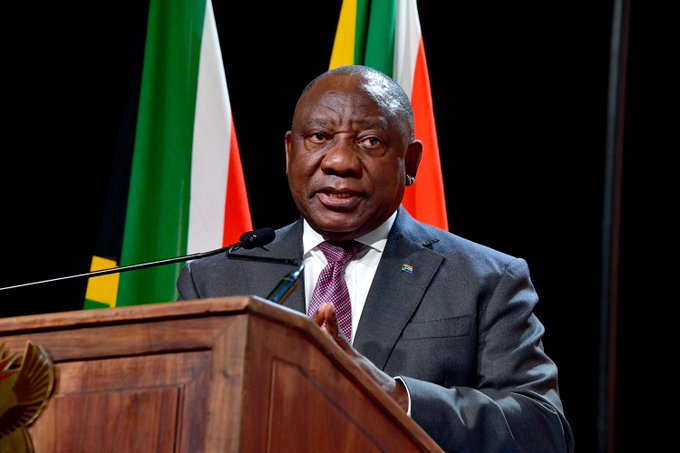
President Cyril Ramaphosa believes work must be done to elevate the role and status of women within the economy.
The President was speaking at the second Women Economic Assembly (WECONA), taking place under the theme: “Unlocking gender-responsive value chains for a resilient economy”.
Ramaphosa launched the inaugural WECONA in October 2021 from one of the pillars of the National Strategic Plan (NSP) on gender-based violence and femicide (GBVF), which advocates the economic empowerment of women to end GBVF in South Africa.
He announced that the Automotive Industry Transformation Fund has committed to spending 30% of the overall budget to advancing gender transformation in the industry amounting to a total of around R1.6 billion over five years.
“The automotive sector has highlighted its commitment towards the meaningful capacity building to establish a pipeline of women leaders and owners, including a dealership development programme.”
At the Gender Lens Investment Summit held in July, the Industrial Development Corporation (IDC) committed R9 billion towards gender lens investing, while the Public Investment Corporation (PIC) committed R12.5 billion.
“As the term implies, gender lens investing is an approach that considers gender-based factors across the investment process to advance gender equality and better inform investment decisions.”
He also highlighted the agriculture sector as a valued partner, committing to establishing a localised manufacturing infrastructure that will support women-owned businesses and build capacity and skills through training programmes.
“We are committed to using the policy and legislative tools at our disposal, such as employment equity legislation and laws that outlaw discrimination, to improve women’s representation in executive leadership and address the gender pay gap.”
Poverty
He told the women that the assembly was taking place as the country implements the Economic Reconstruction and Recovery Plan to grow the economy, support livelihoods, create jobs and recover from the impact of the COVID-19 pandemic.
“And while the pandemic may be in abeyance, unemployment is not,” he stressed.
He said the pandemic’s devastating impact on lives, jobs and livelihoods lost will continue to be felt for some time to come, while women continue to bear the brunt.
“We know that more women are unemployed than men.”
According to the President, in the second quarter of 2022, 47% of South African women aged between 15 and 64 years were recorded as economically inactive.
“This means that almost half of the working-age women in South Africa are out of the labour force compared to 36% of their male counterparts,” he said, adding that poverty is higher among women.
He called on WECONA to produce outcomes that uplift, empower and expand women’s access to all levers of the economy.
Procurement
Ramaphosa said the 20-year-old Black Economic Empowerment Act cannot be separated from women’s economic empowerment.
“We cannot transform racial patterns of ownership of the economy without changing gendered ownership patterns and control. This is what the Women Economic Assembly is all about, to change this.”
The President acknowledged that, in some areas, the country has gone backwards, especially on issues like black management control, skills development, and giving opportunities to black women by broadening procurement.
“For this reason, as government, we introduced the target of 40% of public sector procurement for women-owned businesses. That is why the Women Economic Assembly was convened for the first time last year.”
He encouraged the sectors to commit to procuring more from women-owned businesses.