
By Lehlohonolo Lehana.
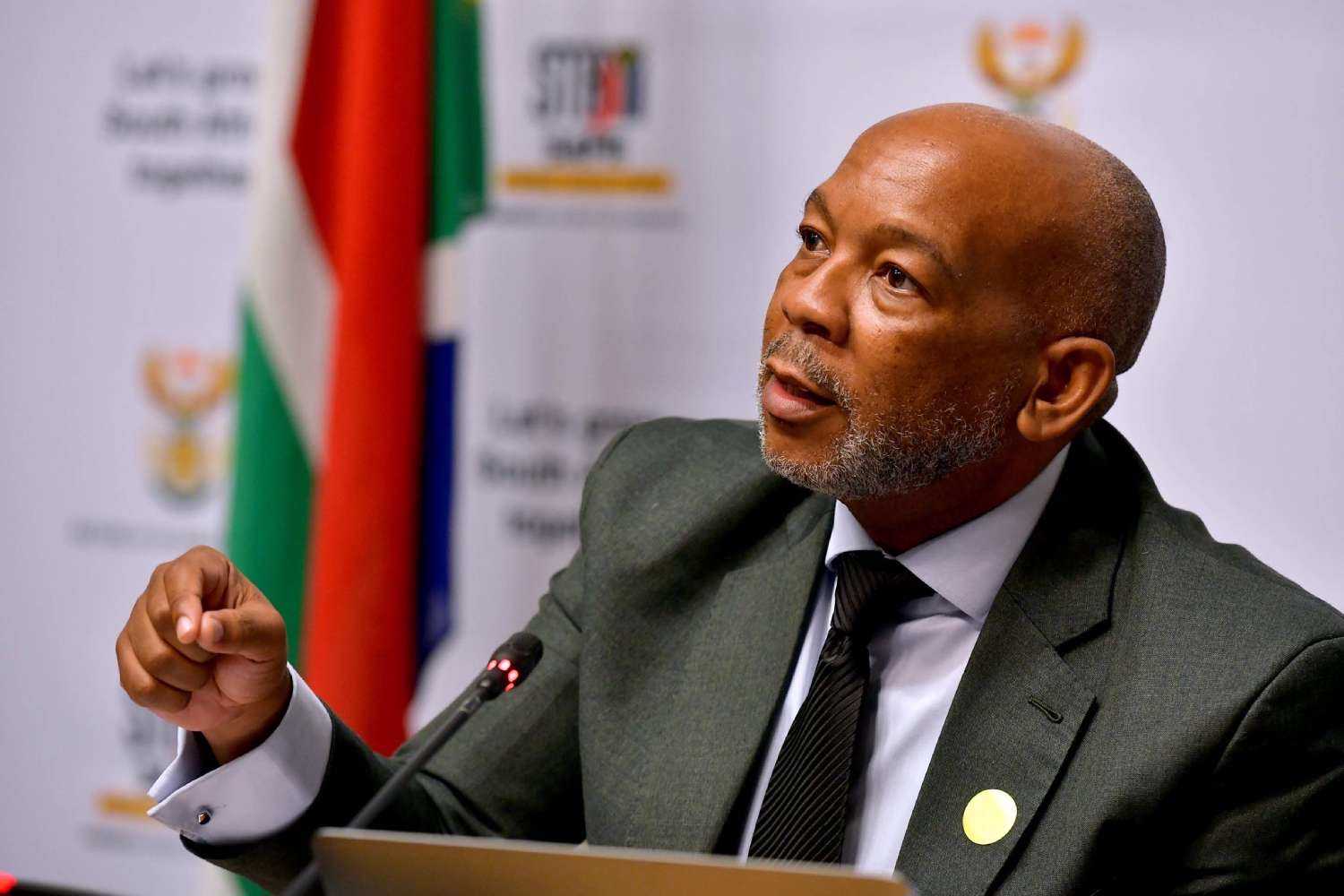
Minister in the Presidency responsible for Electricity, Dr Kgosientsho Ramokgopa, described South Africa’s highly fragmented electricity distribution industry as a threat to energy security that warrants attention “on the scale and intensity” that has been given to the country’s generation shortfall in the recent past.
Ramakgopa delivered a statement on the implementation of the Energy Action Plan (EAP) in the National Assembly on Tuesday.
The EAP was introduced by President Cyril Ramaphosa in July last year to address the intensification of load shedding.
Ramokgopa said that a significant number of municipalities were in a state of paralysis and unable to perform their mandated duties, including in the area of electricity distribution.
The crisis was broad-based, however, manifesting in both an inability of municipalities to service their Eskom accounts, as well as a chronic under-investment in new distribution assets and maintenance of existing infrastructure.
Illegal connections were also resulting in a growing failure of infrastructure as demand exceeded capacity, while theft and vandalism was triggering lengthy outages and increases in reactive maintenance expenditure.
He said that, as of July 2023, the total overdue municipal debt to Eskom stood at R63.2-billion, representing growth of R4.7-billion on the figure reported at year-end.
These conditions have highlighted the threat to energy security and warrant similar attention on the scale and intensity the generation industry has seen in the recent past,” he said.
Ramokgopa also said there was a project pipeline of 66 GW of renewable energy to be added to the grid.
The focus is not only on the generation side. You know there is a significant amount of reform where we have liberalised the generation side. There is an aggressive appetite demonstrated by private sector players—an insatiable appetite. There is a pipeline of 66 GW of projects that are at various stages of the project life cycle,” said Ramokgopa.
He said they were also focusing on the transmission side. This was the approach they were taking.
“We are also focusing on the transmission side. That is why, earlier on, I said we are looking at various options to see how best we can finance the expansion of the grid because we will need upwards of R390 billion that is going to enable us to accommodate new renewable generation capacity from renewable energy sources,” said Ramokgopa.
He said South Africa has turned the corner, with lower stages of load shedding being implemented.
He said the situation will get even better with more units returned to service and renewable energy projects connected to the grid.
Kusile Power Station
Ramokgopa told the National Assembly that the improvement at Kusile power station bears testament to the belief that the power station can drive forward Eskom’s improvement in generation capacity.
In October last year, units at the power station went offline following a duct failure.
“We have always been firm that Kusile Power Station would anchor the drive for generation capacity to get ahead of the demand curve.
“The two units returned have injected an additional 1600 MW over the past month, whilst Units 2 and 5 will add another 1600 MW. This means the 4 Kusile Units will provide a total of 3200 MW of base load by December 2023. The last remaining Kusile unit, Unit 6, is planned to be synchronised in August 2024.
“The early return of the two units is a result of judicious and smart engineering. We anticipate returning Unit 2 by the third week of November 2023. Additionally, Kusile Unit 4…was returned to service on 17 September 2023, three days ahead of the planned date.
“Kusile Unit 5 was originally planned for completion on 28 October 2023 but was rescheduled to later in order to prioritise the return of the three commercial Kusile units. Unit 5 is now scheduled to be synchronised by December 2023,” he said.
Forging ahead
The Minister acknowledged that load shedding continues to take a heavy toll on South Africans.
However, Ramokgopa expressed confidence that the task of lowering and eventually ending load shedding is well underway.
“The national energy crisis continues to be the single biggest existential challenge in post-apartheid South Africa, and we must continue to harness all efforts to arrest further haemorrhaging caused by load shedding to our economy and the degradation of the quality of lives of ordinary South Africans.
“In May 2023, I stood in this august House to deliver an executive statement outlining the transversal interventions we were making to reduce the intensity and frequency of load shedding and to articulate our plans in relation to the winter plan. Working with the dedicated staff at Eskom and industry experts, we have successfully navigated through the winter season and are beginning to turn the tide,” Ramokgopa said.