
By Lehlohonolo Lehana.
Health Minister, Dr Joe Phaahla, has commended the move by Finance Minister Enoch Godongwana, which will see an increase in the allocation for the compensation of health interns.
Reacting to the additional allocations to health shortly after the tabling of the Budget Speech, Phaahla said this will go a long way in helping the already underfunded sector.
“The overall reaction is that in the circumstances of lower economic growth and the devastation of the economy by COVID-19, what the Minister has done is very commendable because things could have been worse.
“… When you add the internship allocation plus the overall additional allocation, it comes to just over R19 billion over three years. That is a significant additional allocation which will help us quite a bit,” he said.
In his speech, Godongwana made a plethora of announcements aimed at improving social services like health and education.
Godongwana said like teachers, health care workers are among those who are the “last and only line of defence” against the pandemic.
He announced an additional R15.6 billion to provincial Health Departments to support their continued response to COVID-19, and to bridge shortfalls in essential goods and services.
An amount of R3.3 billion was allocated to absorb medical interns and community service doctors.
Phaahla said while the entire public health is underfunded, he understands the circumstances of “where we are today, so we appreciate the gesture of the additional allocation, which will take us a long way, particularly considering the devastation, and the pressure under which we have to redirect a lot of resources to deal with the COVID-19 pandemic”.
“So this will help us but we are hoping that the economy will continue to grow better than [it is] now so that in the coming years, we can even get better so we can add some capacity within our health services, which is lacking, “he said.
Response teams to address typhoid cases
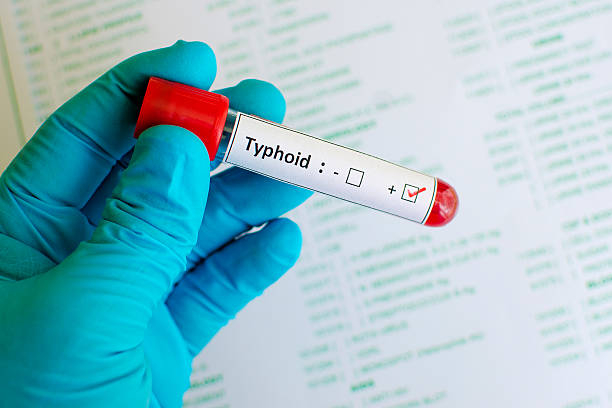
Phaahla says the department will deploy Outbreak Response Teams in Gauteng and the Western Cape to address the typhoid outbreak.
The Minister said the move was to ensure that the current crop of cases are followed up and managed.
He also moved to dispel rumours and fake news that the disease has contaminated drinking water.
“There has been misguided news that our municipal water is contaminated with this bacteria. This is totally untrue. What we want to emphasise is that there is no public risk in terms of contamination of drinking [water], “he said.
The number of cases of typhoid fever in the country has been on the decline for the last few years.
“Typhoid is endemic in South Africa which means that whenever there is always some small breakout of typhoid whenever there’s a problem with the sewer system when things are not properly managed.
“What the National Institute of Communicable Diseases has indicated, is that over the last three years there have been pockets of this disease being picked up. On average, there’s been less than 200 cases in the whole country in a year. In fact, last year there was less than 150 cases,” he said.
National Health Insurance
The Minister said the department is “optimistic” that the National Health Insurance Bill be supported in Parliament.
The Bill seeks to map out a route for the provision of standardised healthcare.
“The Portfolio Committee on Health in the National Assembly is busy with oral submissions on the NHI Bill. From the department’s side, we are waiting for them to call the department once they’ve wrapped up their hearings.
“There will be questions which we will be expected to answer but we optimistic that majority of parties in Parliament will support the bill so that we can lay the foundation for universal health coverage,” he said.
Allocation of houses to go digital
The Department of Human Settlements will digitise the allocation of houses to allow the public to view their status via the platform at any time.
“This will be done through a digital system that is accessible to all, which will eliminate corrupt activities in the allocation of housing opportunities.
One of the most important pillars of this government is transparency, Phaahla, said when addressing a media briefing of the Social Protection, Community and Human Development Cluster.
“In the area of human settlements, Phaahla on Thursday said government will focus on sharpening its main priorities, which include the transformation of human settlements into liveable and sustainable spaces through spatial targeting and consolidating of investment.
“We are doing so by reprioritising the programmes to focus on the upgrading of informal settlements, integrated residential development, and significantly increasing the affordable rental housing stock.
“The department will also accelerate the issuing of title deeds throughout the country as a way of restoring dignity to South Africans,” the Minister said.
Government’s response to GBV
Meanwhile, government continues to intensify its response to gender-based violence and femicide (GBVF) through the implementation of the National Strategic Plan on GBVF, which promotes the empowerment of women.
The President signed into law three new pieces of legislation, which has strengthened the criminal justice system, promoted accountability across the State and improved support to survivors.
“The implementation of this legislation will go a long way to ensuring that cases are successfully prosecuted, that survivors are protected and that there are more effective deterrents in place for perpetrators.
“However, the fight against gender-based violence will never be won unless, as a society, we mobilise all formations and all citizens behind a sustained programme of social action.
“Ending GBV is a collective responsibility, and takes a social compact that ensures safe spaces and communities for women and children,” Phaahla said.
The Department of Public Works has so far handed over 12 properties for use as shelters for survivors of gender-based violence.
The properties were handed over to the national and provincial Departments of Social Development (DSD).
Furthermore, a total of 14 other properties have been inspected so that refurbishment work can start, and more properties can be handed over in the provinces.