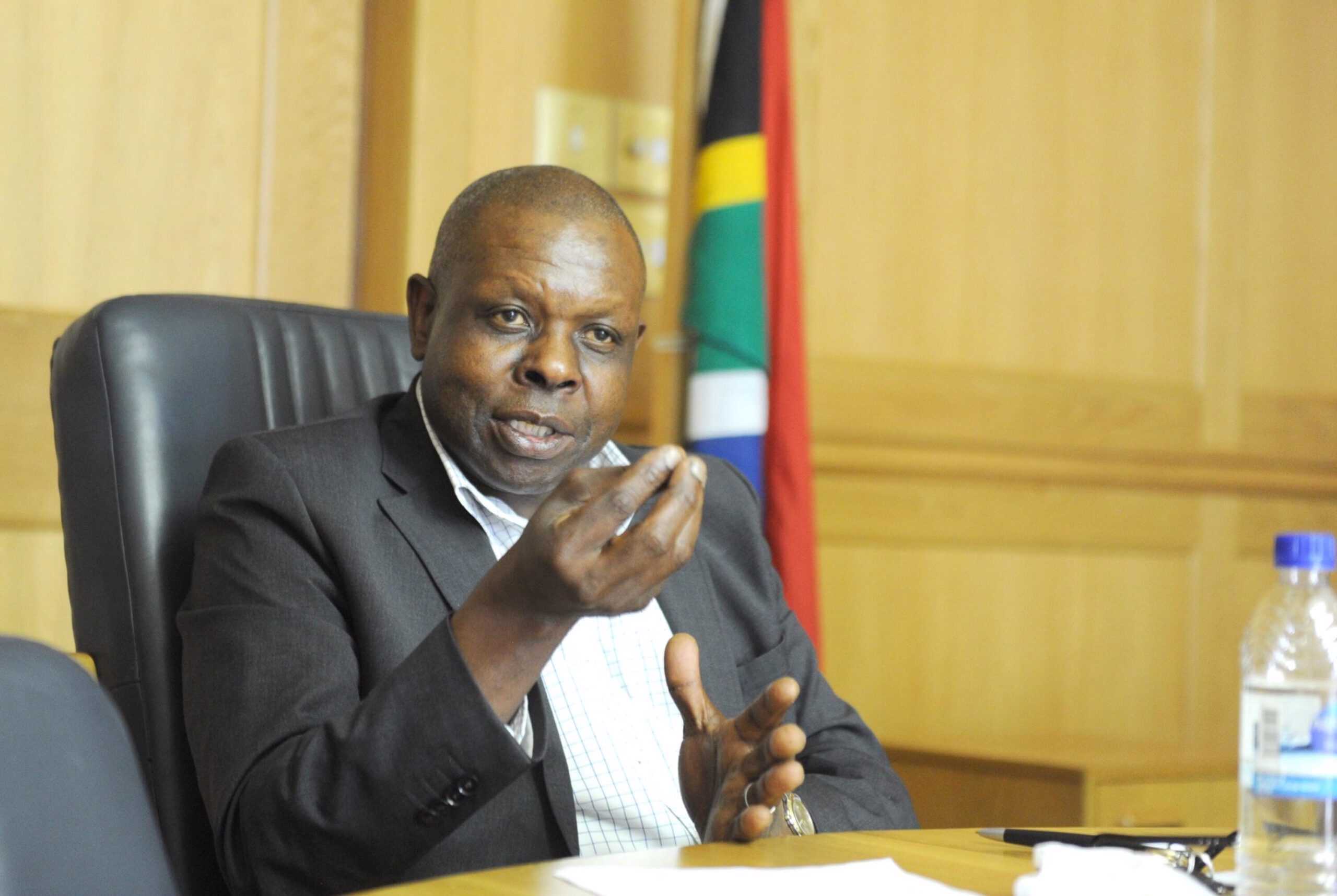
A suspension of Hlophe now would be of no practical effect as he is already suspended in relation to a finding of gross misconduct over a previous complaint made in 2008.
On this finding, parliament’s justice committee voted to recommend his removal and the National Assembly’s programme committee decided that a special sitting will be convened in January for MPs to attend in person and vote.
If Hlophe is not impeached — or if he were to litigate to prevent the vote — a further suspension on the basis of Goliath’s complaint would keep him out of office.
In response, Hlophe said, he is saddened by the possibility of being removed from the bench, stating his belief that such an outcome aligned with the desire of his critics.
In an interview with eNCA on Wednesday, Hlophe revealed that Parliament failed to inform him of the decision taken to recommended his removal from the bench.
“All I know is what I have read in the newspapers. It comes as no surprise because the matter has a history, it has turns and twists,” he said.
Hlophe clarified that the assertion labeling him as “the face of judicial impropriety” was more about public perception rather than factual evidence.
“That’s what the detractors wanted,” he said in reference to retired Constitutional Court (ConCourt) judge Johann Kriegler and the Democratic Alliance (DA).”
“[Kriegler] is very vociferous, anything to do with Hlophe he is always there… he is one of the detractors. The other detractors, obviously, were politicians. I have been openly called by the Democratic Alliance’s Helen Zille an ANC deployee [but] I am a sitting judge what an insult. So there was political interference but also Kriegler has always been vociferous,” he said.
He expressed his dismay at the prospect of facing impeachment for “merely making a remark”.
“I’m not the only one who remarked about the [Jacob] Zuma matter. It was very topical and if one looks at the evidence of Judge [Chris] Jafta before the JSC, he says even the judges, advocates, everyone was talking about the Zuma matter and the only person who is charged is me. It would be sad to leave the bench, where I have made a contribution in my view, under such a cloud.”
According to Section 177 of the constitution, a judge can only be ousted from their position if the JSC determines that the judge in question suffers from incapacity, exhibits gross incompetence or is guilty of gross misconduct.
If the National Assembly approves the judges’ removal, it will mark the first instance in the country’s history where judges are removed by parliamentary action. After that, the president would dismiss the judges from office based on the parliamentary resolution requesting such action.